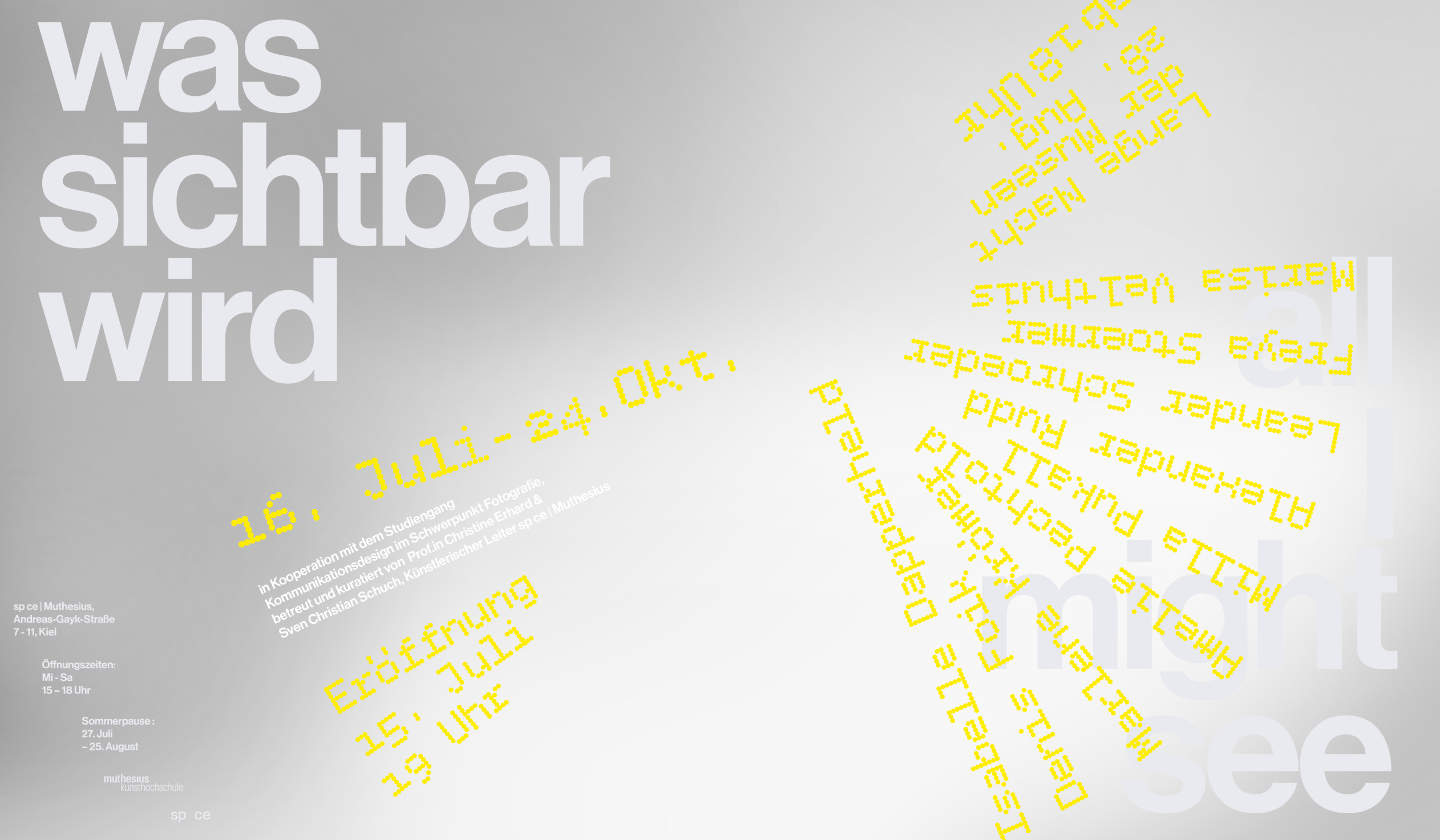
was sichtbar wird - all I might see
Opening on July 15, 2026
Group exhibition of photography in collaboration with the Communication
Design program curated and supervised by: Prof. Christine Erhard & Sven Christian Schuch (Artistic Director, sp ce | Muthesius)
Featuring: Isabelle Dapperheld, Denis Foik, Marlene Krömer, Amelie Pechtold, Milla Pukall, Alexander Rudd, Leander Schroeder, Freya Stoermer, Marisa Velthuis
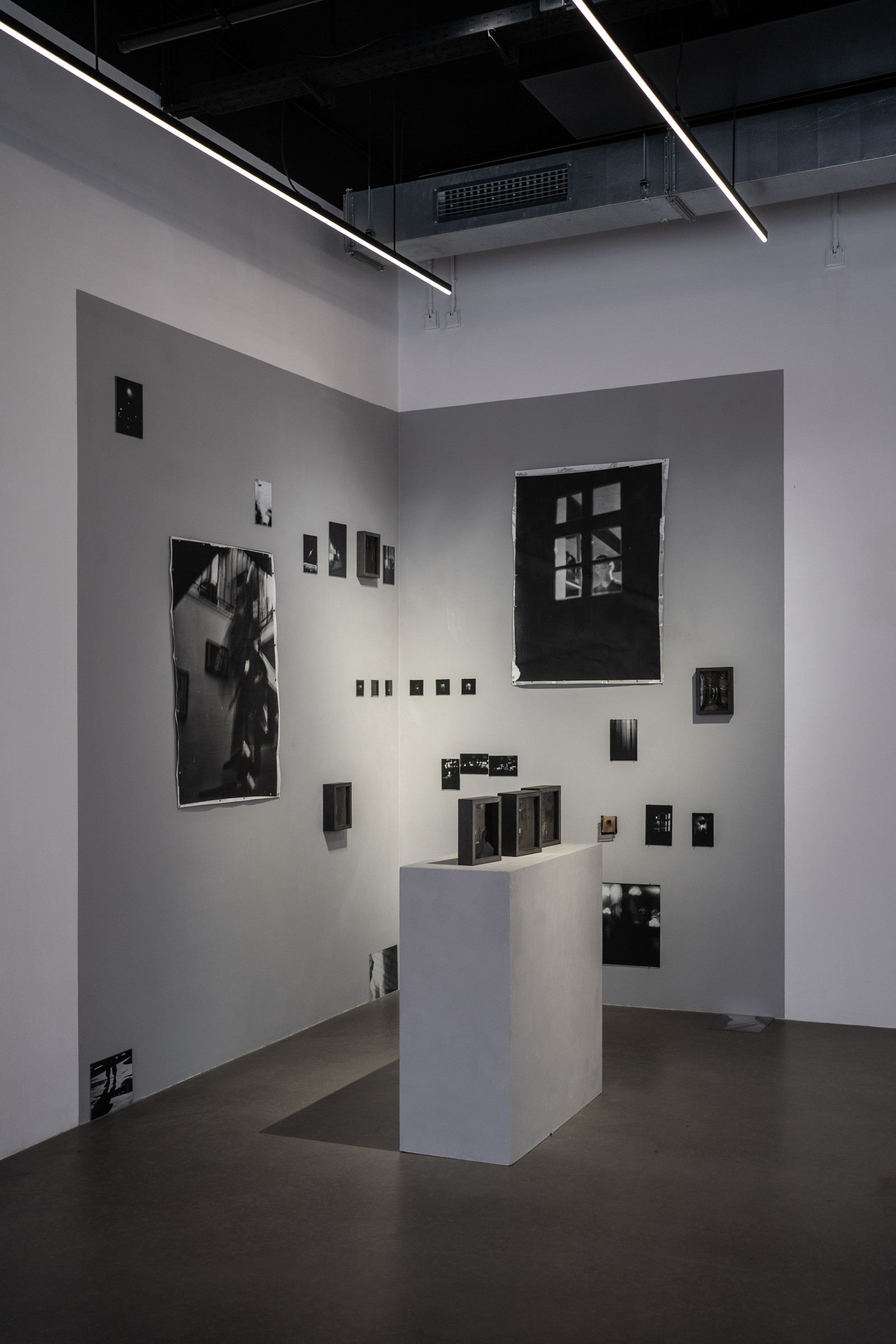
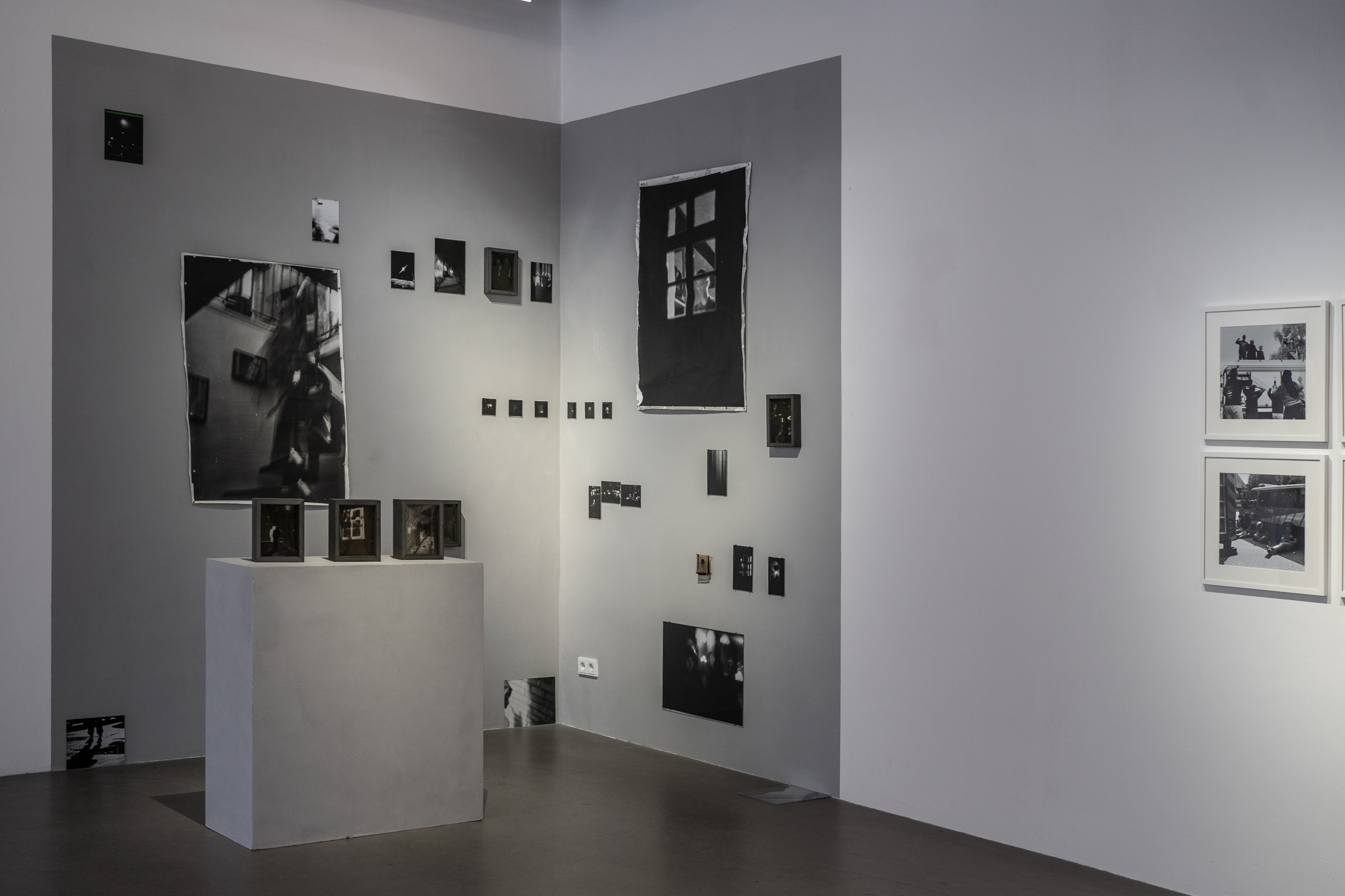
This year’s summer exhibition at sp ce | Muthesius is entirely dedicated to photography. How are images created today amid a constant flood of images? How do they capture attention and focus, rather than further amplifying the media noise?
In collaboration with the Communication Design program, under the guidance of Christine Erhard, professor of photography at the Muthesius University of Fine Arts and Design, nine students are developing new photographic works.
The focus is on the question of how images function under conditions of public exposure, distance, and attention when they appear not in isolation but in sequences, series, and spatial arrangements.
At the moment of exhibition, the works are not only presented to a broad public for the first time; they are simultaneously recontextualized. They invite viewers to engage with them and stimulate a dialogue. The range of themes is shaped by the pressing questions of a young generation that is using the medium of photography to give itself a multifaceted voice.
was sichtbar wird - all I might see 01
© sp ce | Muthesius Julia Marre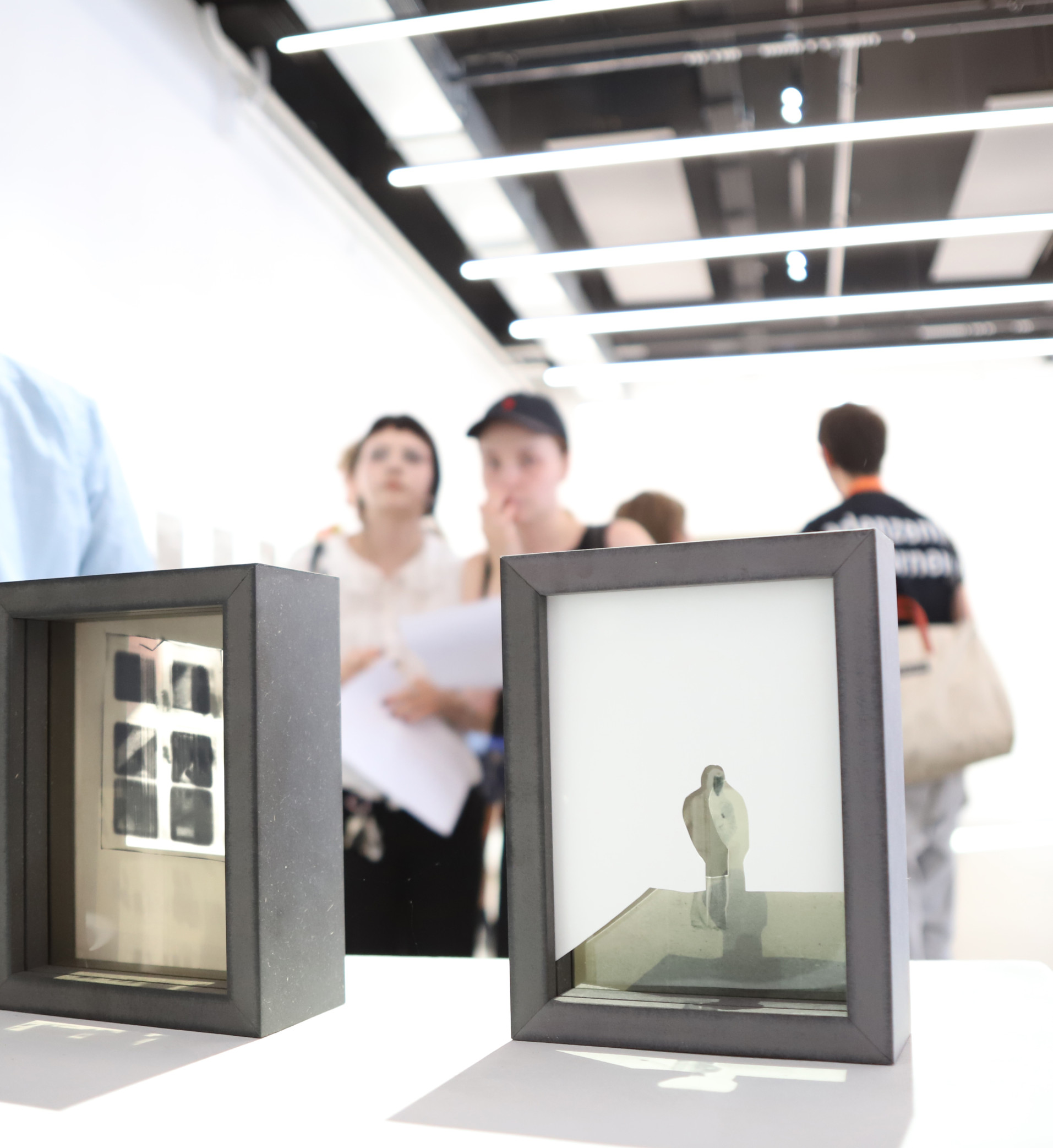
was sichtbar wird - all I might see 02
© sp ce | Muthesius Julia Marre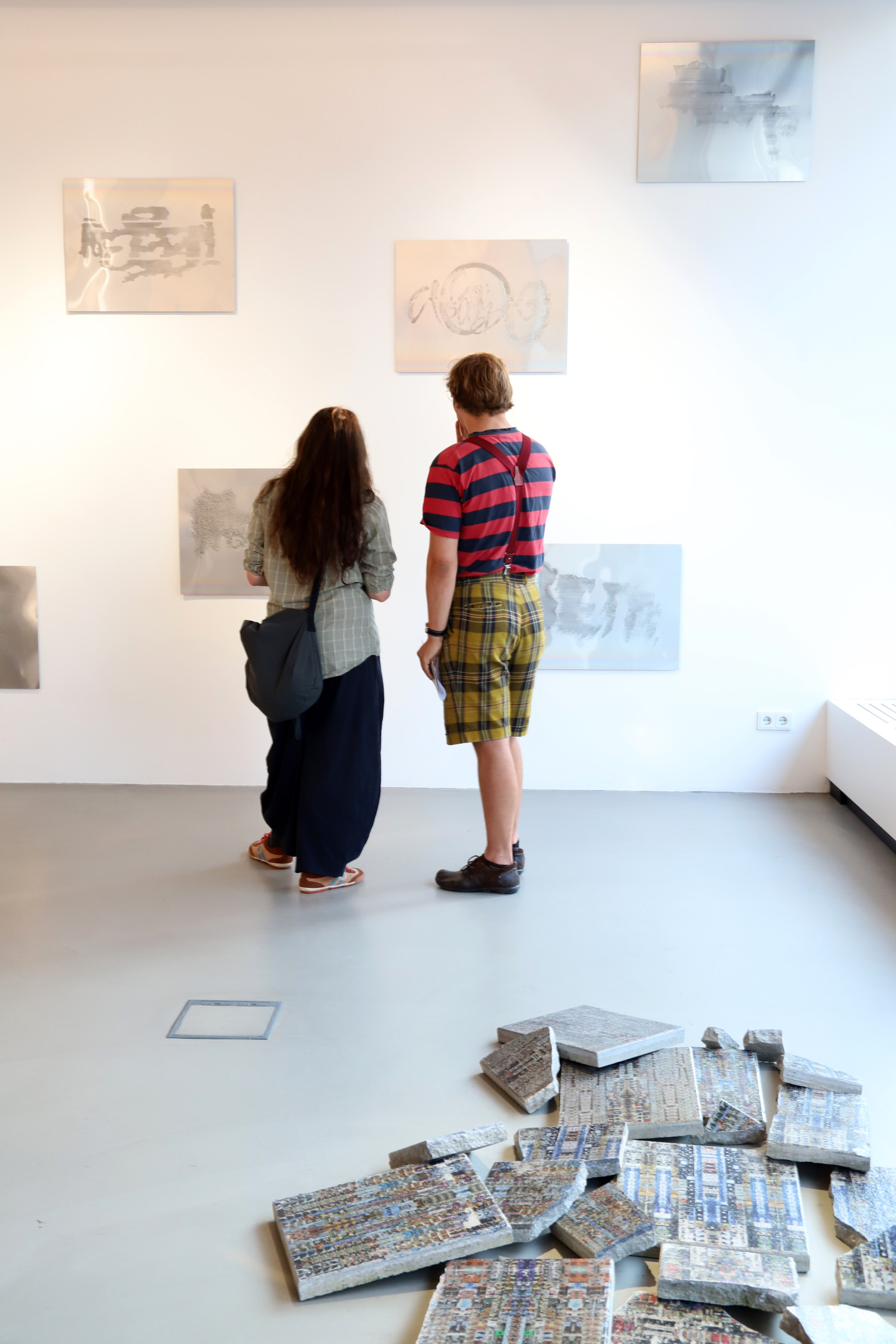
was sichtbar wird - all I might see 03
© sp ce | Muthesius Julia Marre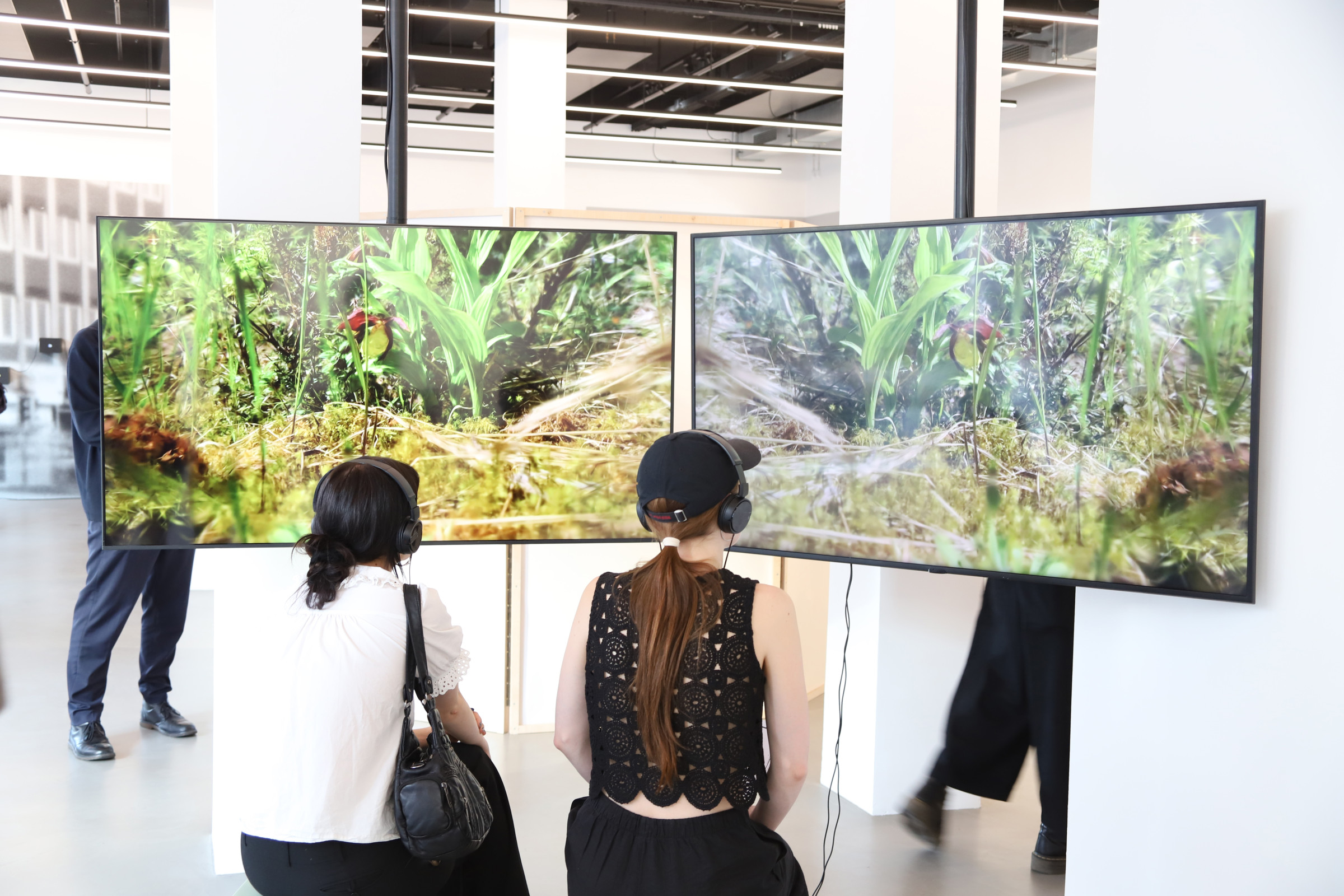
was sichtbar wird - all I might see 04
© sp ce | Muthesius Julia Marre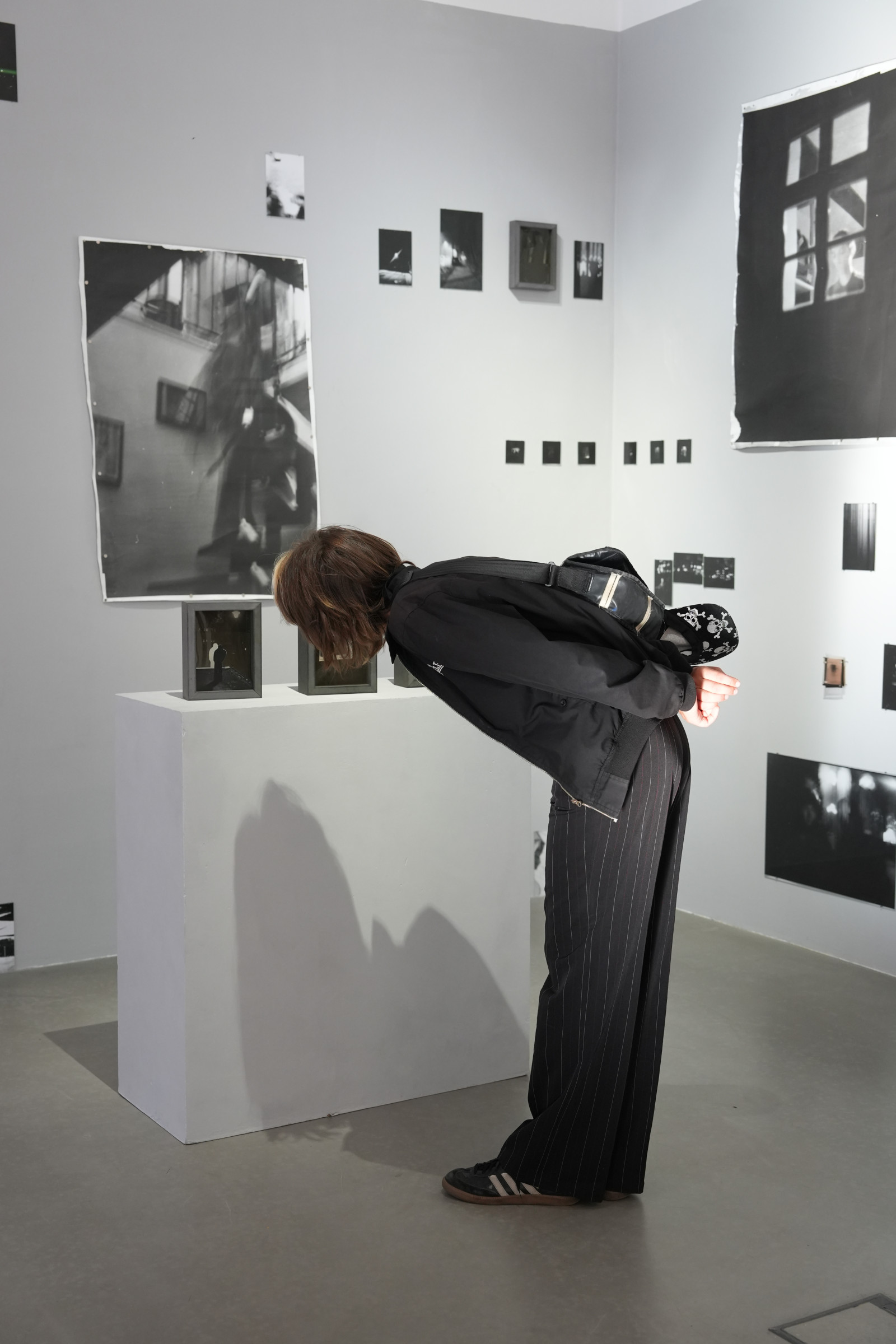
was sichtbar wird - all I might see 05
© sp ce | Muthesius Richard Gutberlet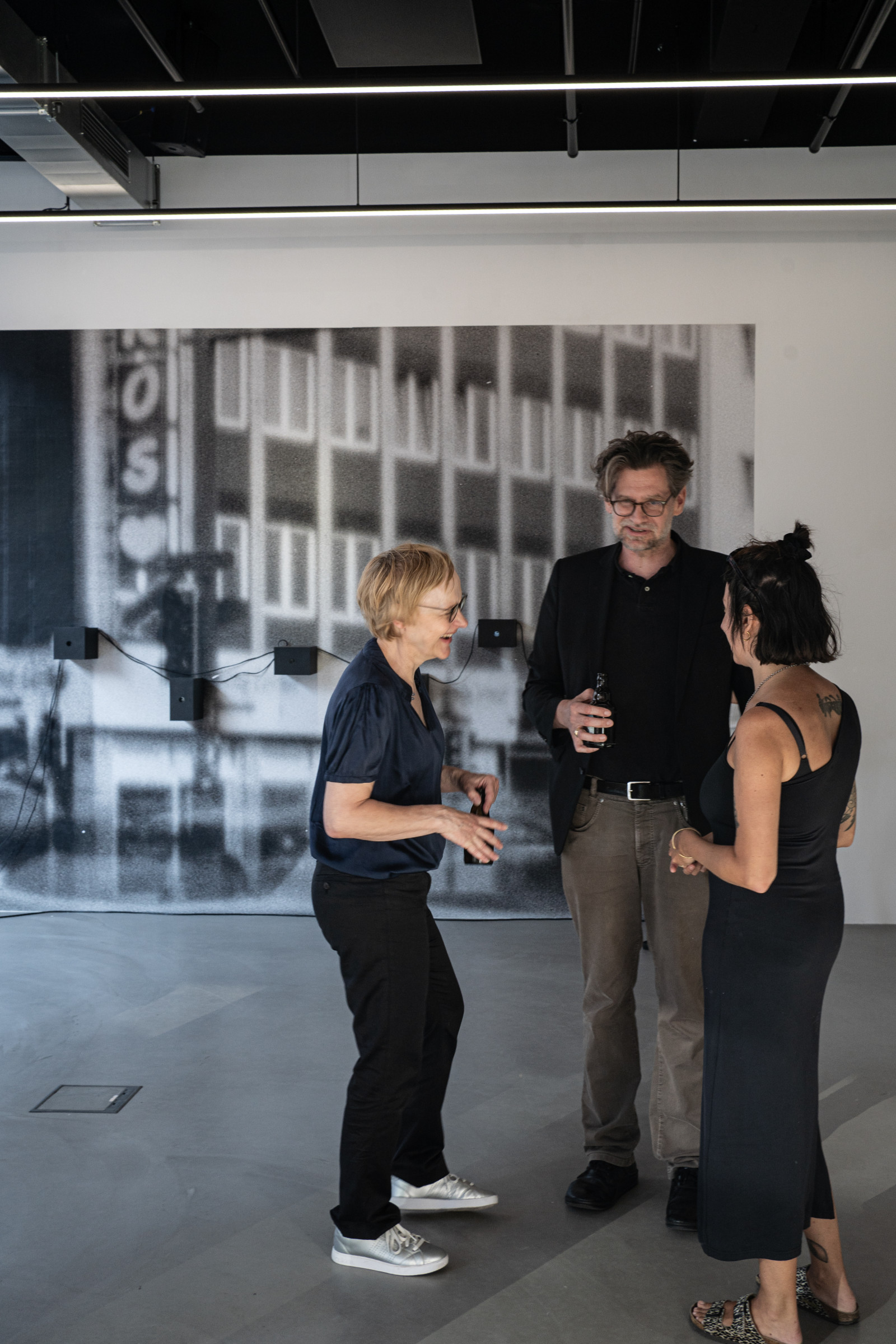
was sichtbar wird-all I might see 06
© sp ce | Muthesius Shi Shi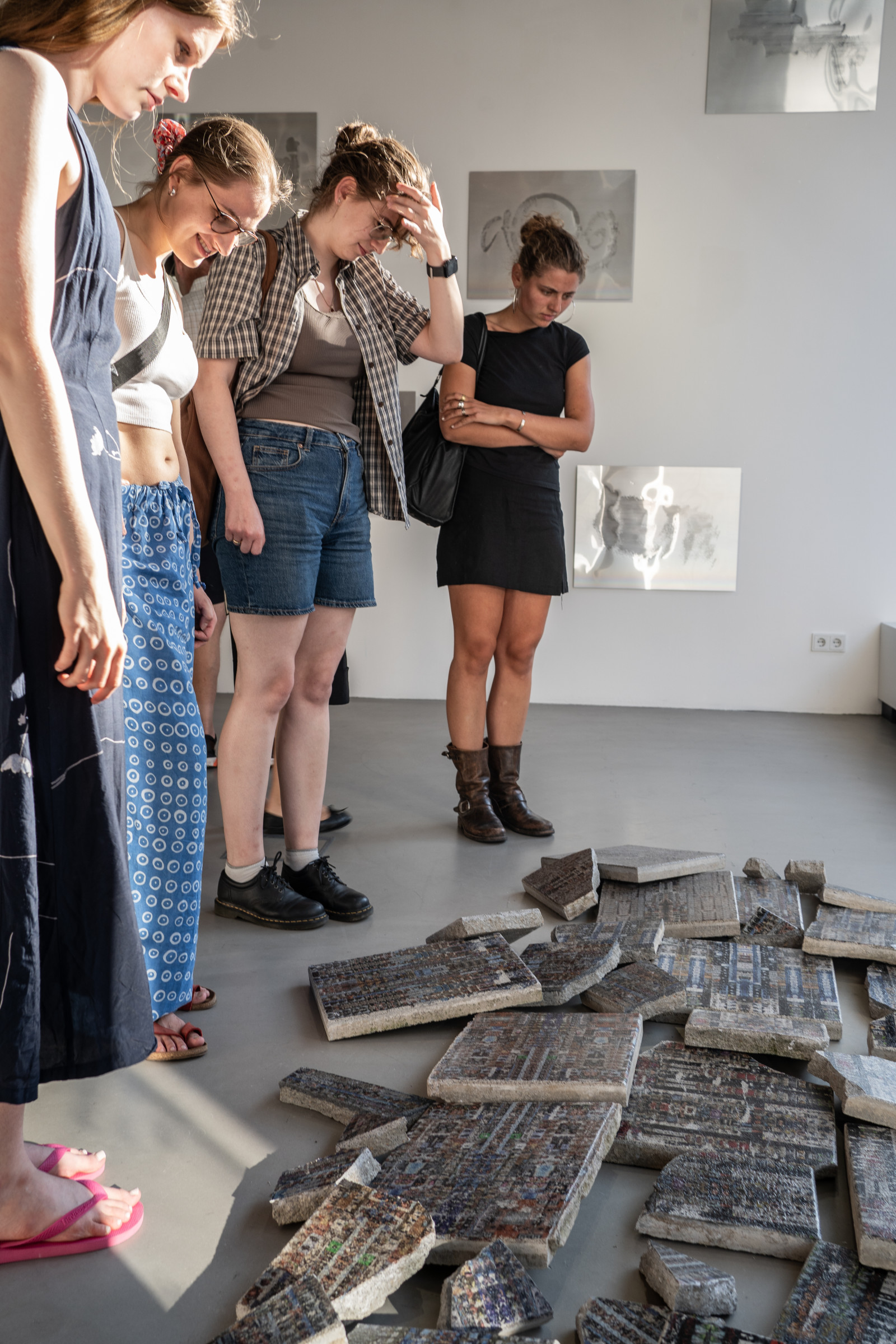
was sichtbar wird-all I might see 07
© sp ce | Muthesius Shi Shi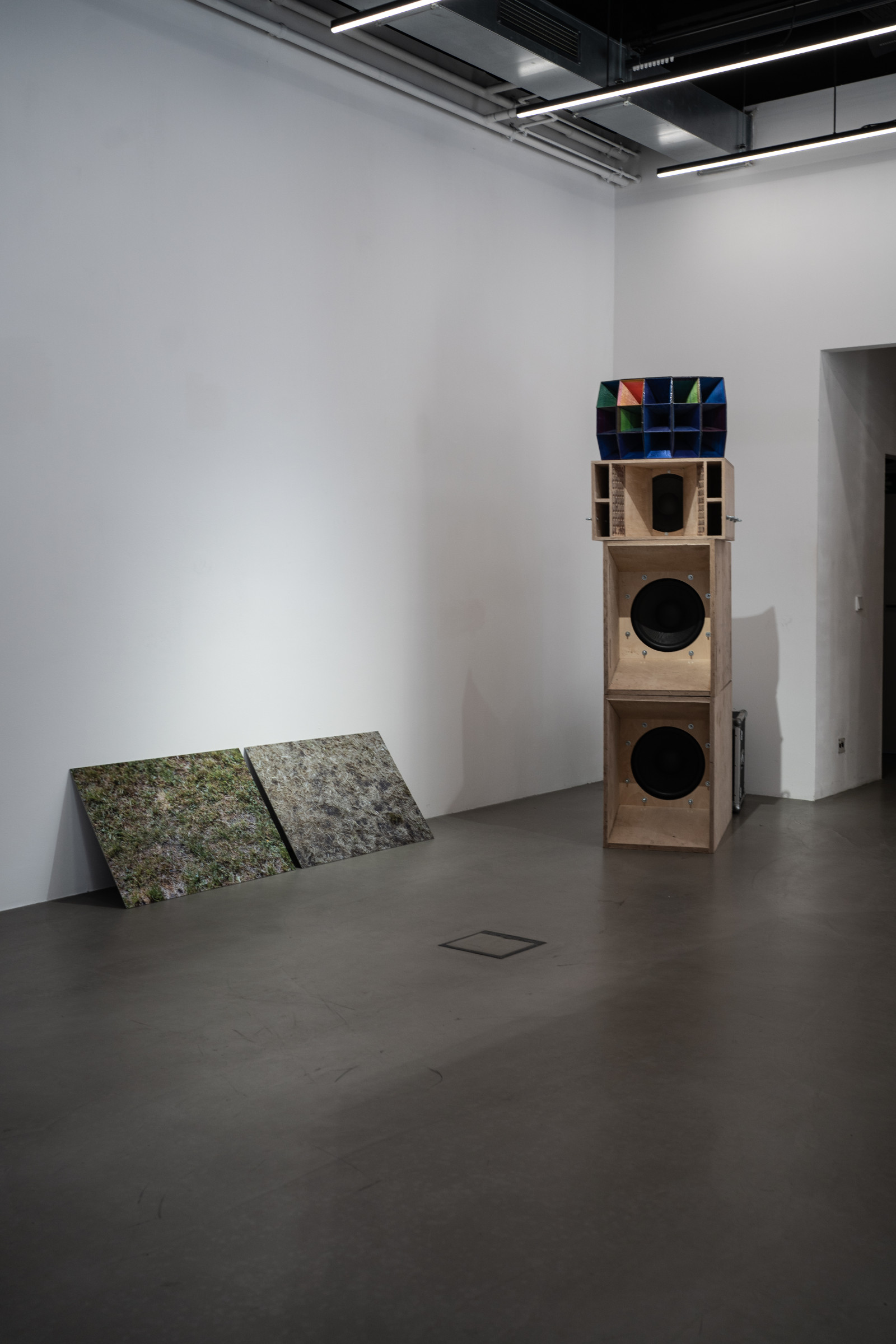
was sichtbar wird-all I might see 08
© sp ce | Muthesius Shi Shi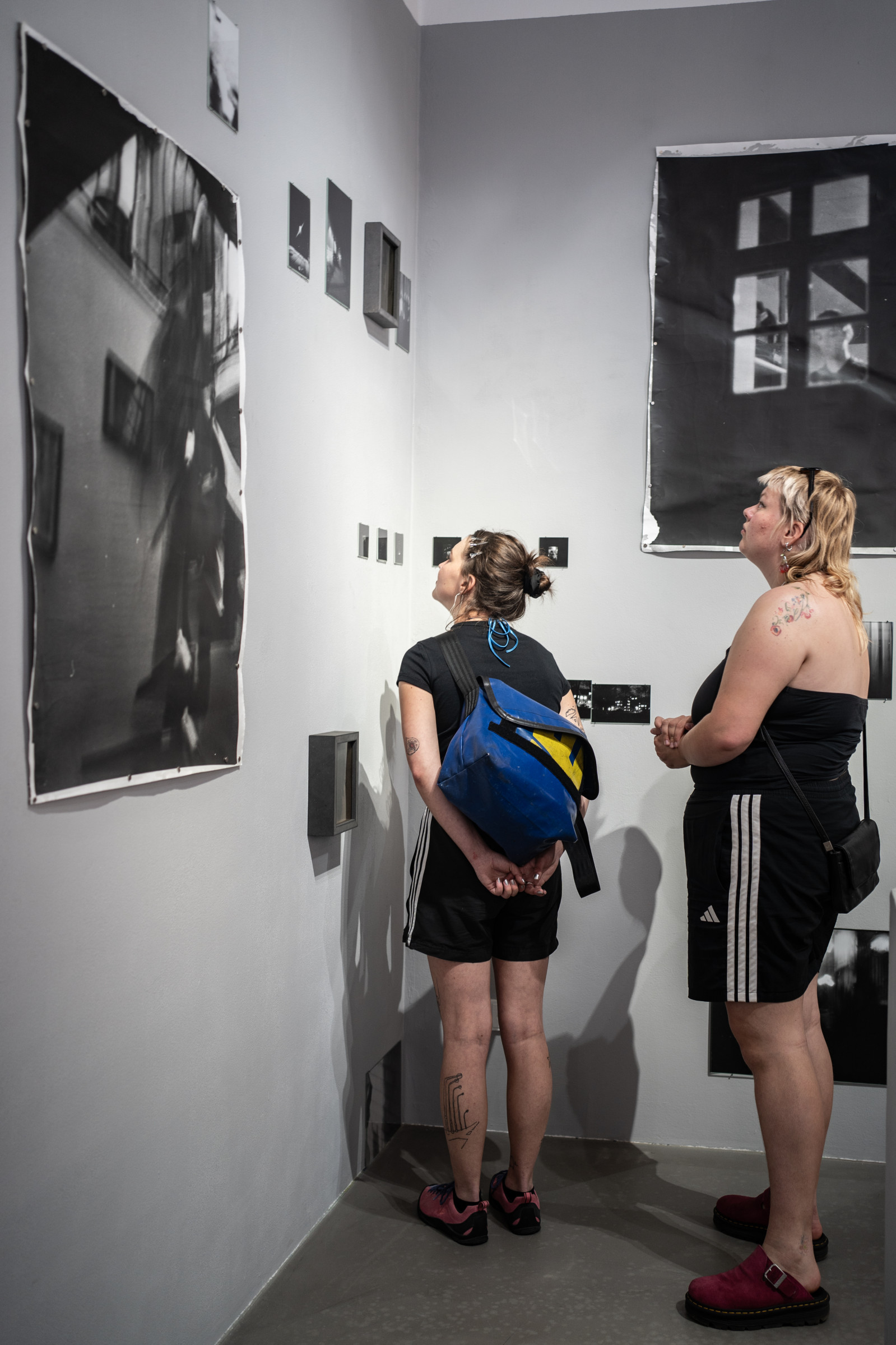
was sichtbar wird-all I might see 09
© sp ce | Muthesius Shi Shi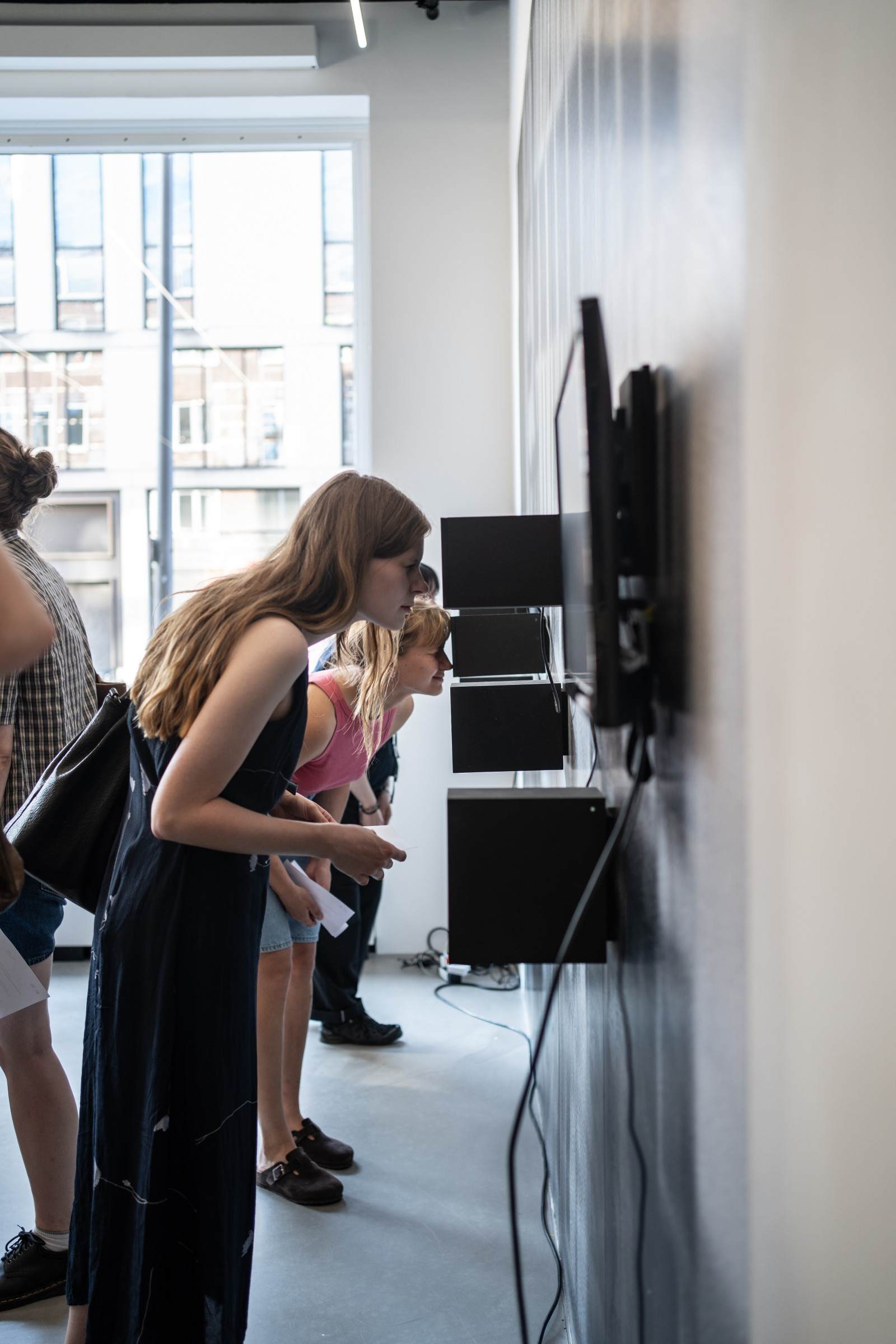
was sichtbar wird-all I might see 12
© sp ce | Muthesius Shi Shi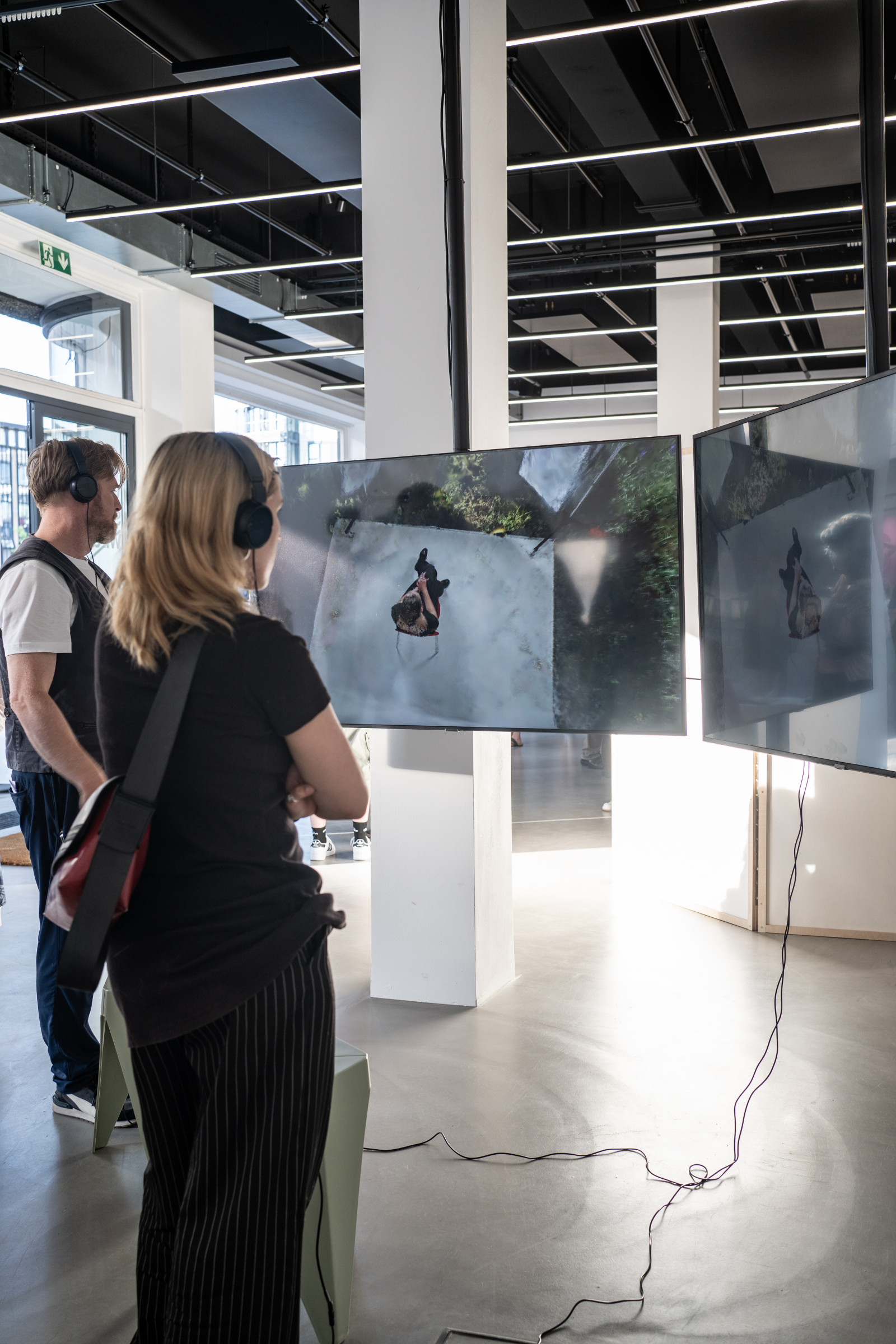
was sichtbar wird-all I might see 13
© sp ce | Muthesius Shi Shi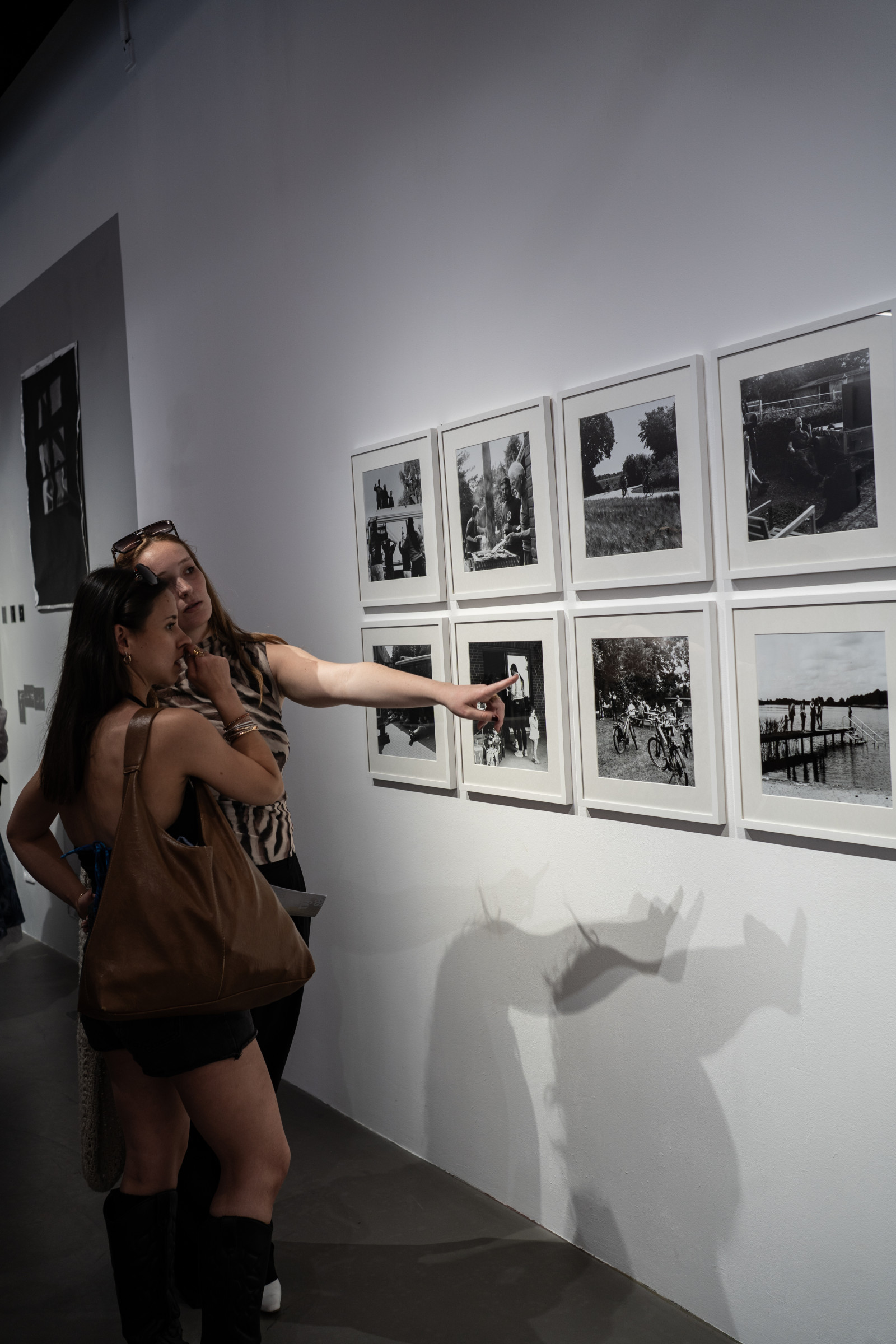
was sichtbar wird-all I might see 14
© sp ce | Muthesius Shi Shi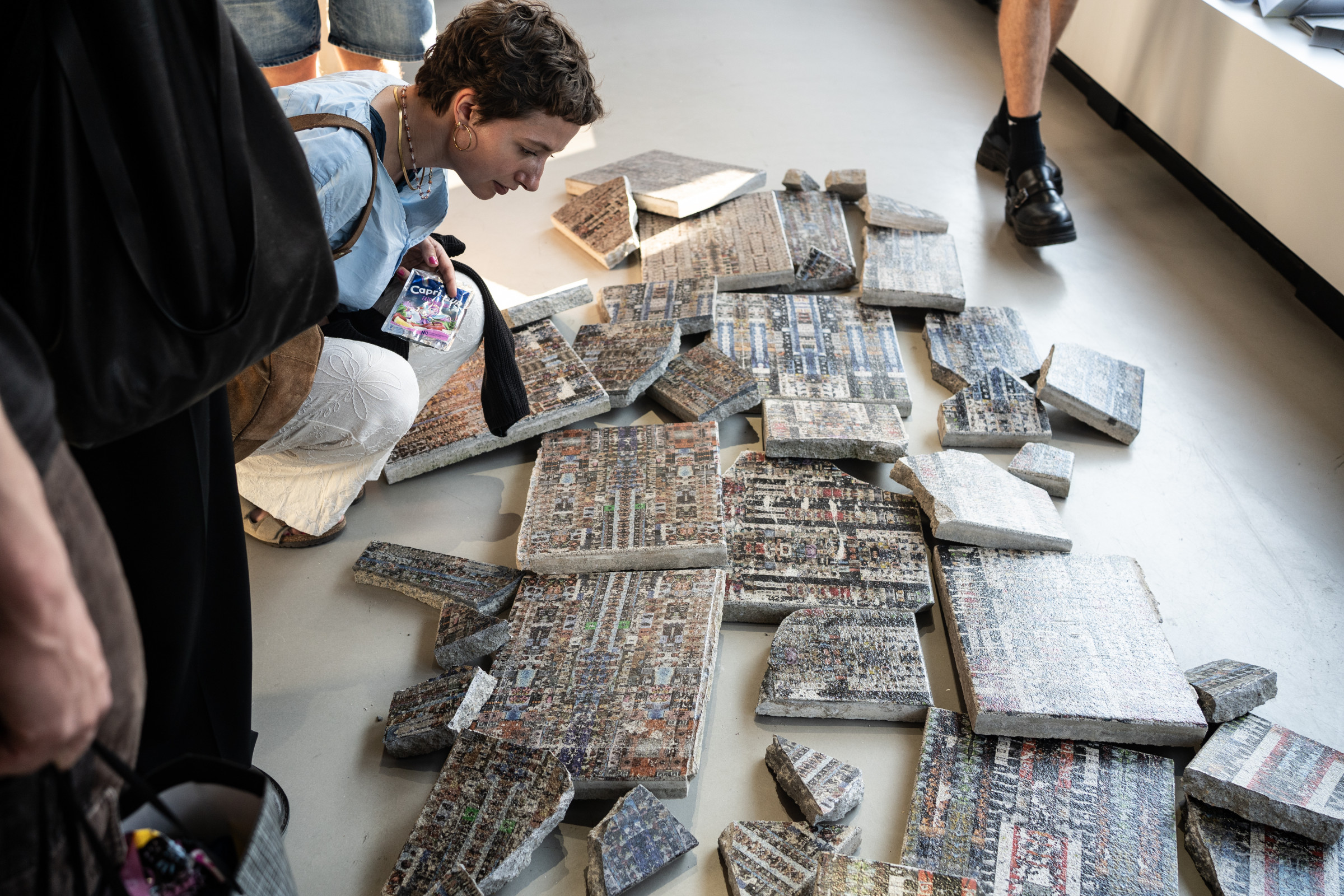
was sichtbar wird-all I might see 15
© sp ce | Muthesius Shi Shi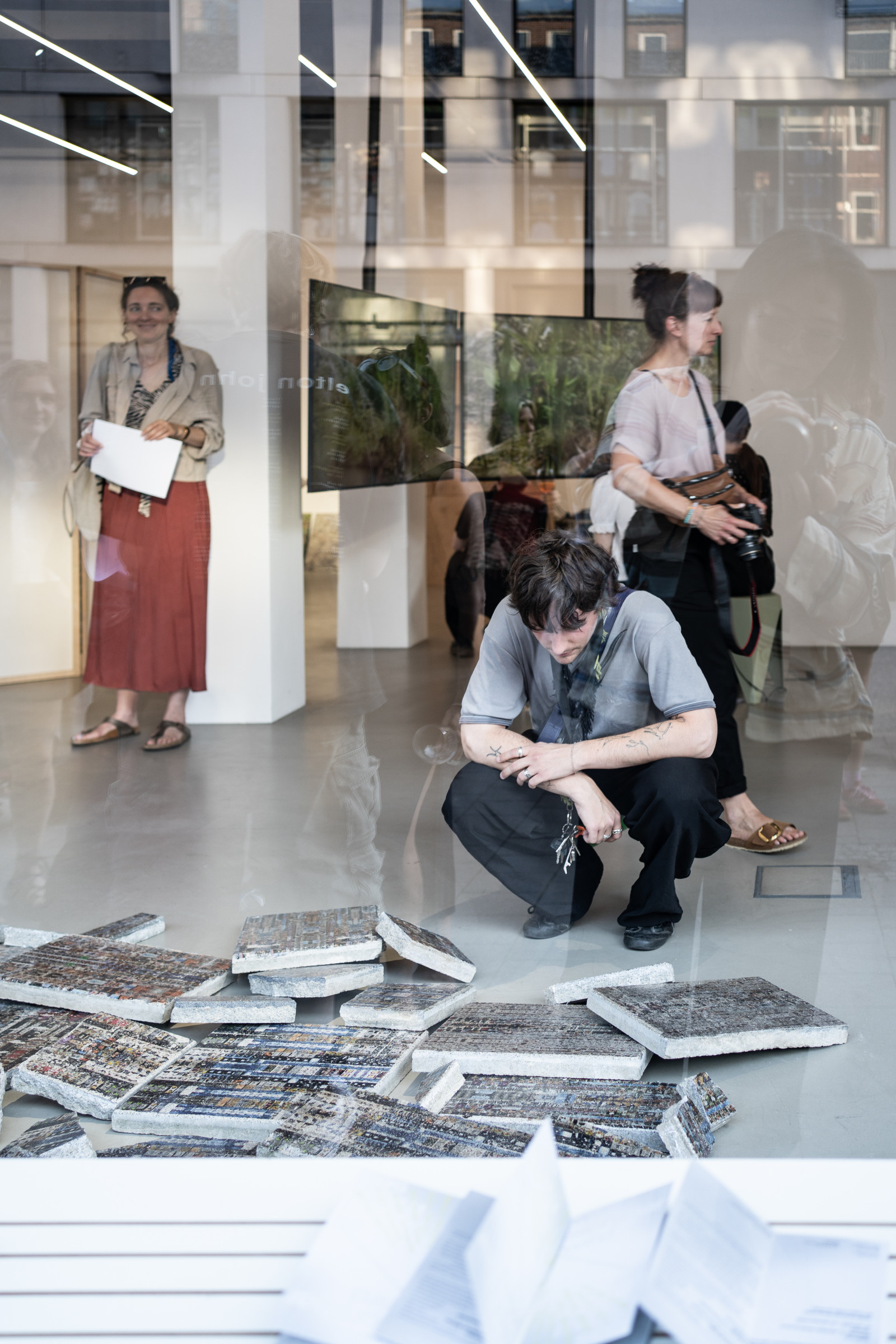
was sichtbar wird-all I might see 16
© sp ce | Muthesius Shi Shi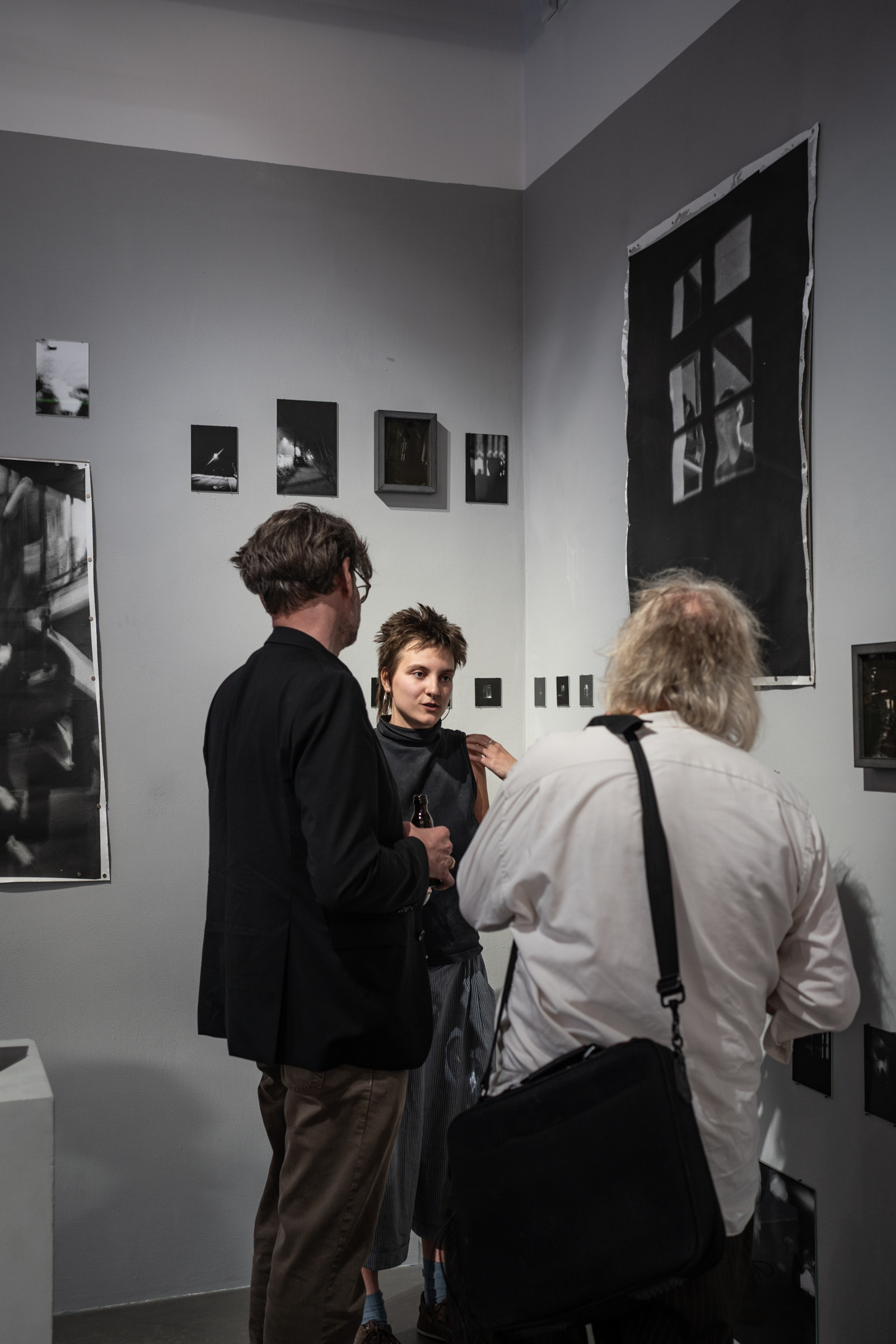
was sichtbar wird-all I might see 17
© sp ce | Muthesius Shi Shi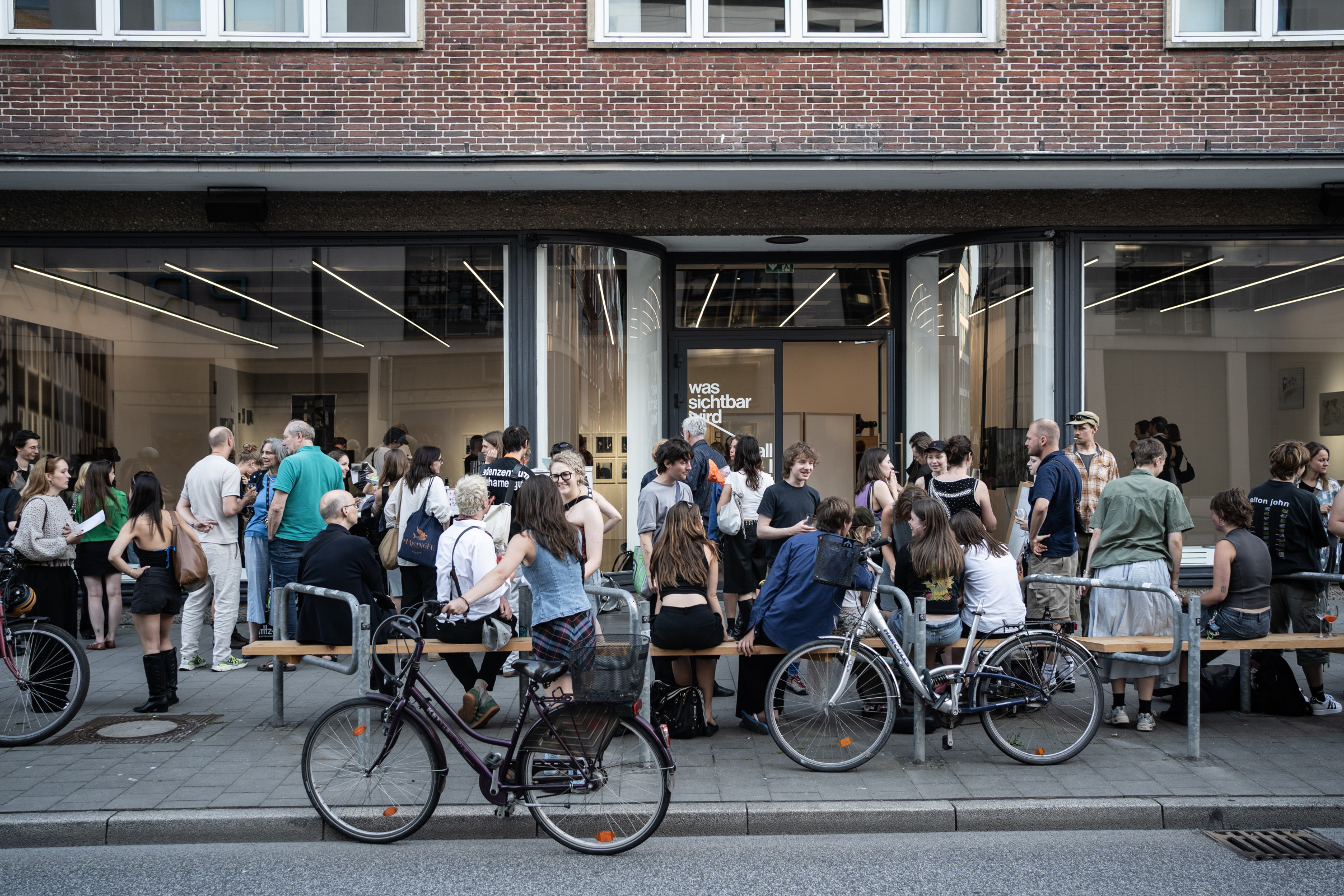
was sichtbar wird-all I might see 18
© sp ce | Muthesius Shi Shi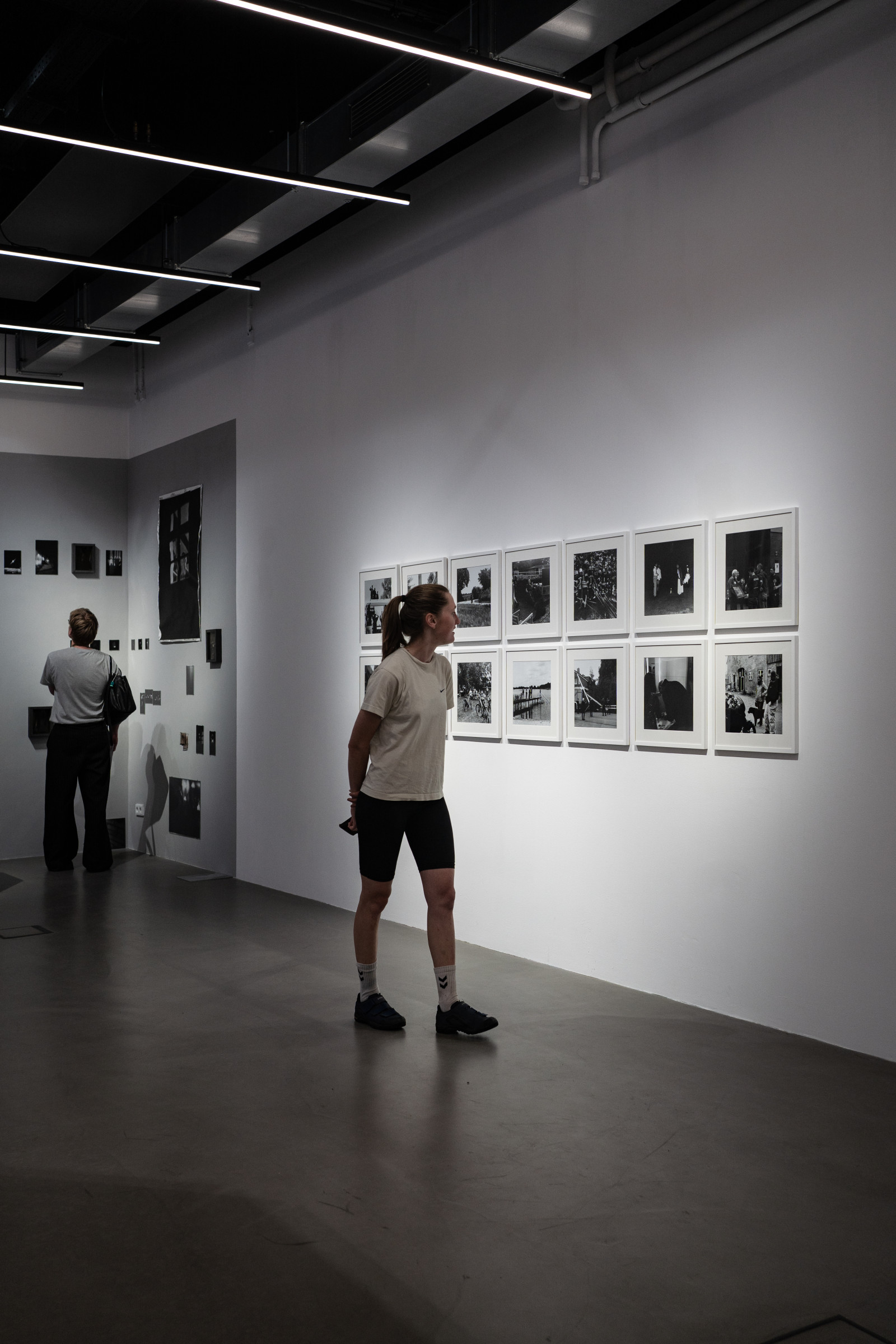
was sichtbar wird-all I might see 19
© sp ce | Muthesius Shi Shi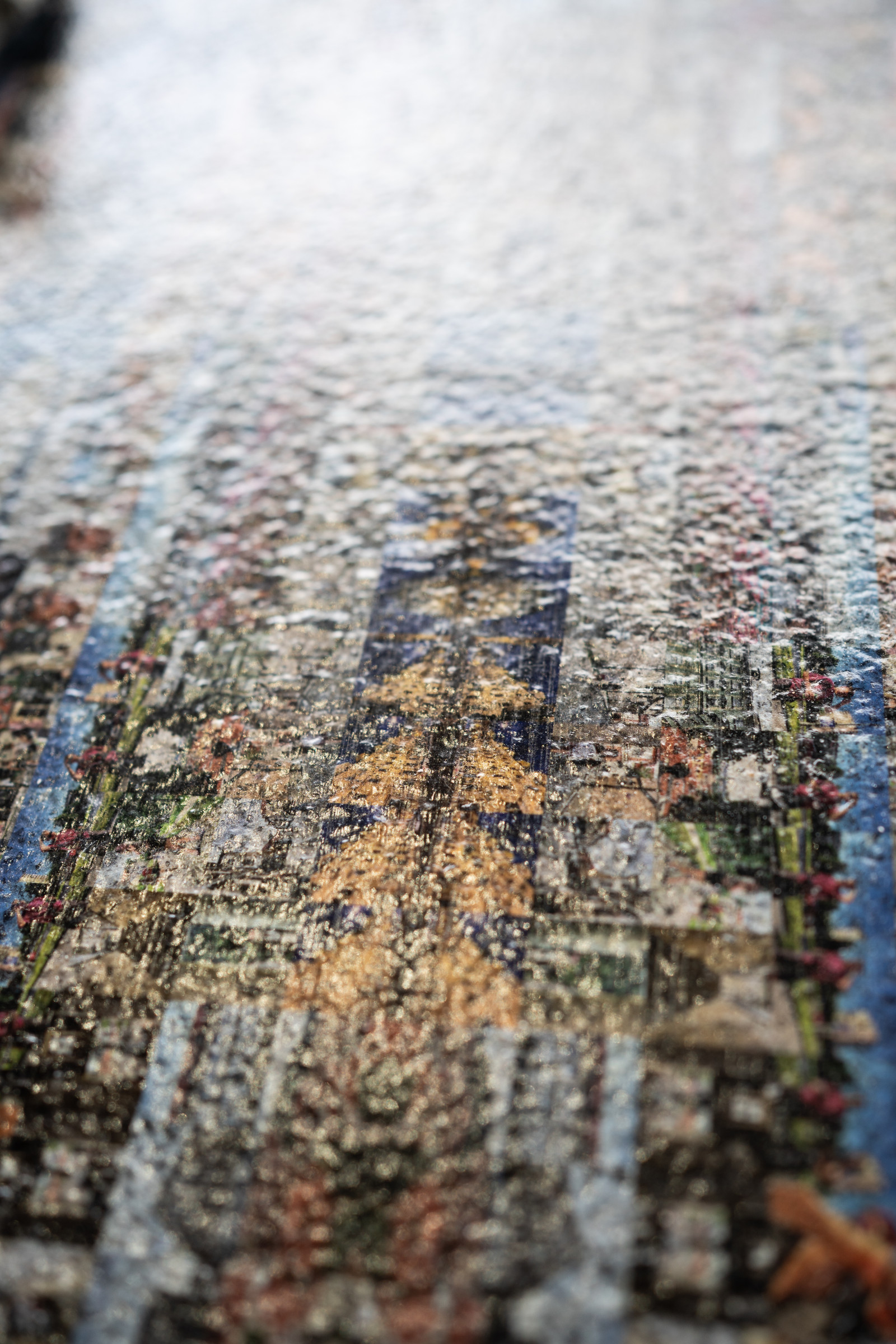
Individual Works
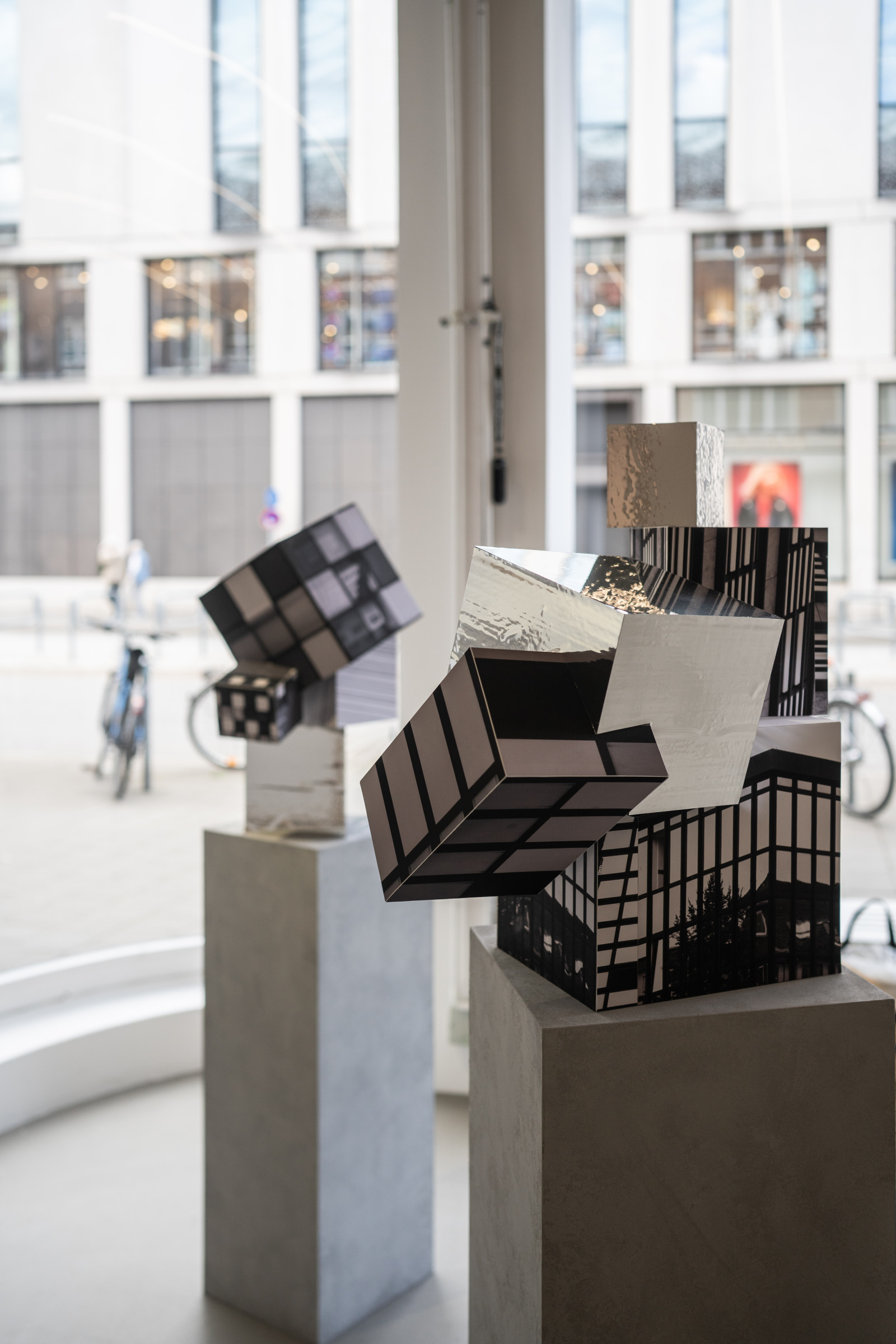
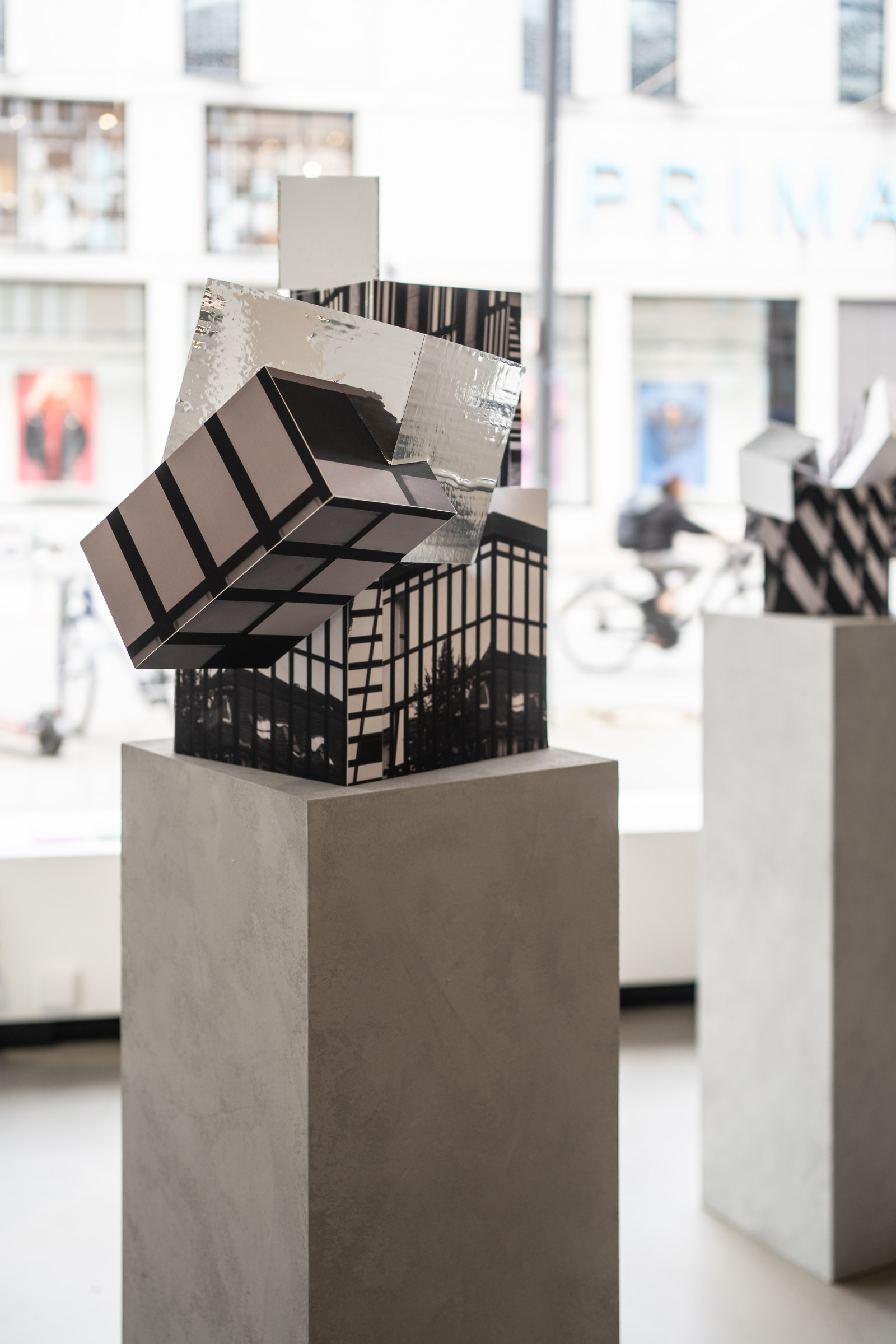
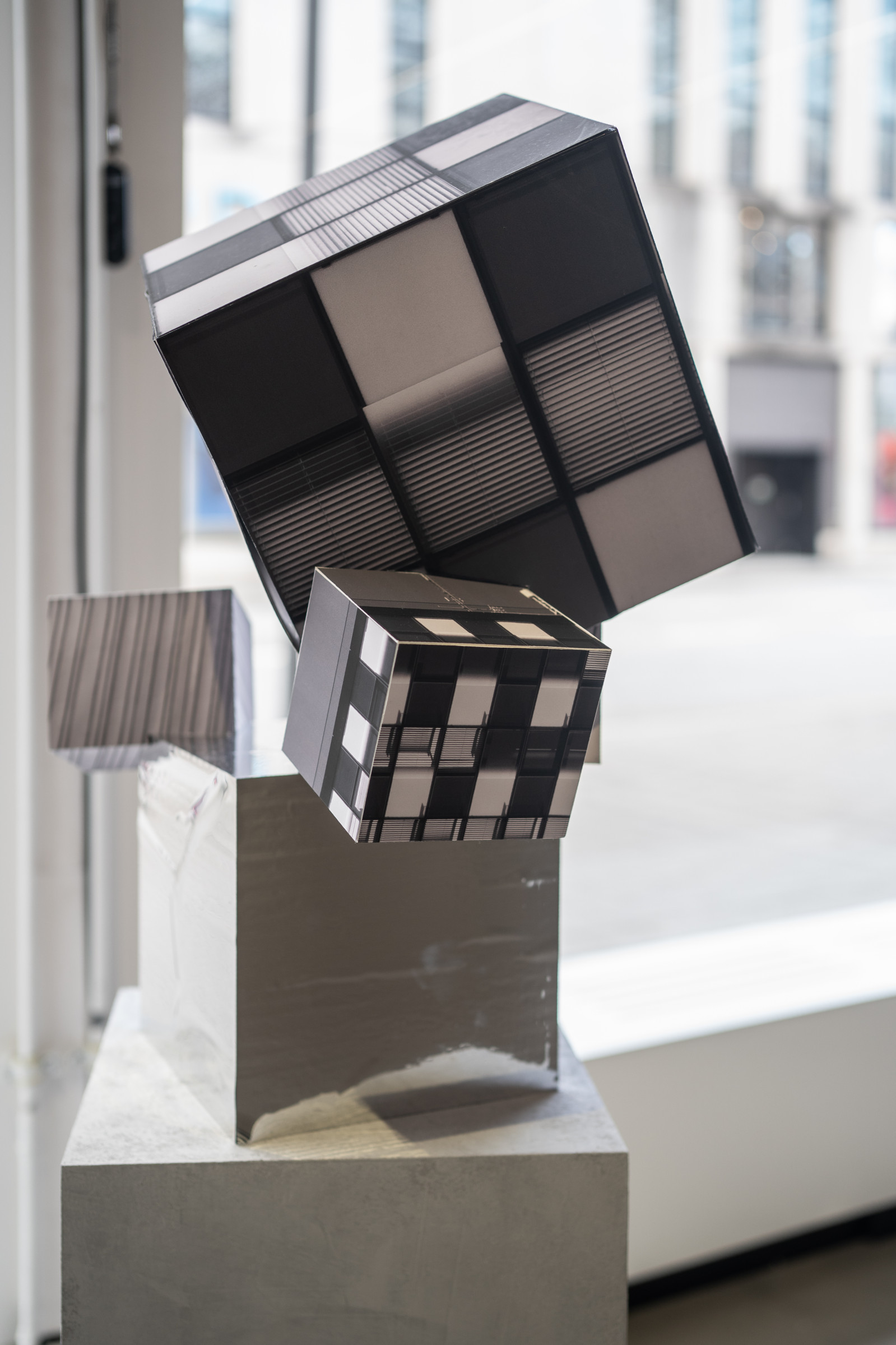
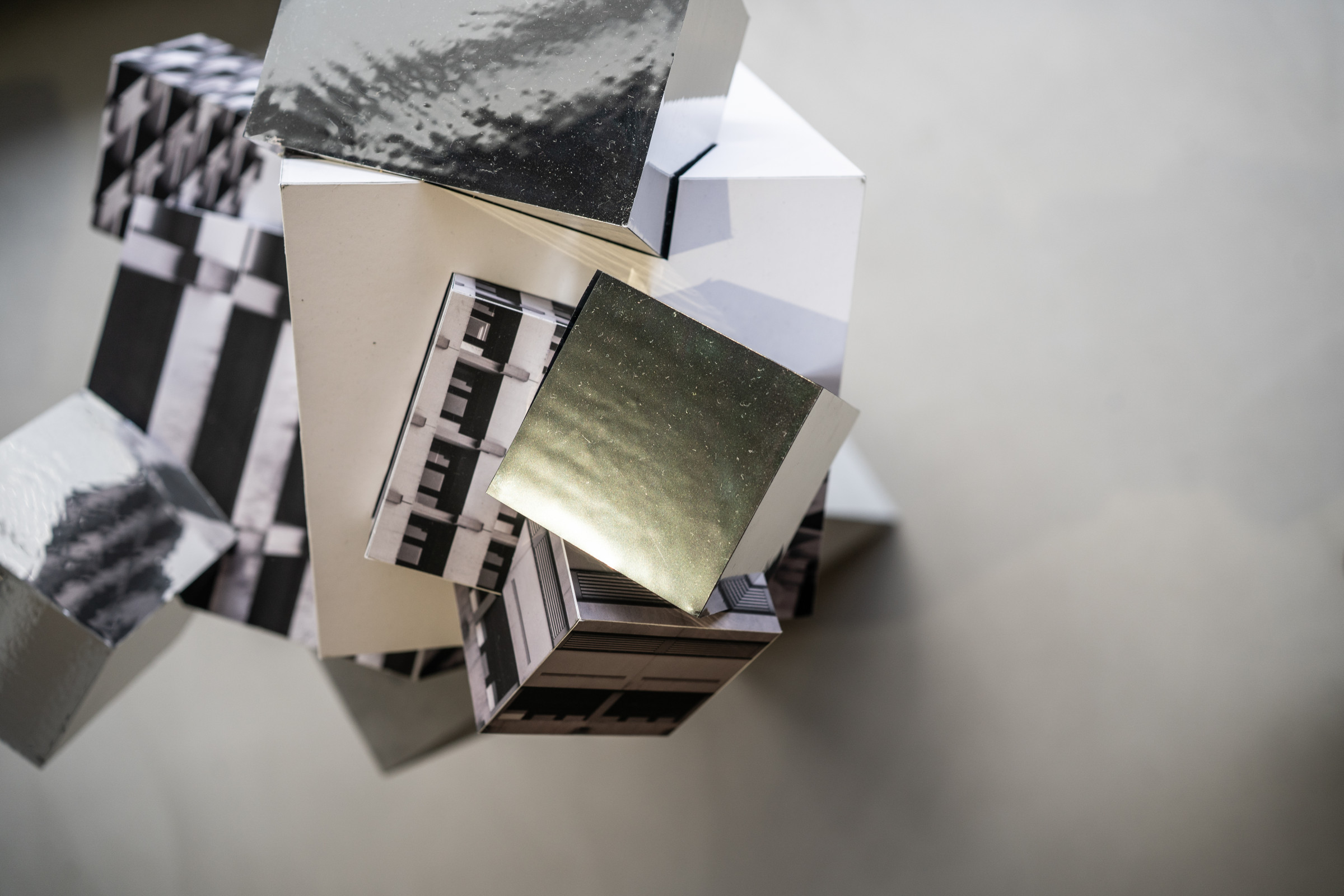
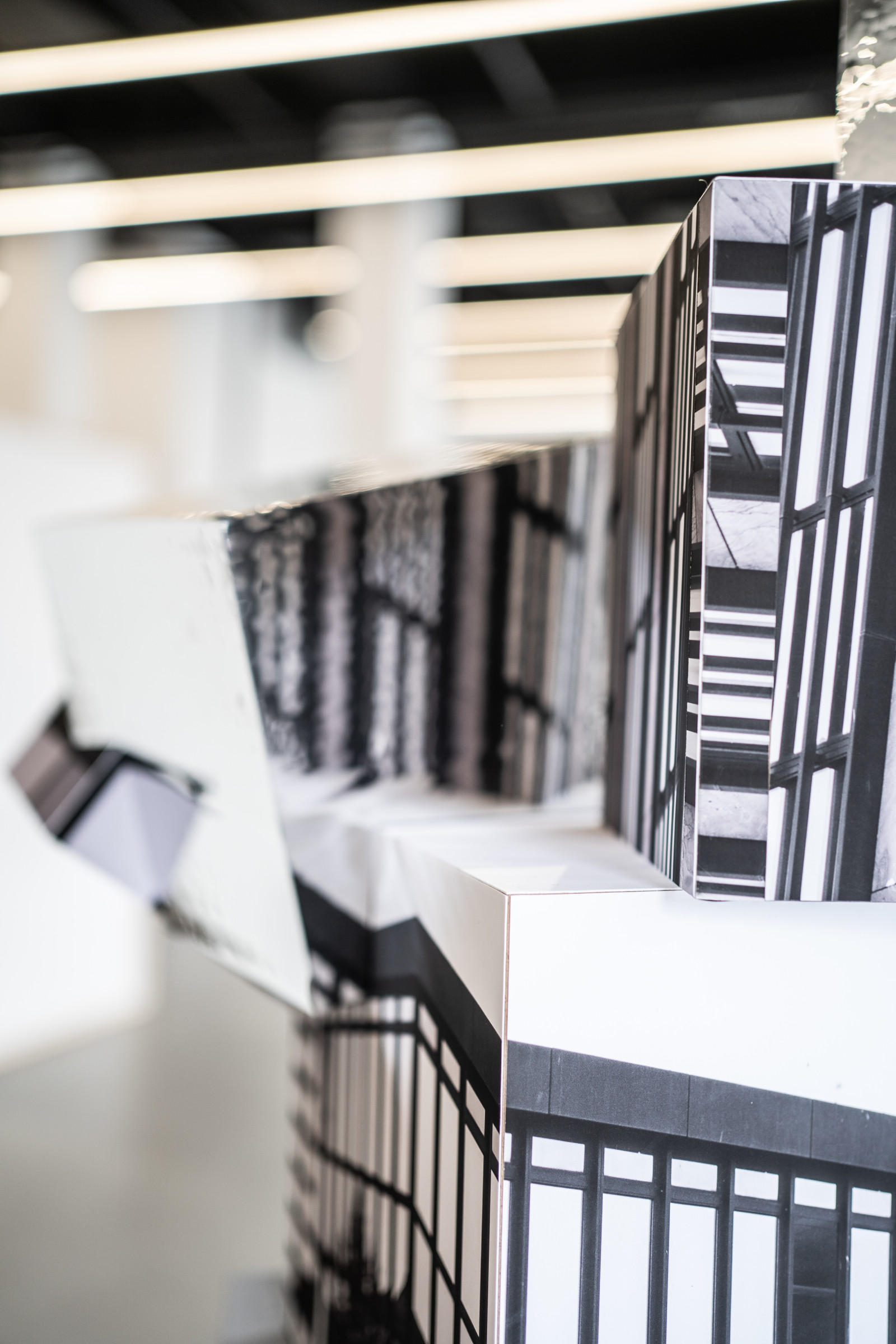
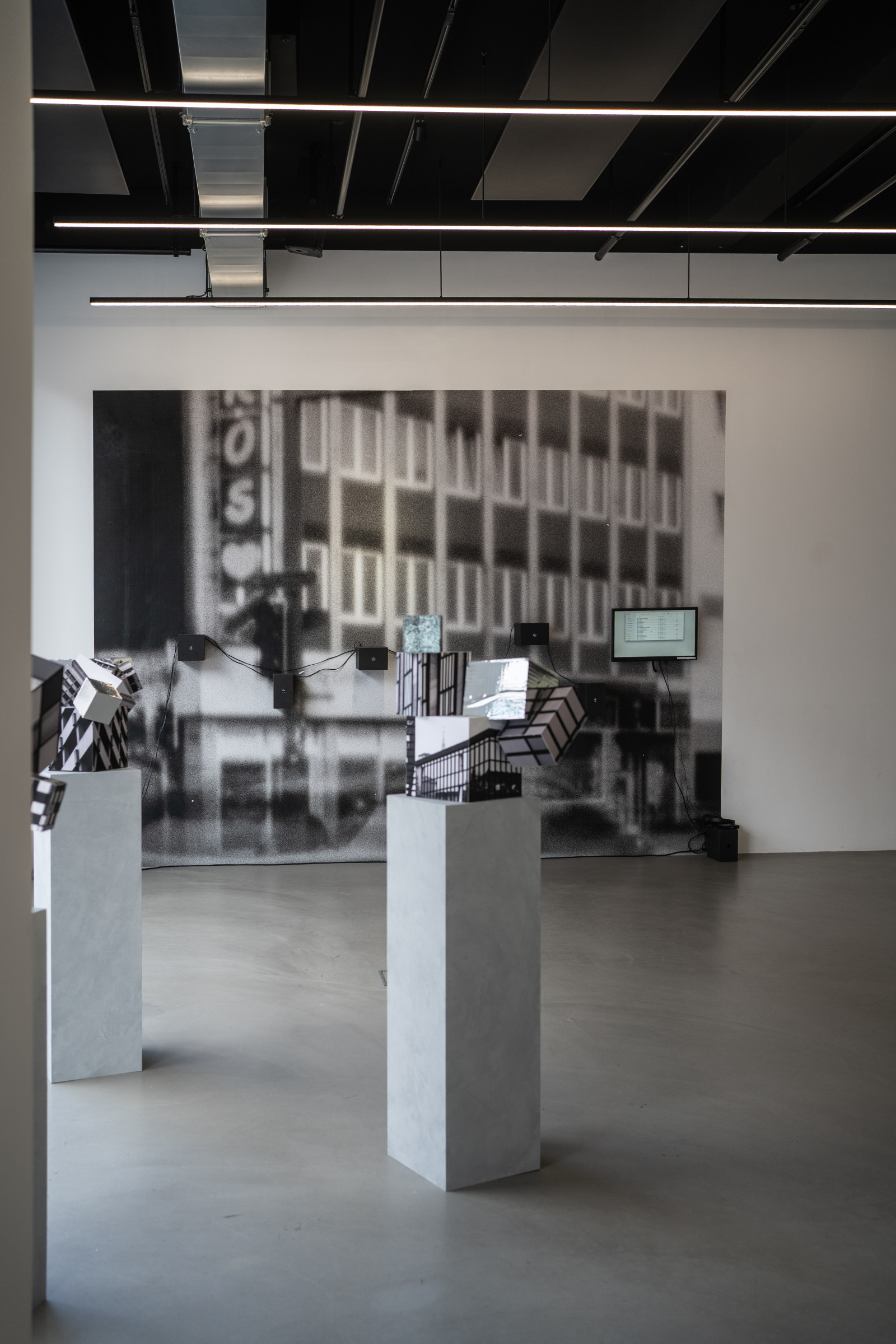
Isabelle Dapperheld – Pyrite, 2026
3D-printed plastic, MDF with photographs and reflective film
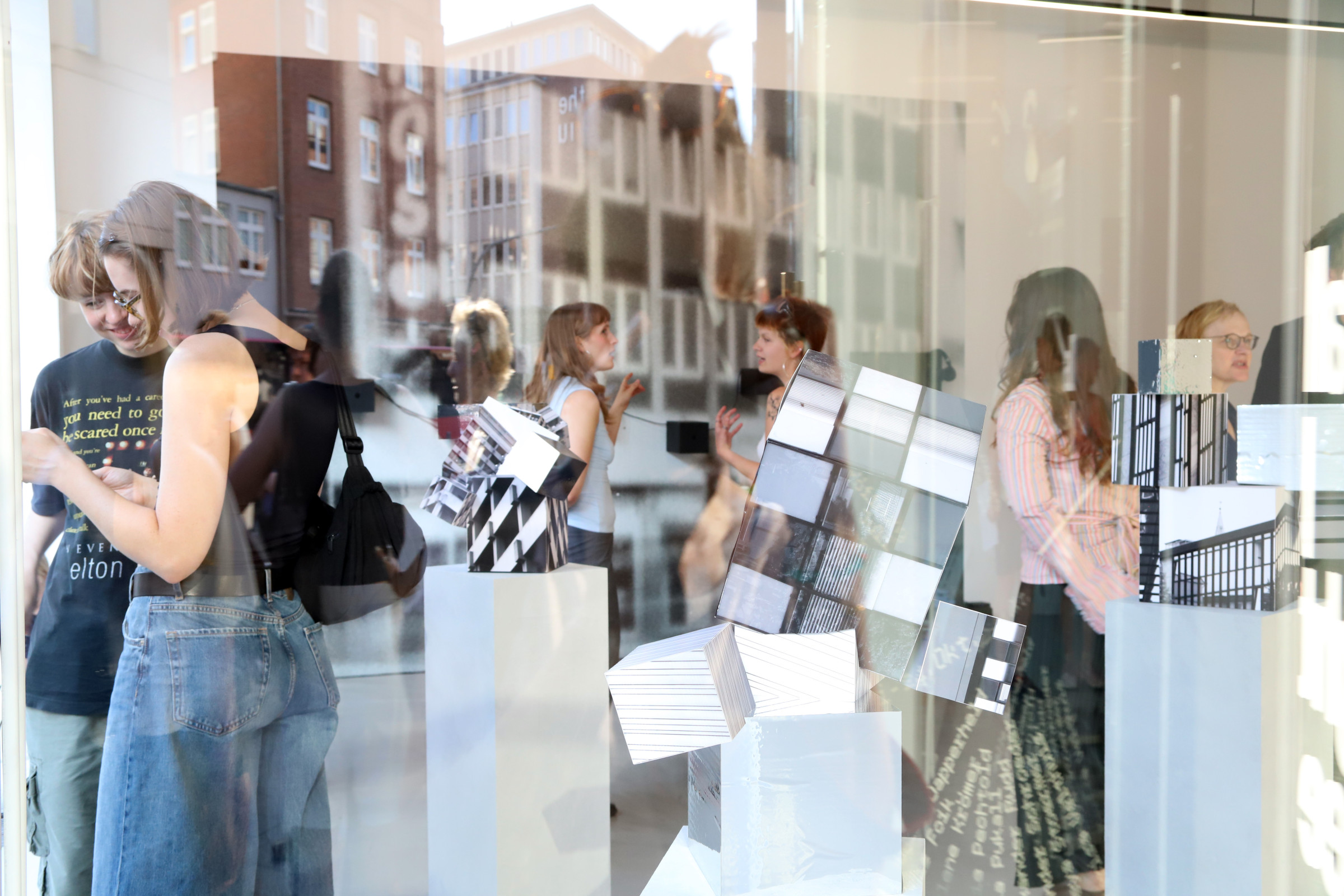
Enlarged mineral structures display digital photographs of architectural structures and reflective surfaces. Each object refers to a building in Kiel: the Federal Institute for Dairy Research, the tax office, and a building at the marina.
The superimposition of mineral form, photographic image, and reflective surfaces creates shifts in scale and perspective. The work explores formal analogies as well as the interplay between material, surface, and spatial perception.
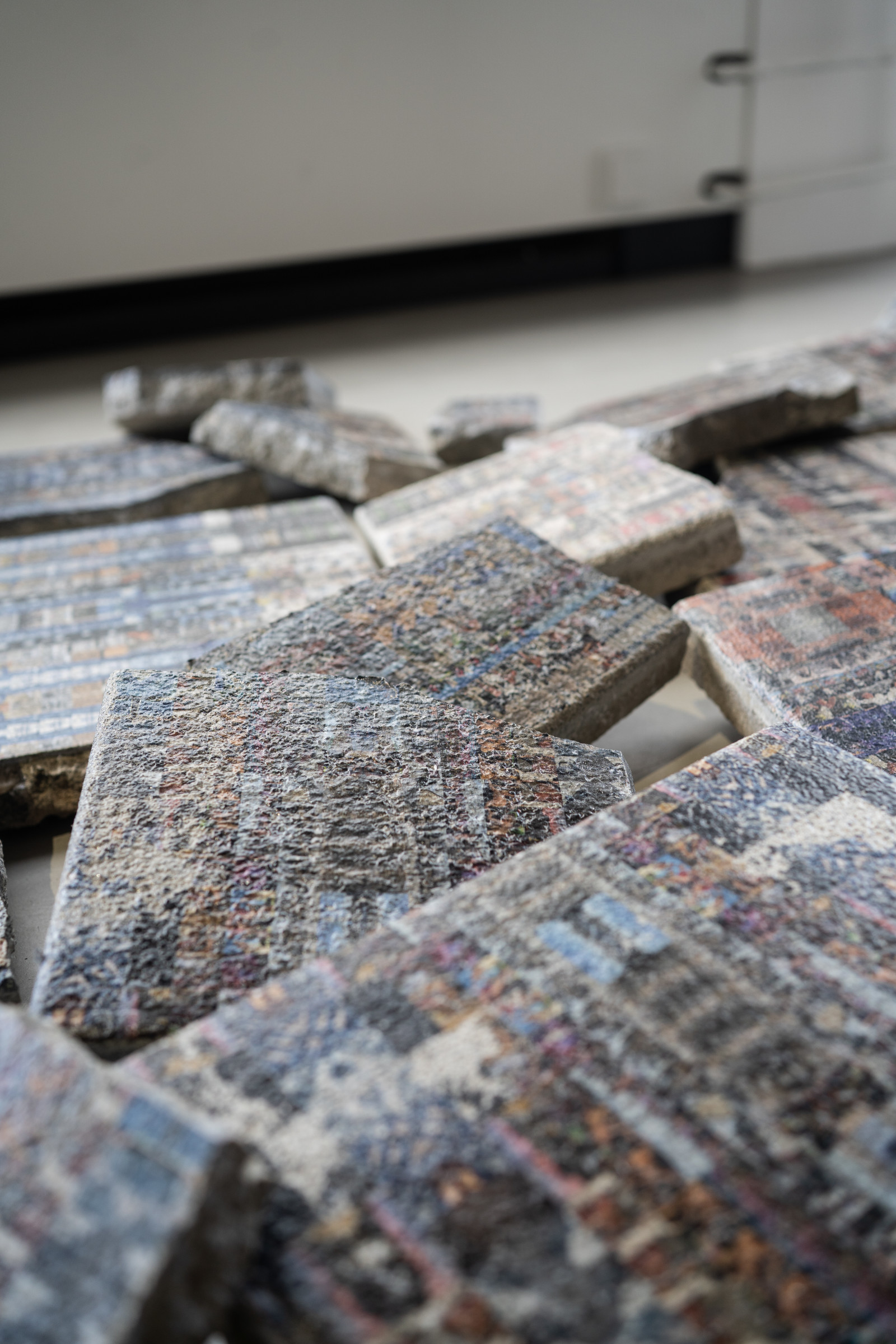
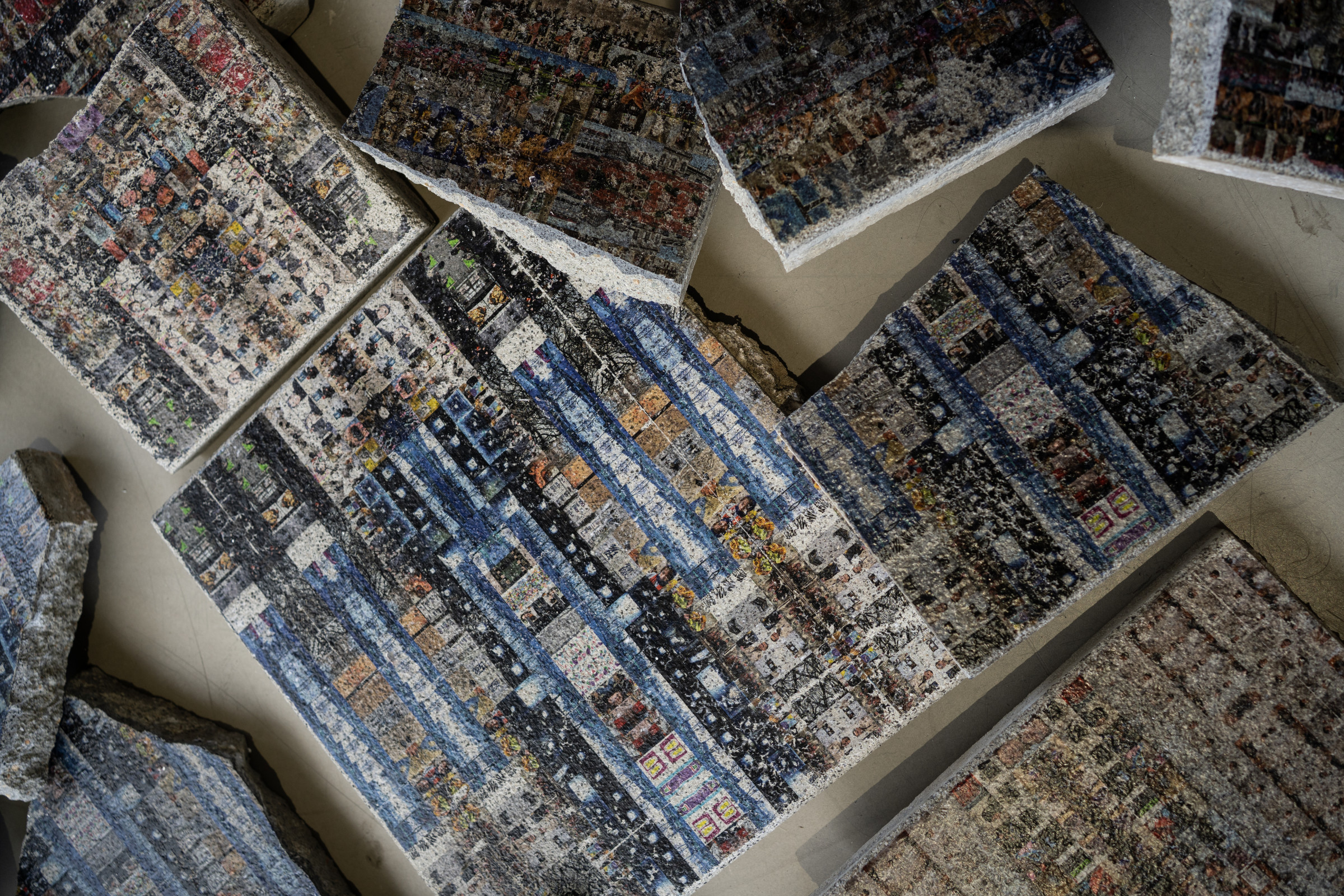
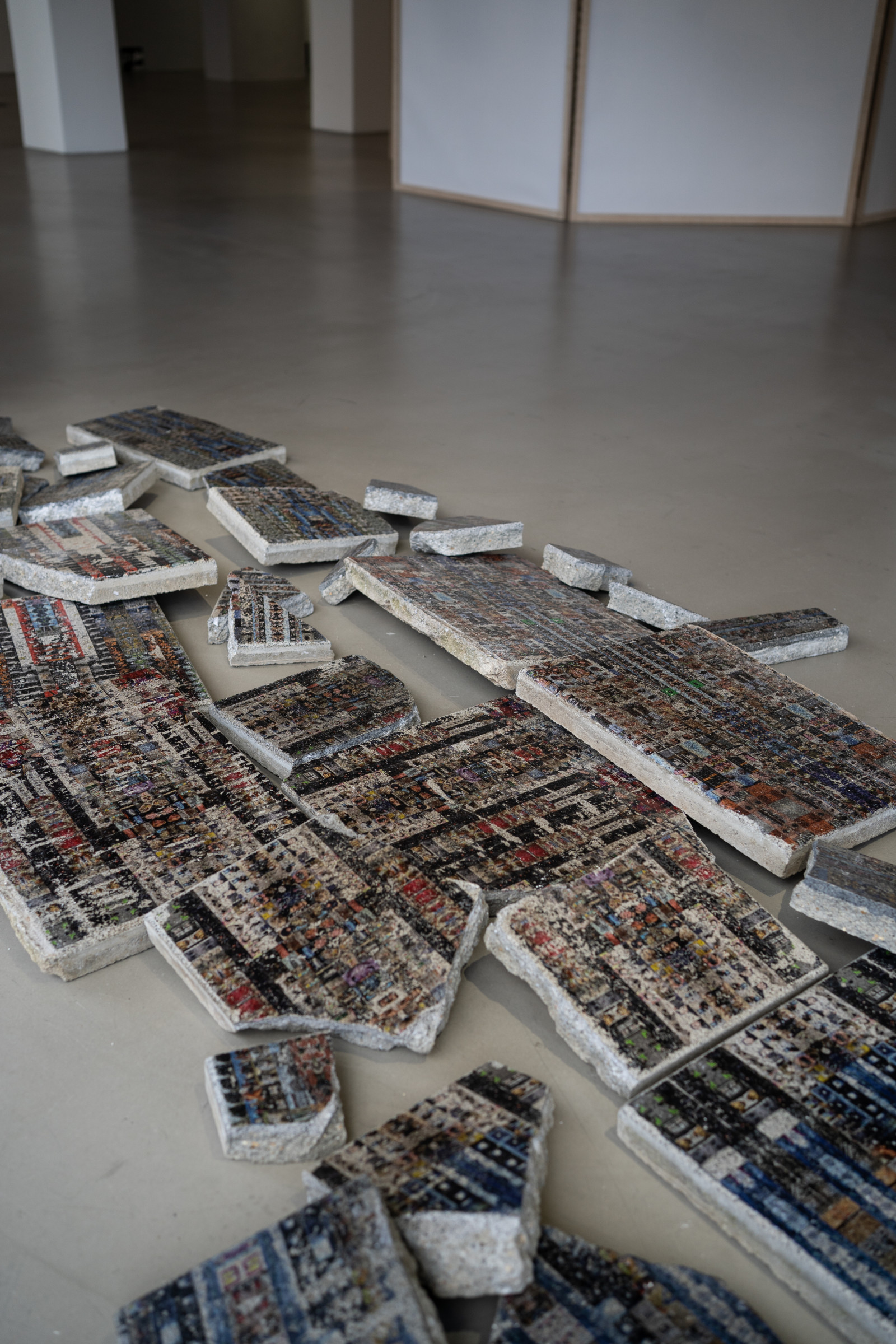
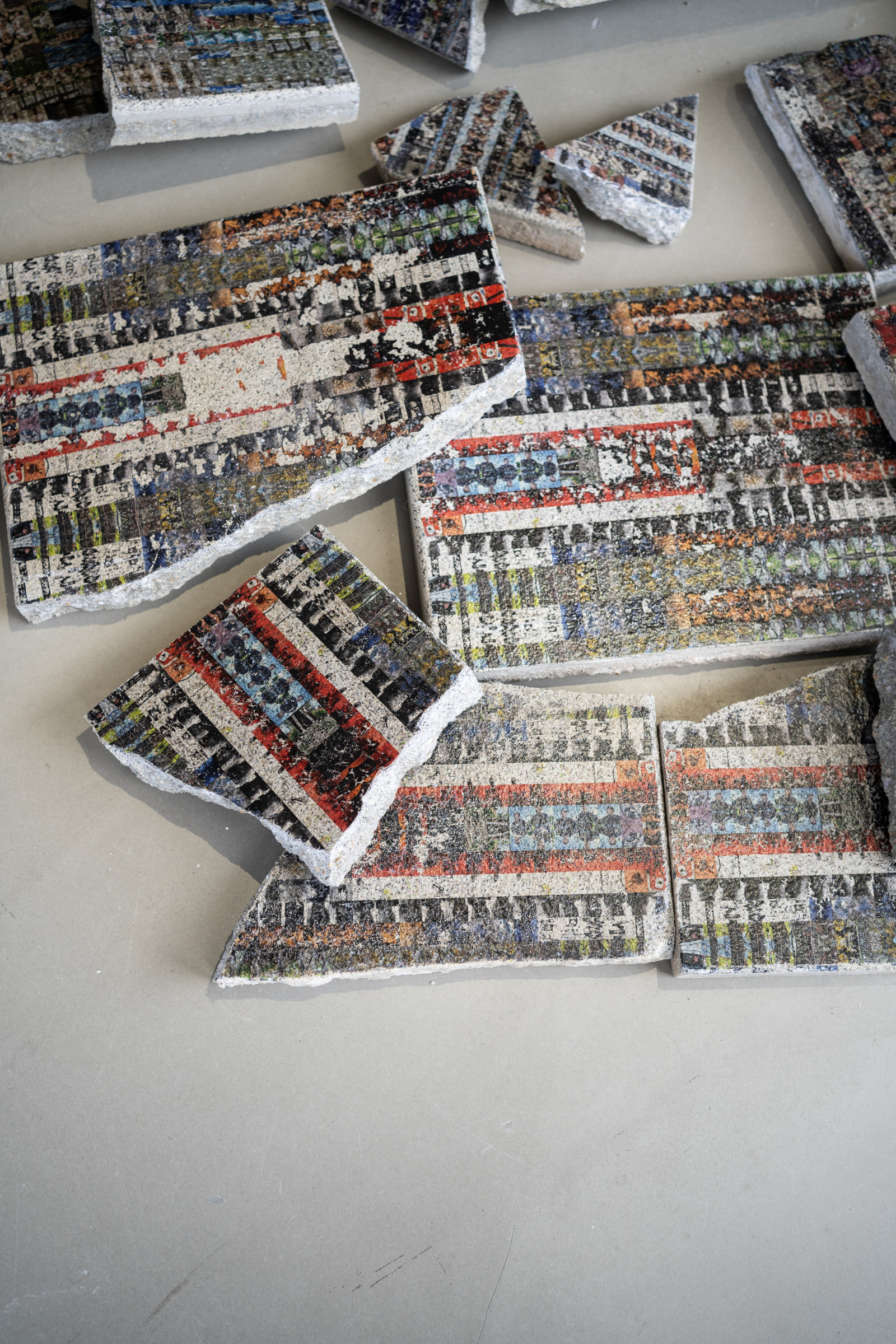
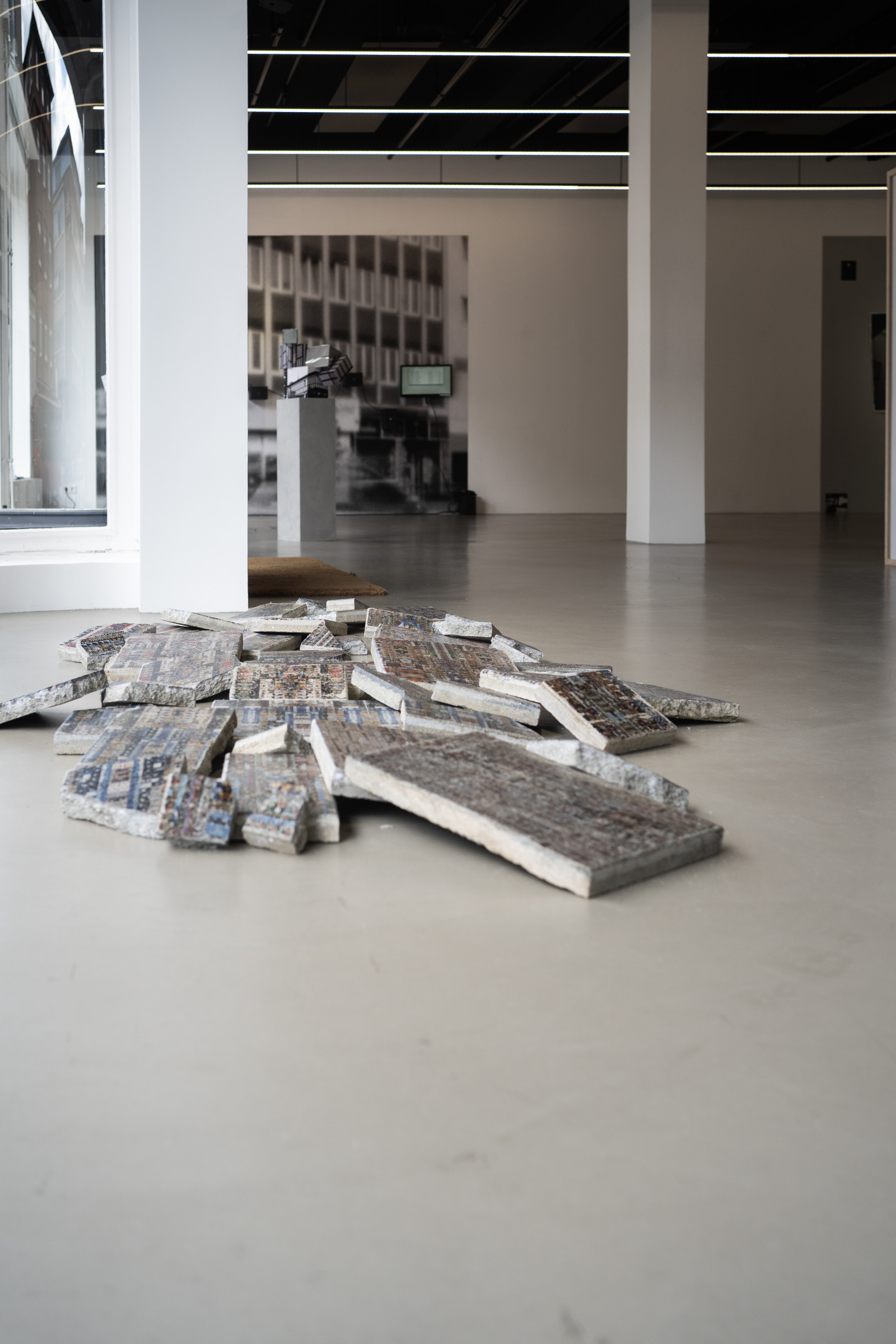
Denis Foik – On Ornaments: Stone & Fragment, 2026
Smartphone Gallery, laser-print transfer process on stone slabs (1,232 / 7 / 40)
Ornamental compositions were arranged from individual photographs in the artist’s smartphone gallery and transferred to stone slabs through a process of transformation.
As the stone slabs shatter, the ornaments break free from their original form and appear only as fragments. Viewers are denied access to the individual photographs, and their gaze is focused on the object as a whole.
The individual slabs come together to form a stone structure that bears traces of collection, transfer, and alienation. The work explores the evolution of ornamental design and the increasing decline of ornamentation in public spaces.
At the same time, two different forms of the archive converge: the ephemeral, digital visual memory of the smartphone gallery and the durable, heavy stone. Between photography, material, and fragment, a dialogue emerges around memory, transformation, and the question of how ornaments are preserved, altered, or lost.
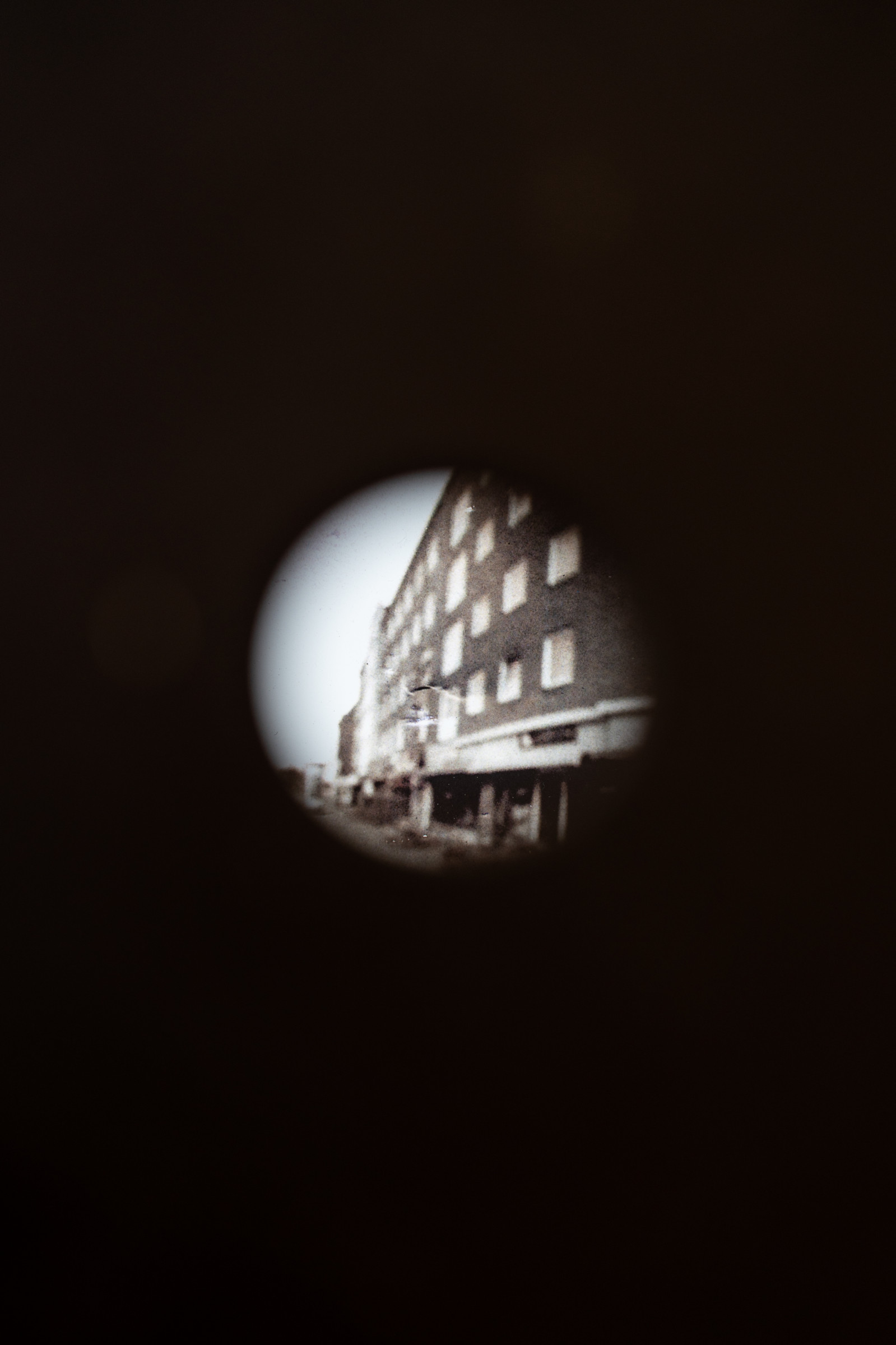
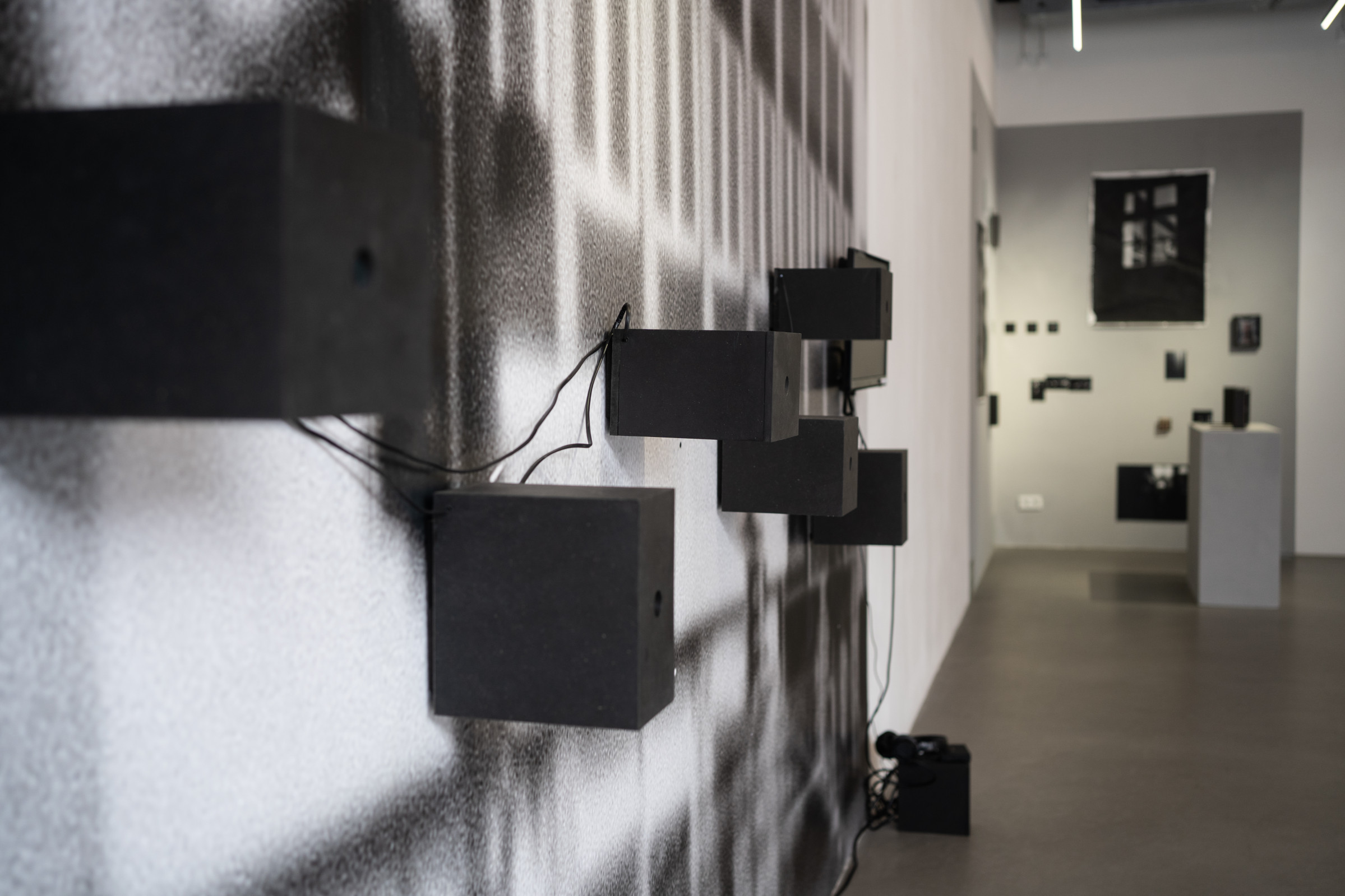
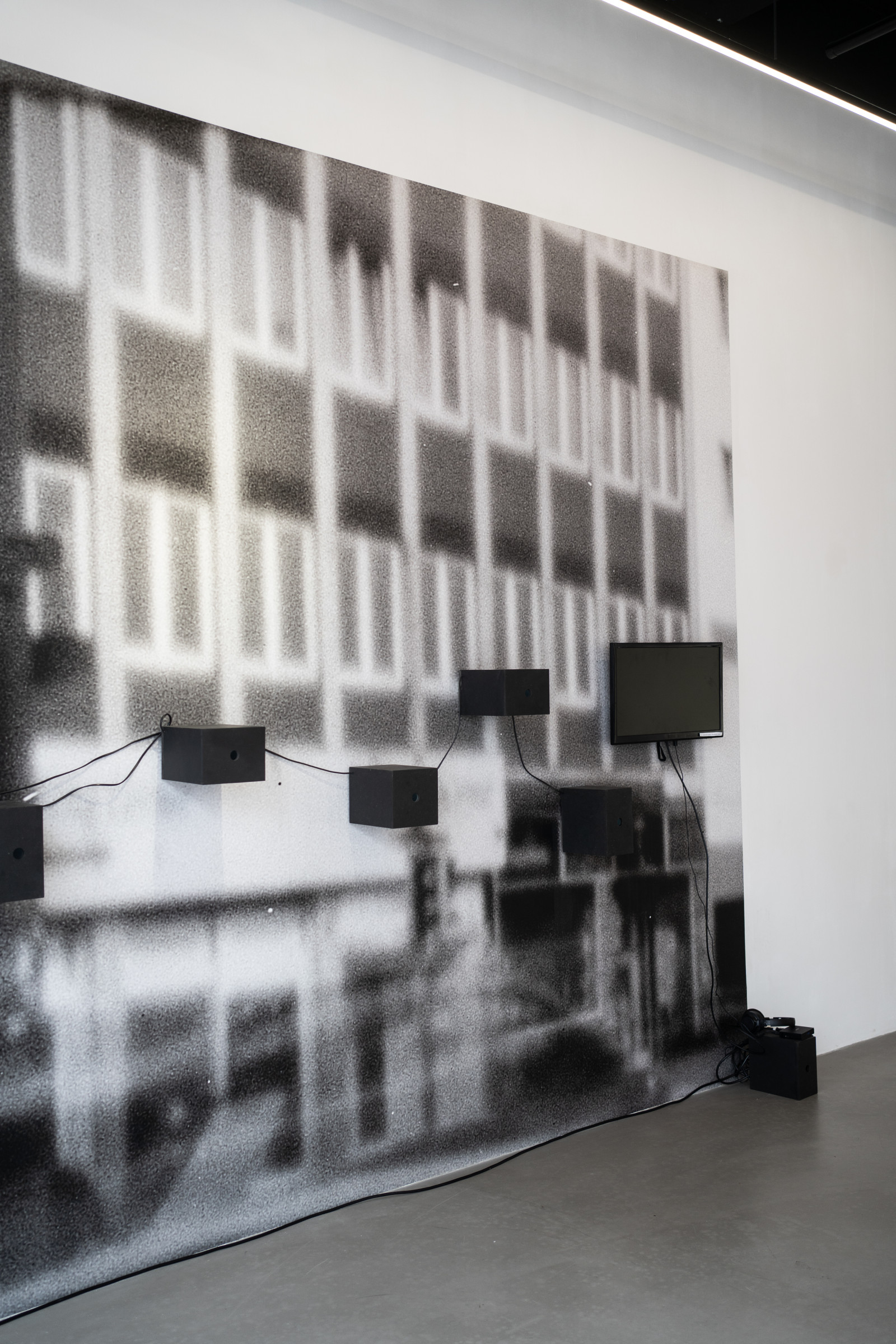
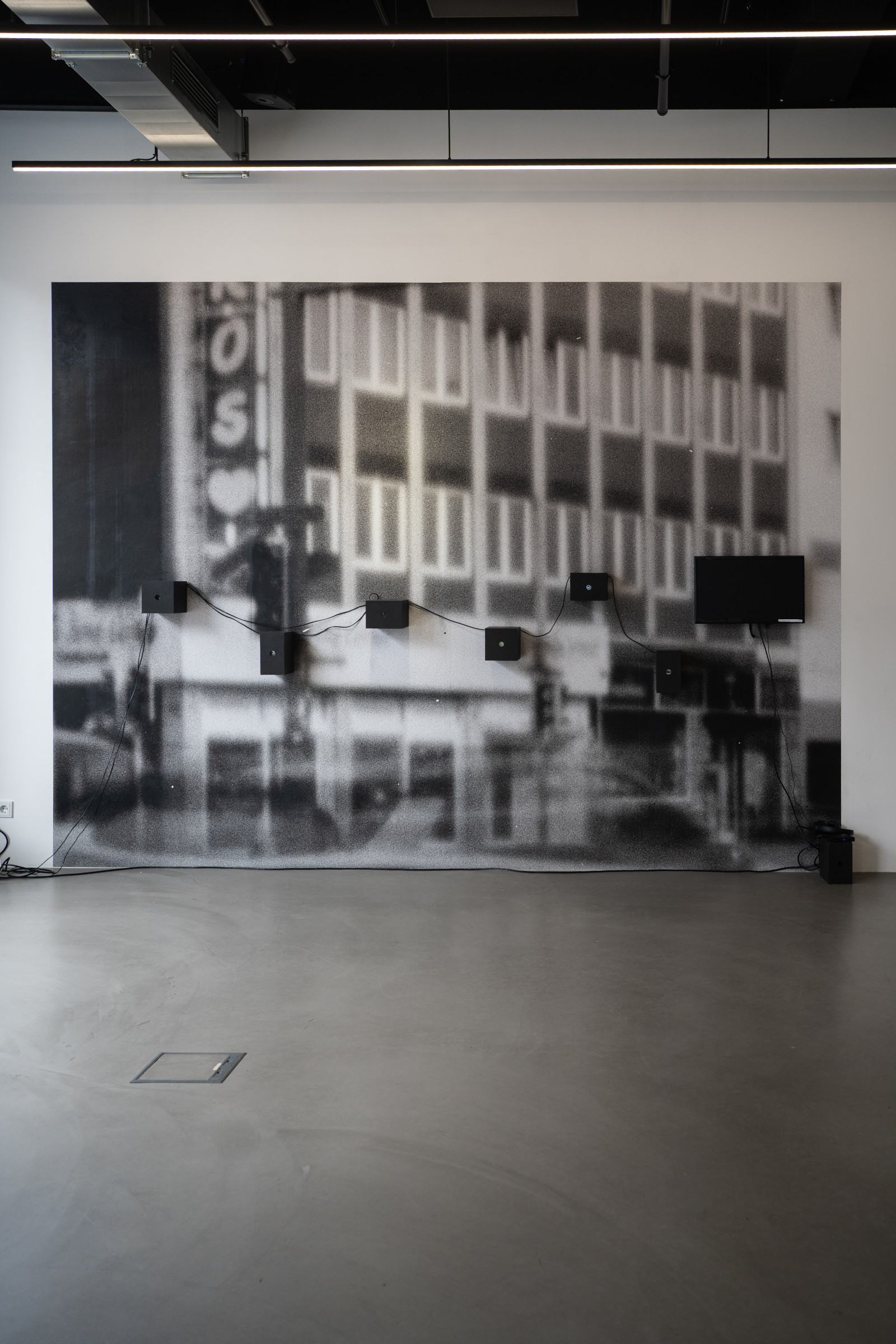
Marlene Krömer – Alias, 2026
Mixed media comprising 6 digitized analog photographs, photo wallpaper, video (2:08 min)
An old soda can with a hole in it.
A secret glimpse of a faceless presence.
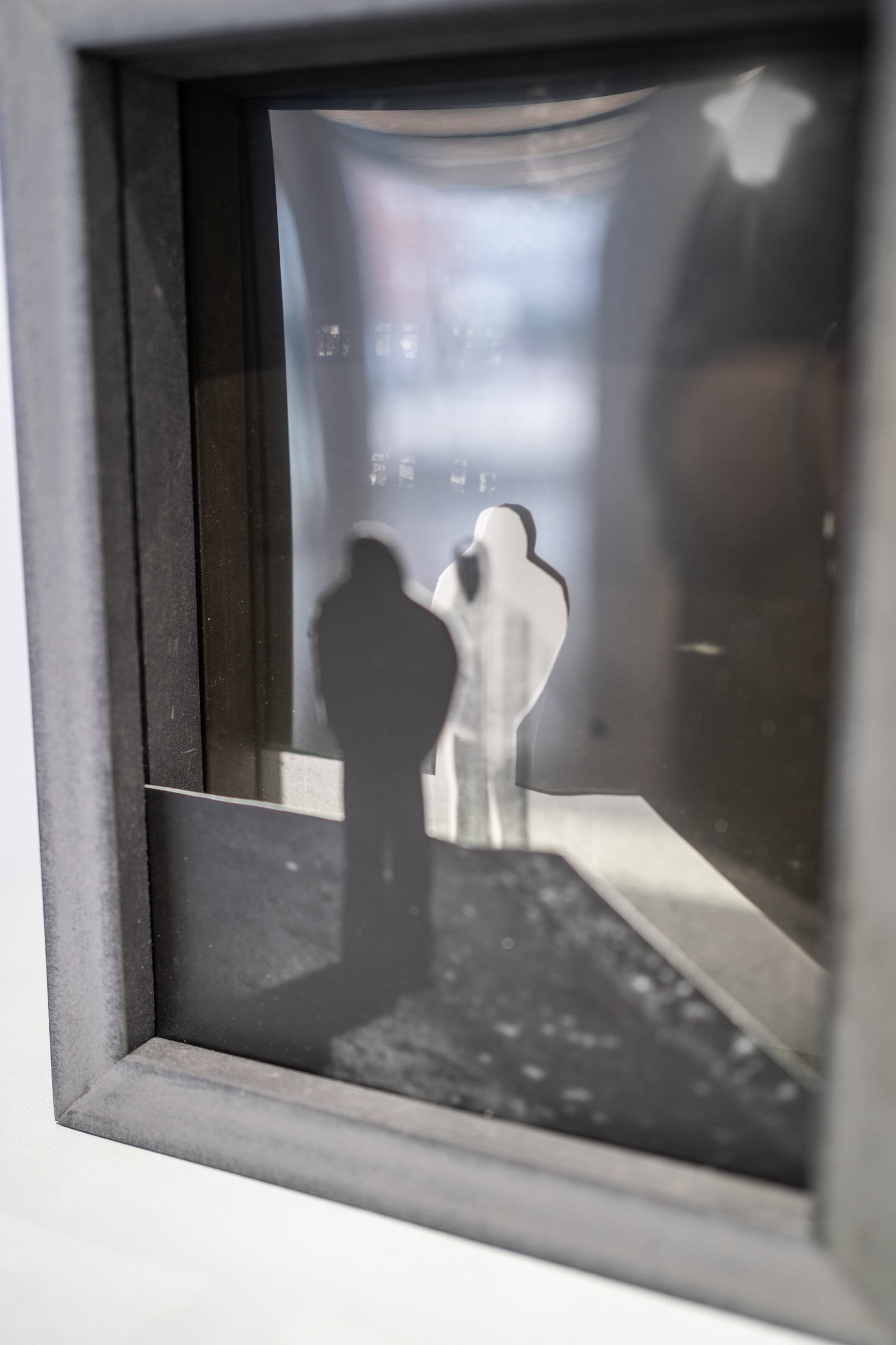
The work *Alias* presents portraits of the clientele at the Eros Center in Kiel, collected over the course of several weeks. Using homemade pinhole cameras—which, with an exposure time of approximately seven days, obscure any direct information about the presence of the clients—this project reflects on invisibility while simultaneously highlighting the obviousness and permanence of the brothel as an institution.
Through a small hole, we see everything and, ultimately, nothing. Here, photography conveys the fundamentally systematic exploitation of (mostly) female bodies through the depiction of the architecture. The anonymity that clients enjoy in this society is not only a social consensus; it is protected by law. Unlike sex workers, they are not required to show identification and generally operate under aliases.
In professionally structured “client forums,” they anonymously exchange stories about their experiences online, indulge in violent fantasies, and show solidarity with one another. Both in the analog and digital worlds, the protection of clients is systematic.
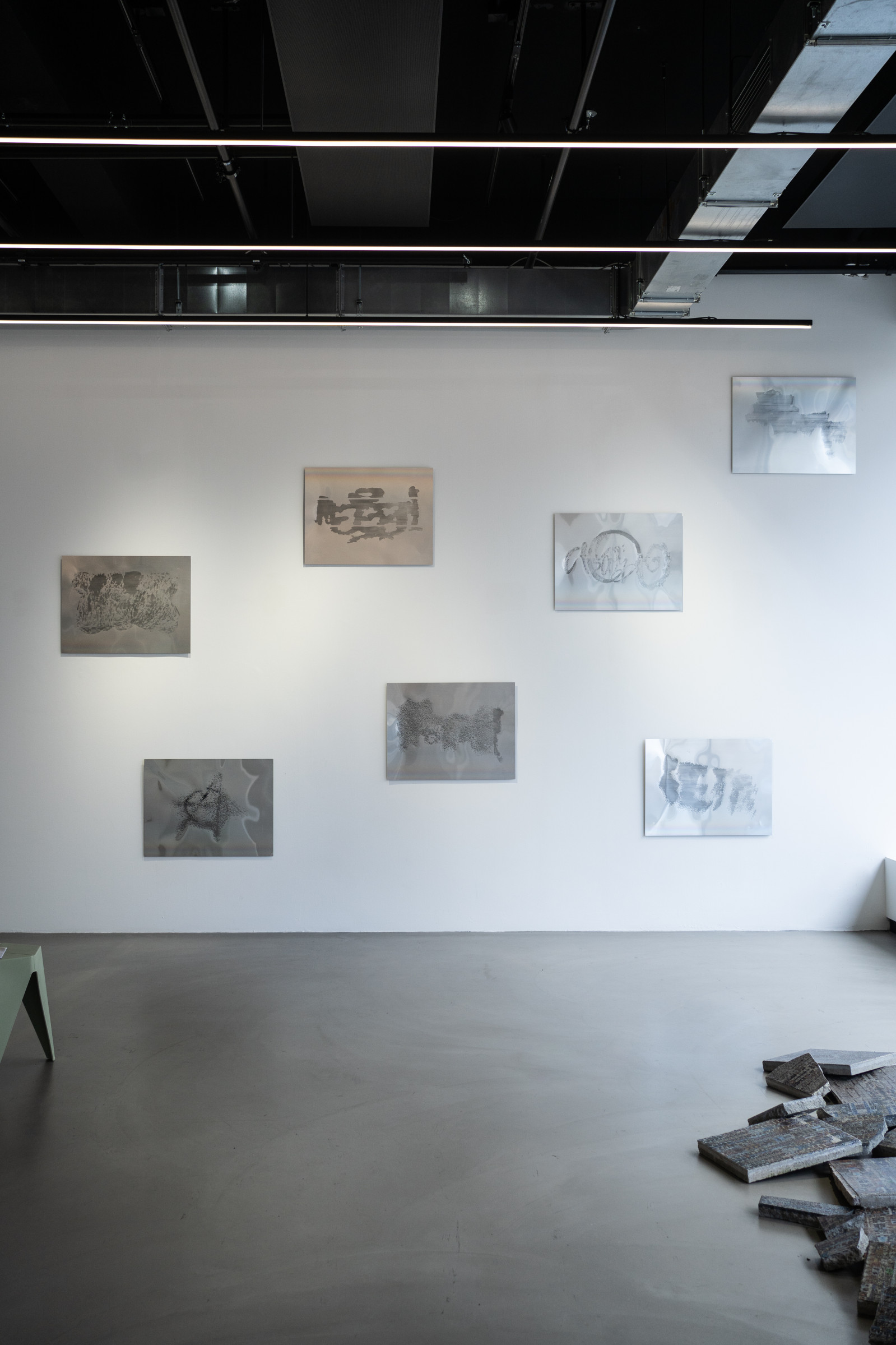
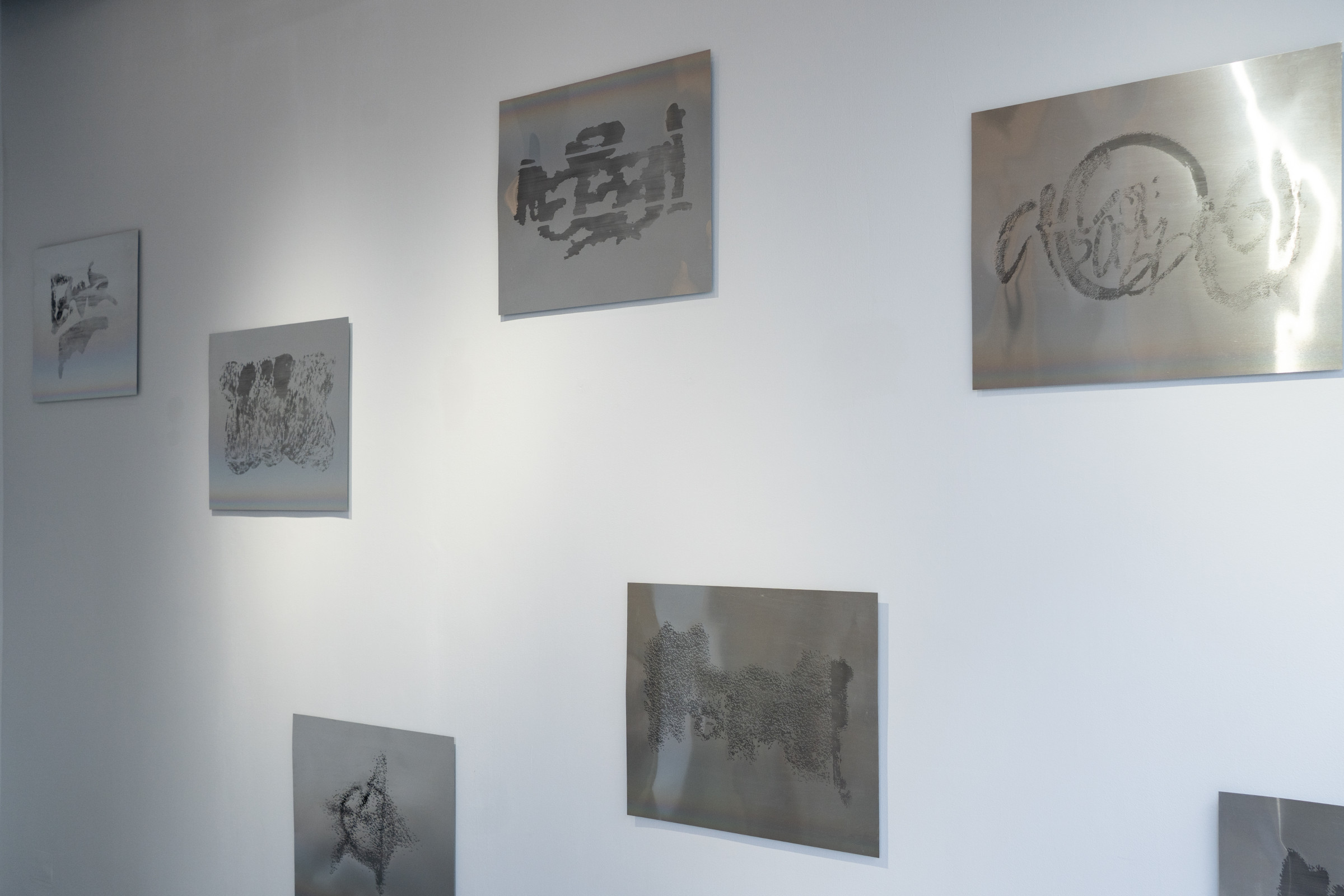
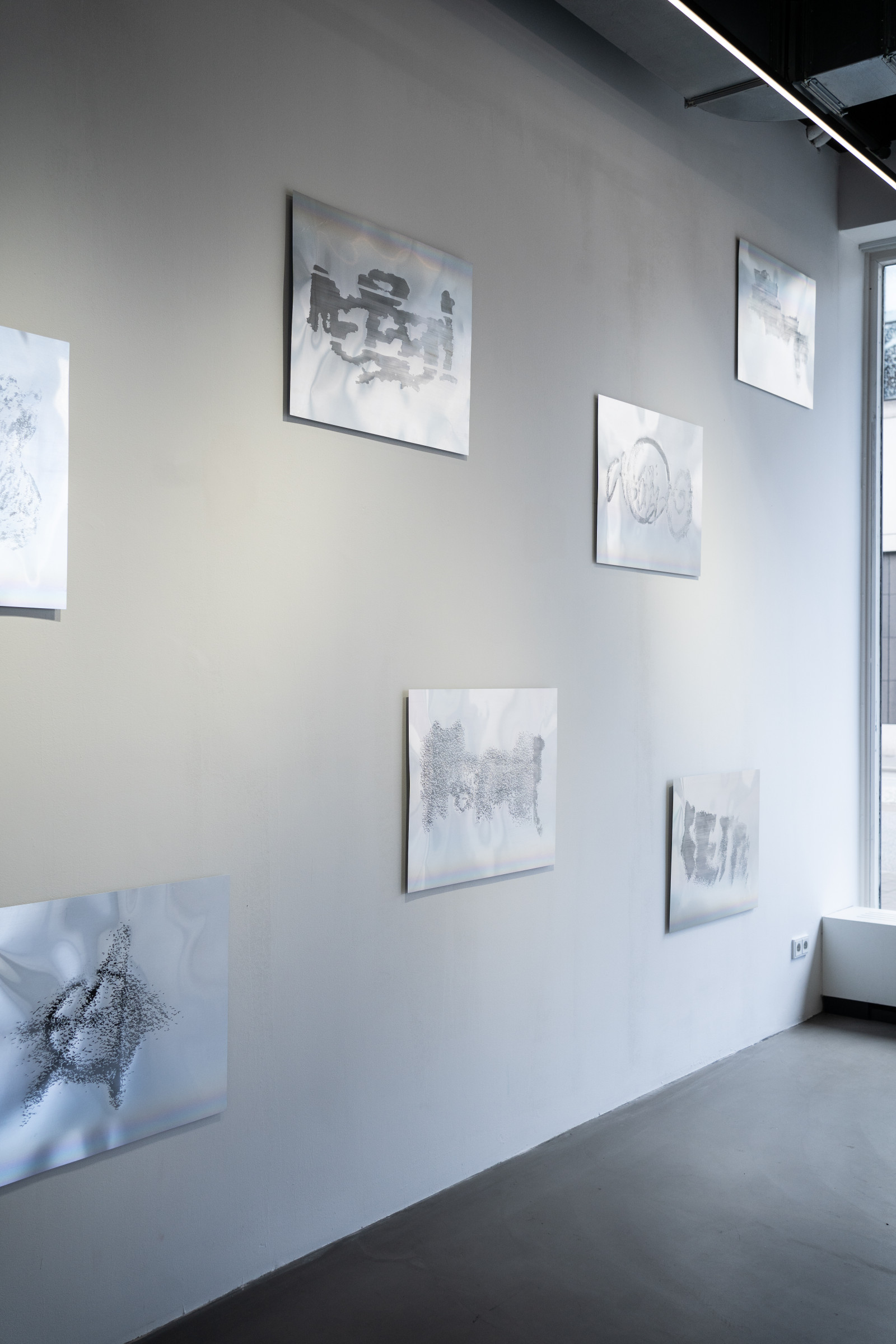
Amelie Pechtold – Silent Conflict, 2026
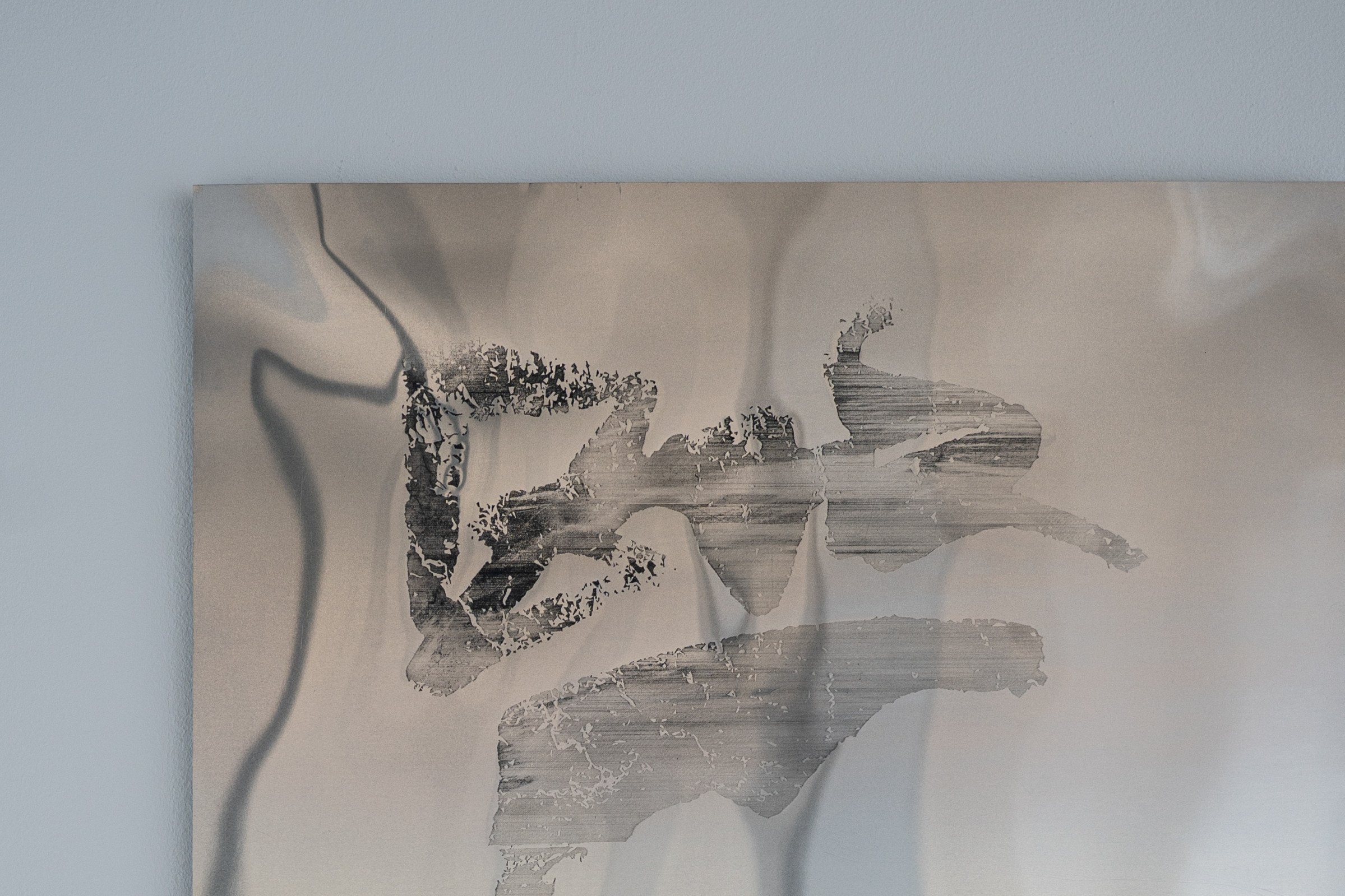
aluminum panels, each 74.5 x 56 cm
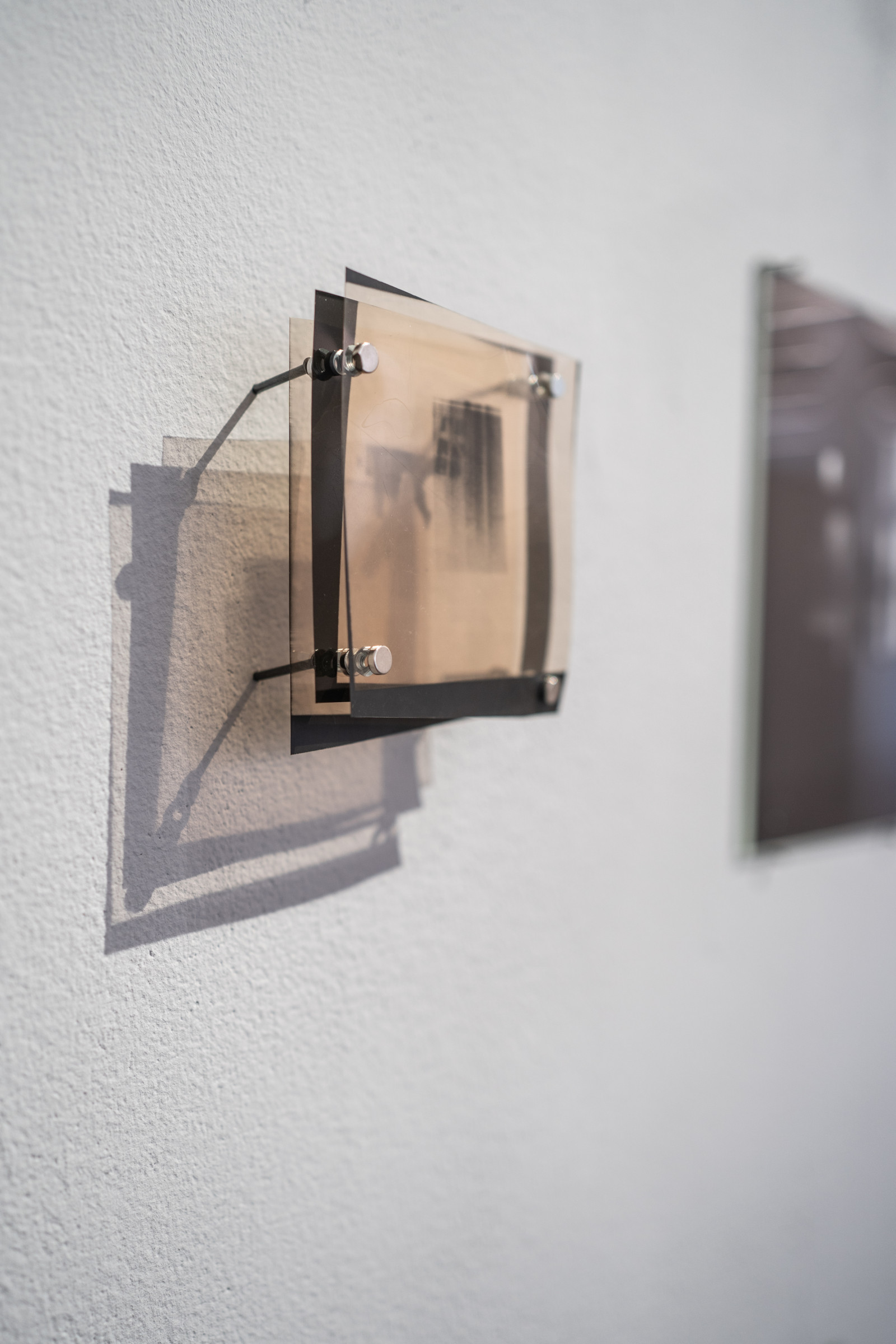
What remains when something is meant to disappear? The work focuses precisely on that: spots and fragments, a glimpse of what lies beneath the layer of paint. Created in the context of the celebrations for German Unity Day 2025 in Saarbrücken, in the run-up to which numerous graffiti pieces in the cityscape were painted over or removed.
The work visualizes the silent conflict between the need for visibility and political expression and the control exerted over it by municipal authorities. However, the attempt to clean up a city’s public image
cleans up and pacify a city leaves traces that convey a message of their own. Photographed and engraved in metal, these images remain visible.
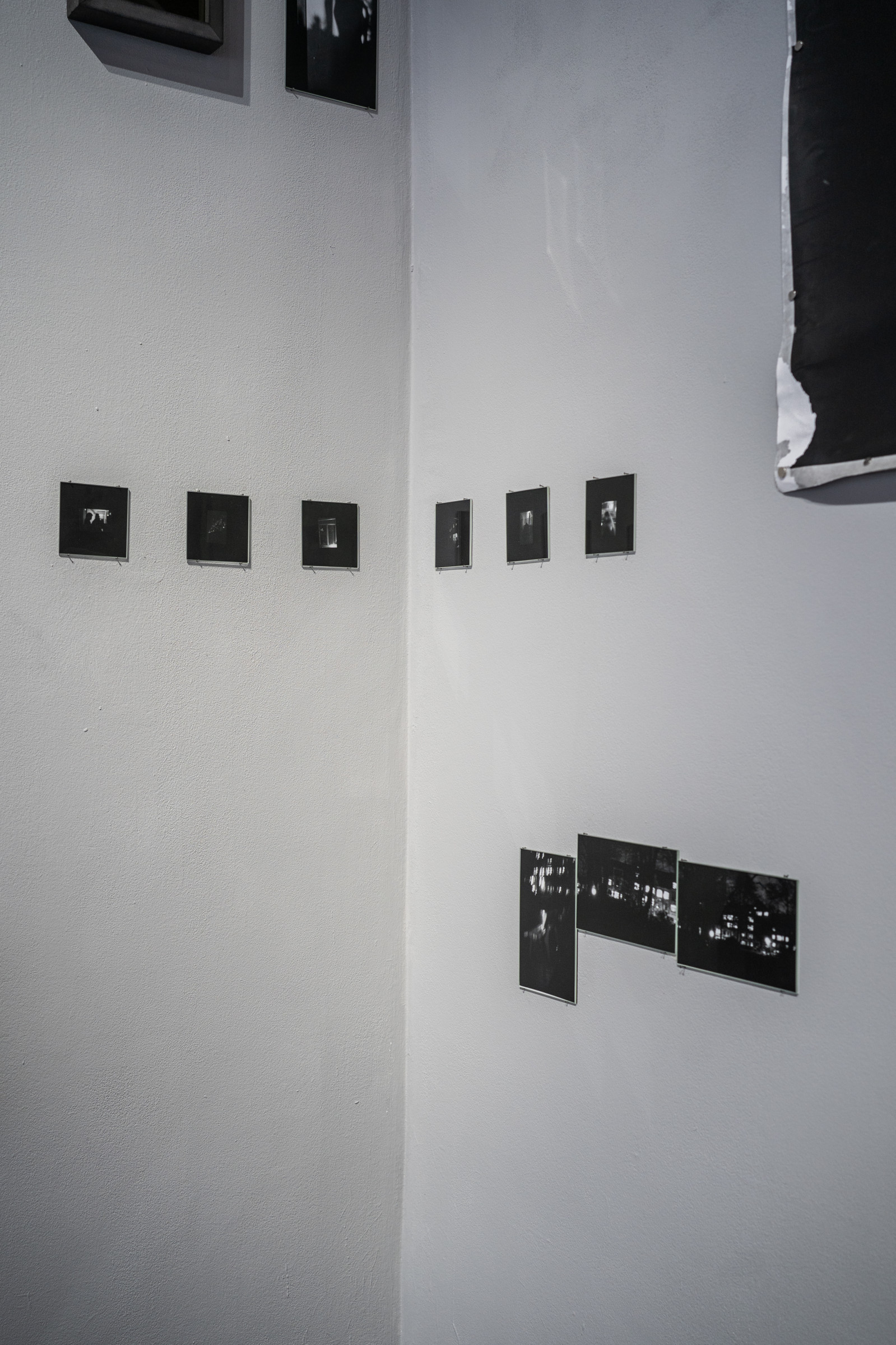
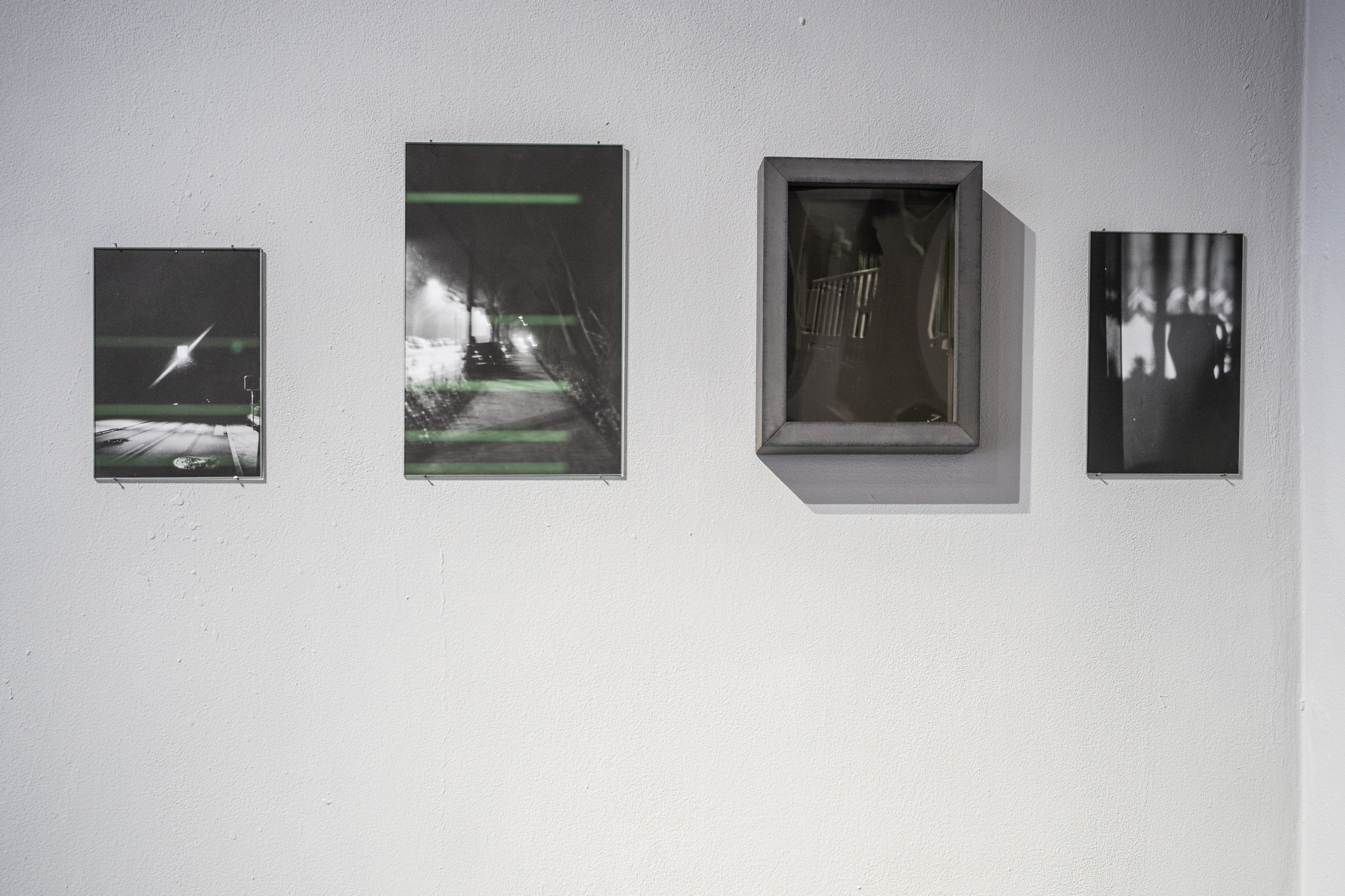
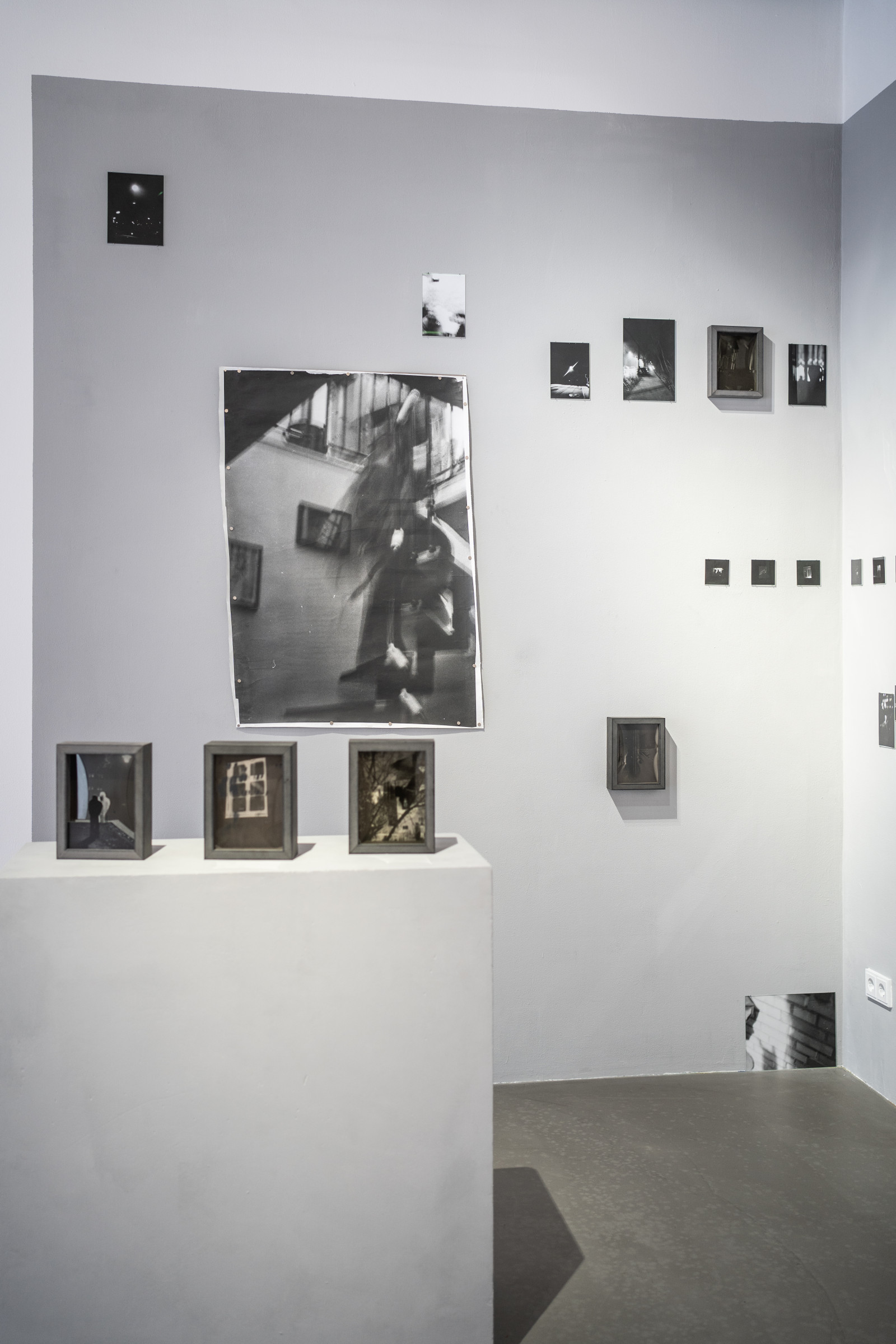
Milla Pukall – Groping in the Dark, 2026
Analog black-and-white prints on silk-matte photo paper, baryta paper, and analog negative film
This photo series presents an experimental exploration of the theme of darkness. Whether it’s the childhood memory of frantically scurrying to the bathroom in the dark at night or the experiences of FLINTA* people on their way home at night.
Darkness can trigger varying degrees of fear or uncertainty. After all, everything is less visible in the dark. On a technical level, this uncertainty also applies to the camera. Subjects are harder to focus on due to less light, the exposure time is longer, and this results in blurriness and a lack of detail.
In this context, the photographs in the series were created—sometimes intuitively, sometimes more deliberately—during the dark season. Through the analog development of the images in the darkroom, the exploration of the absence of light runs through the entire creative process. Shadows and contrasts take center stage and can be experienced in different ways in the exhibition.
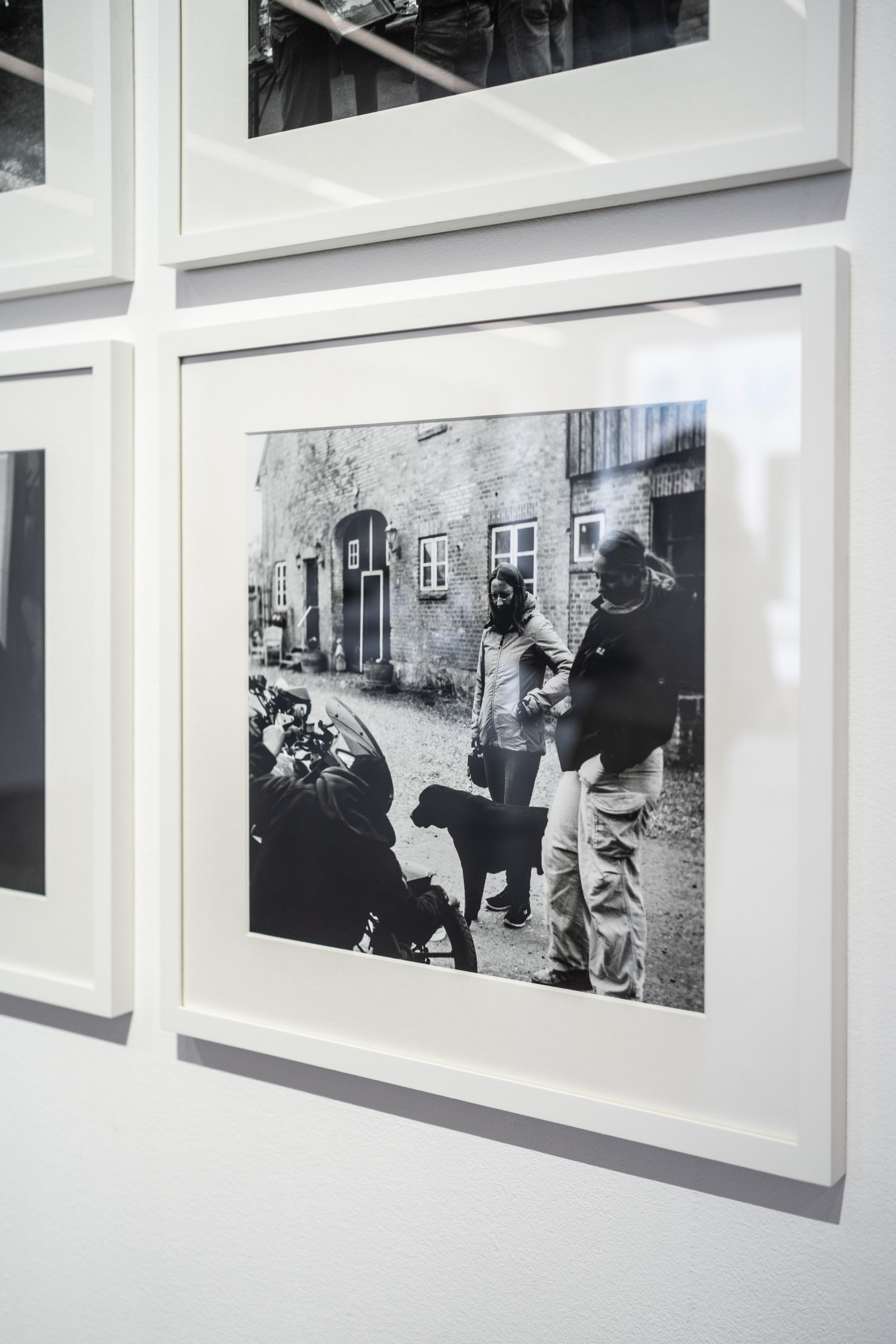
Alexander Rudd – Together, 2026
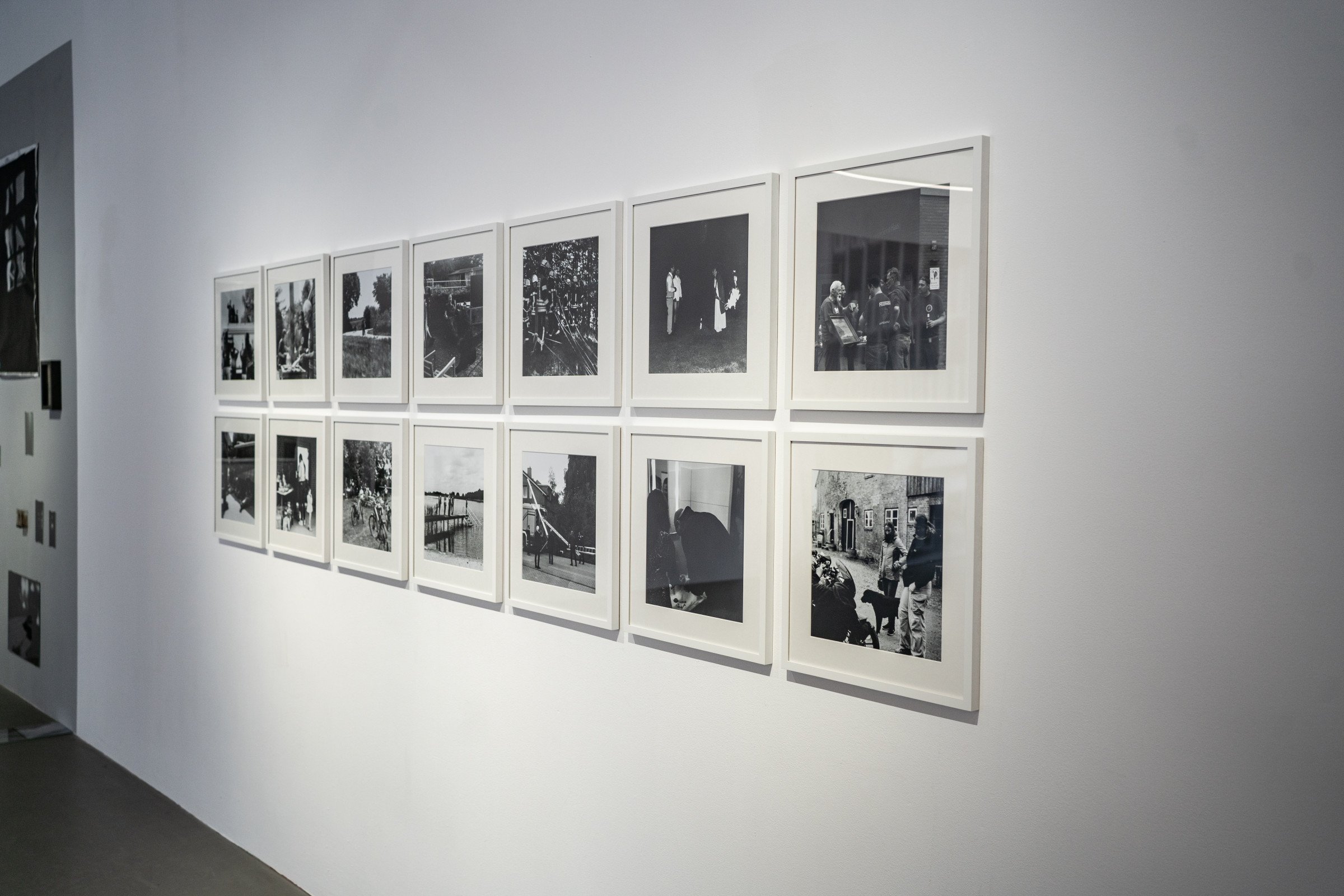
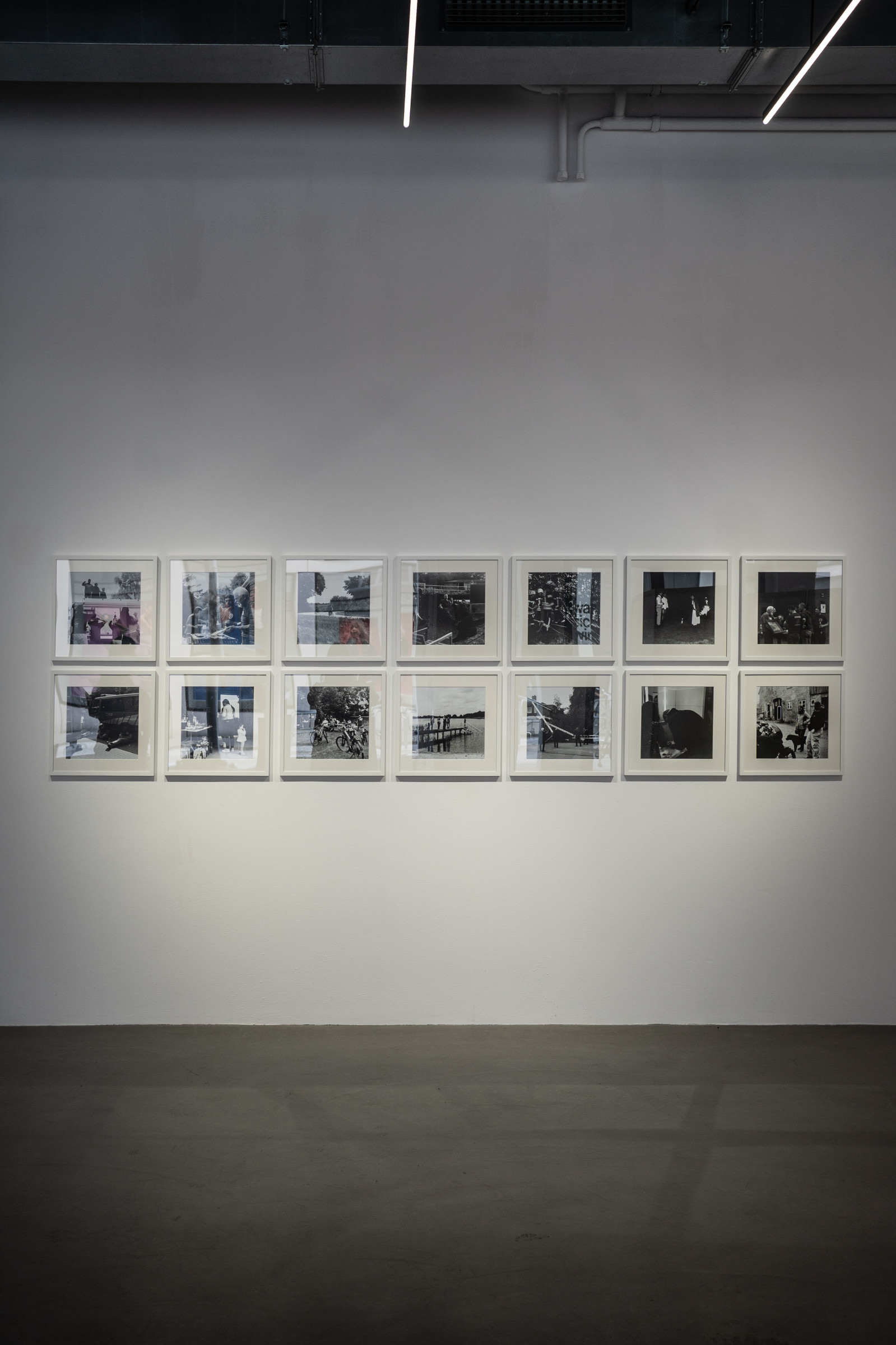
Analog photography, medium format 6x6, analog prints 30 x 30 cm each, framed
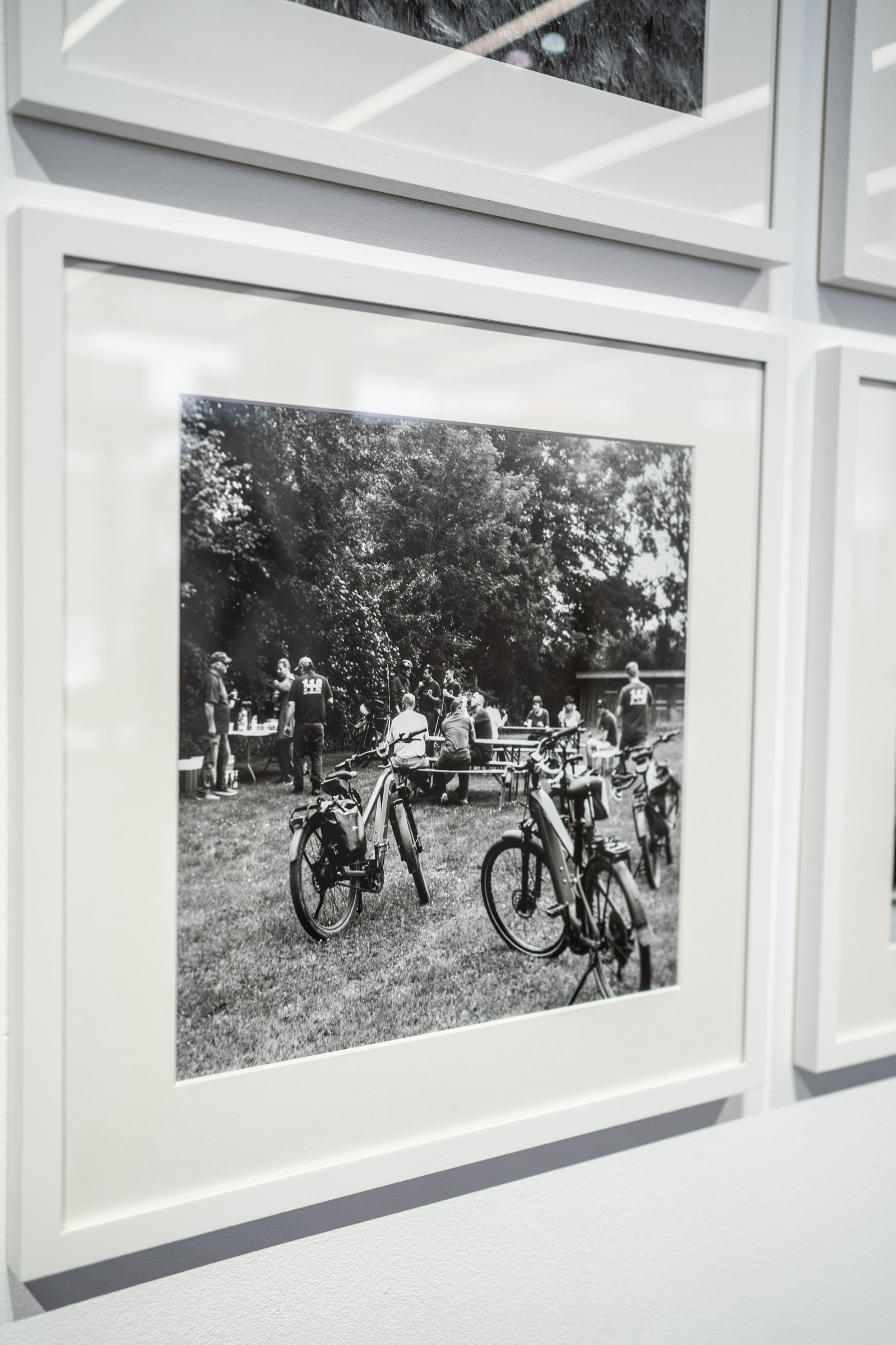
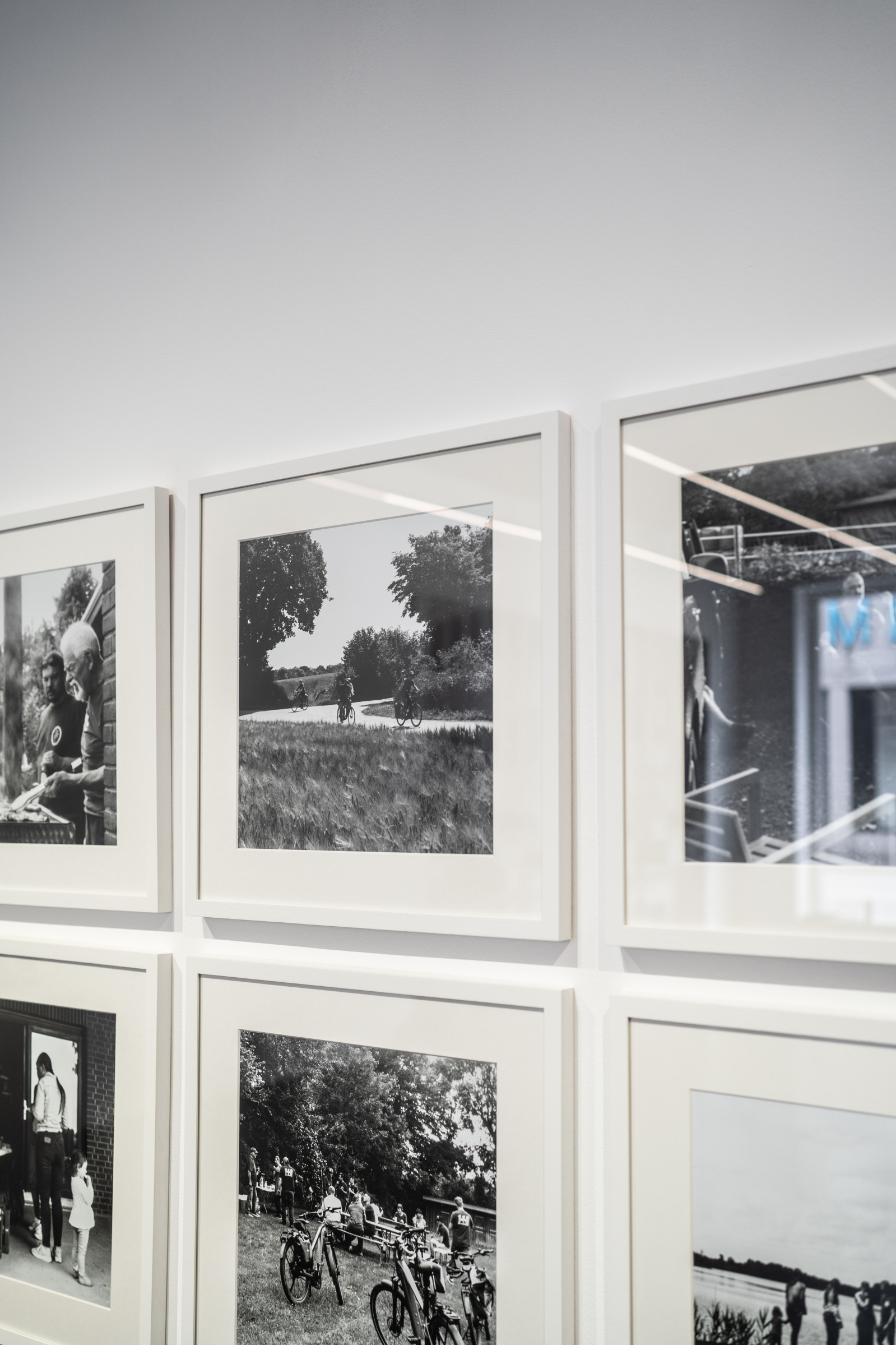
What are they up to, back there behind the hills and fields? The photo series Together is a photographic documentation of a village community hidden away in the idyllic landscape of Schleswig-Holstein and focuses primarily on the interactions among the residents. The images were taken analog in 6 x 6 cm medium format and subsequently enlarged to 30 x 30 cm.
They depict the residents’ everyday interactions—seemingly casual moments such as volunteer fire department drills, a bike ride, group barbecues, and relaxing with a dog or a game of bowling. Ultimately, these rituals foster a sense of community and serve to practice and shape reality in the analog realm, beyond digital spaces. This tranquil place provides the foundation for spaces of interpersonal and intergenerational dialogue, the transmission of knowledge within a manageable context, and thus makes a significant contribution to a fundamental understanding of democracy.
Leander Schroeder – Before & After, 2026
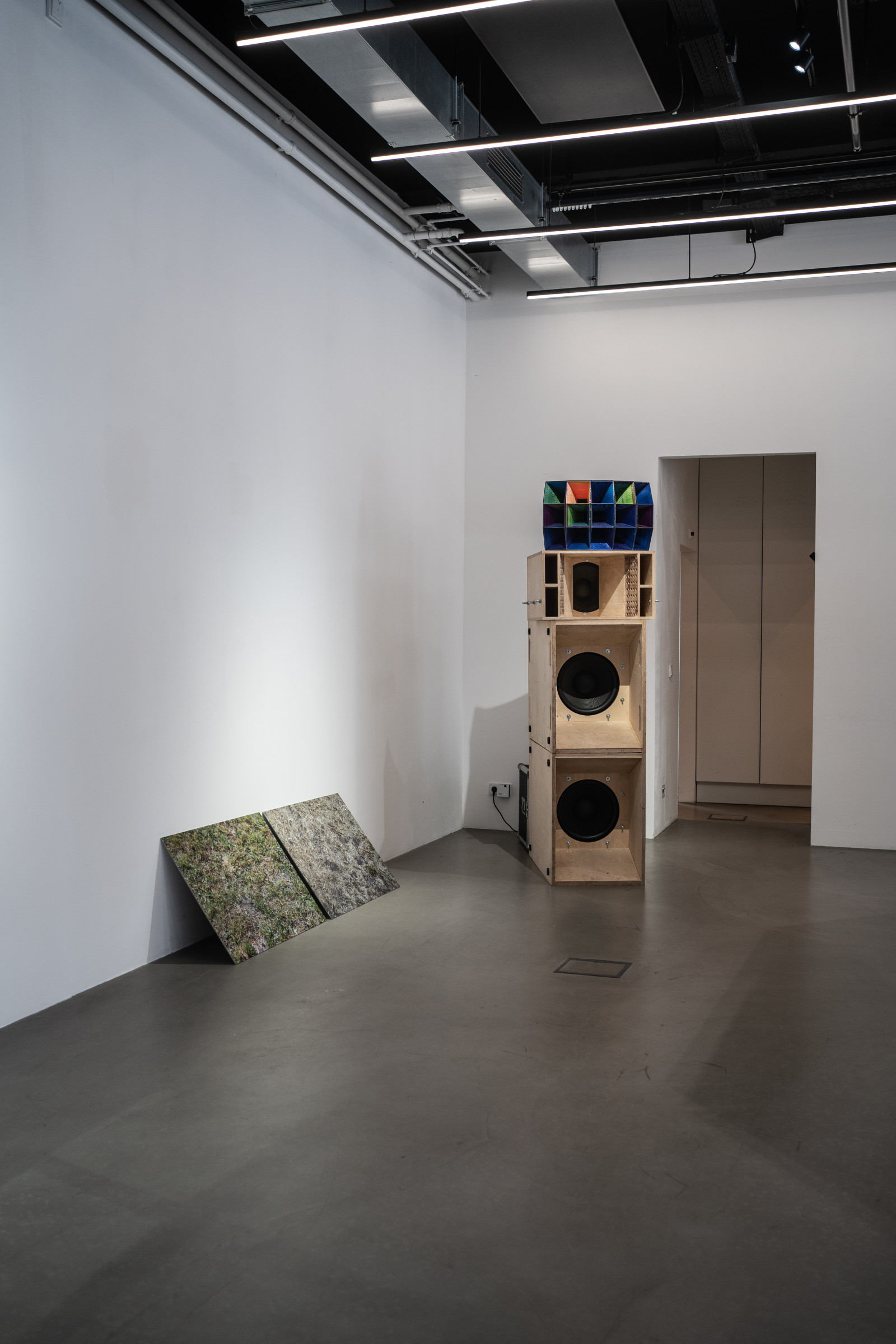
Photographs 60 x 90 cm, homemade passive speaker system, sound
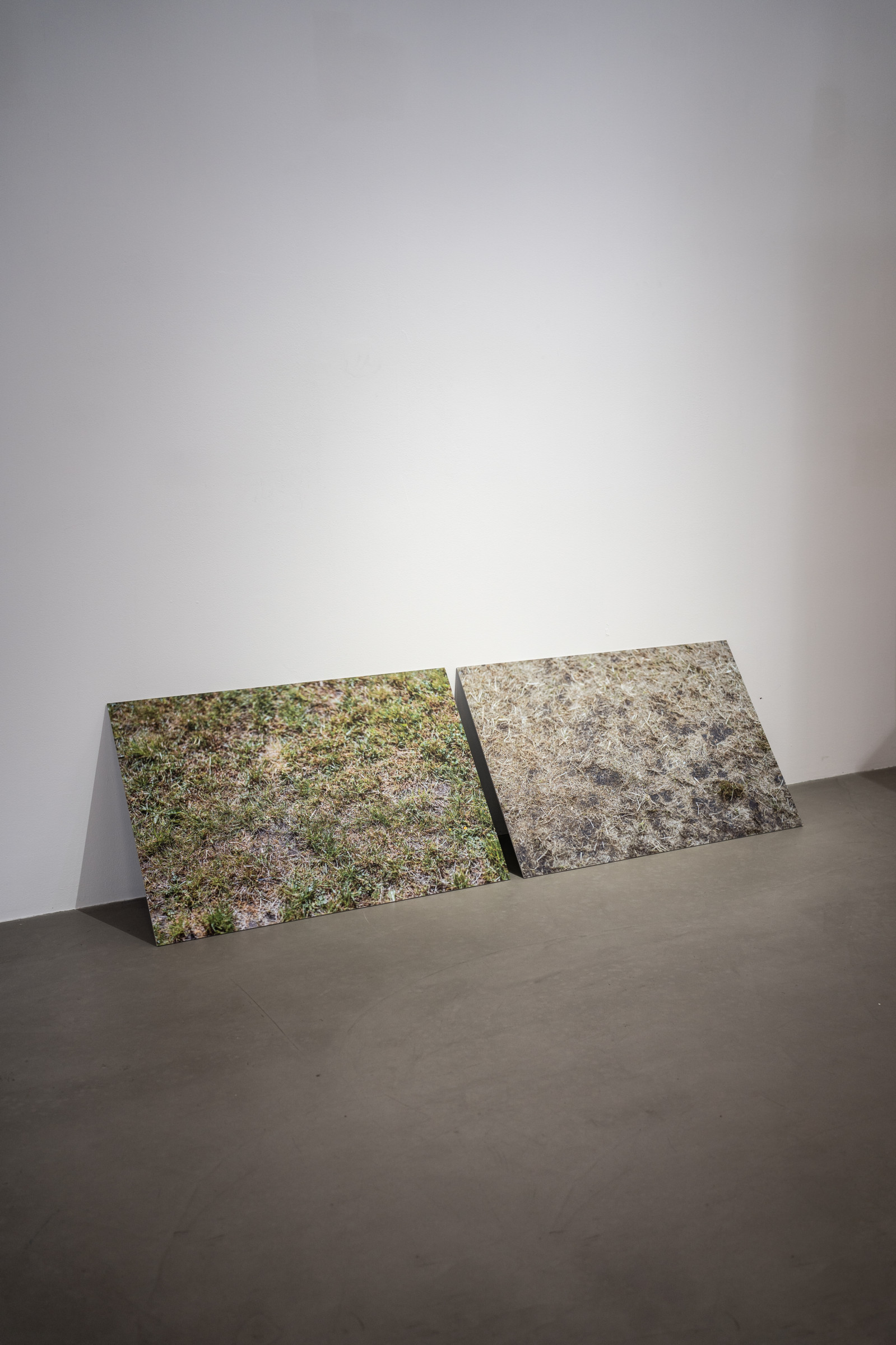
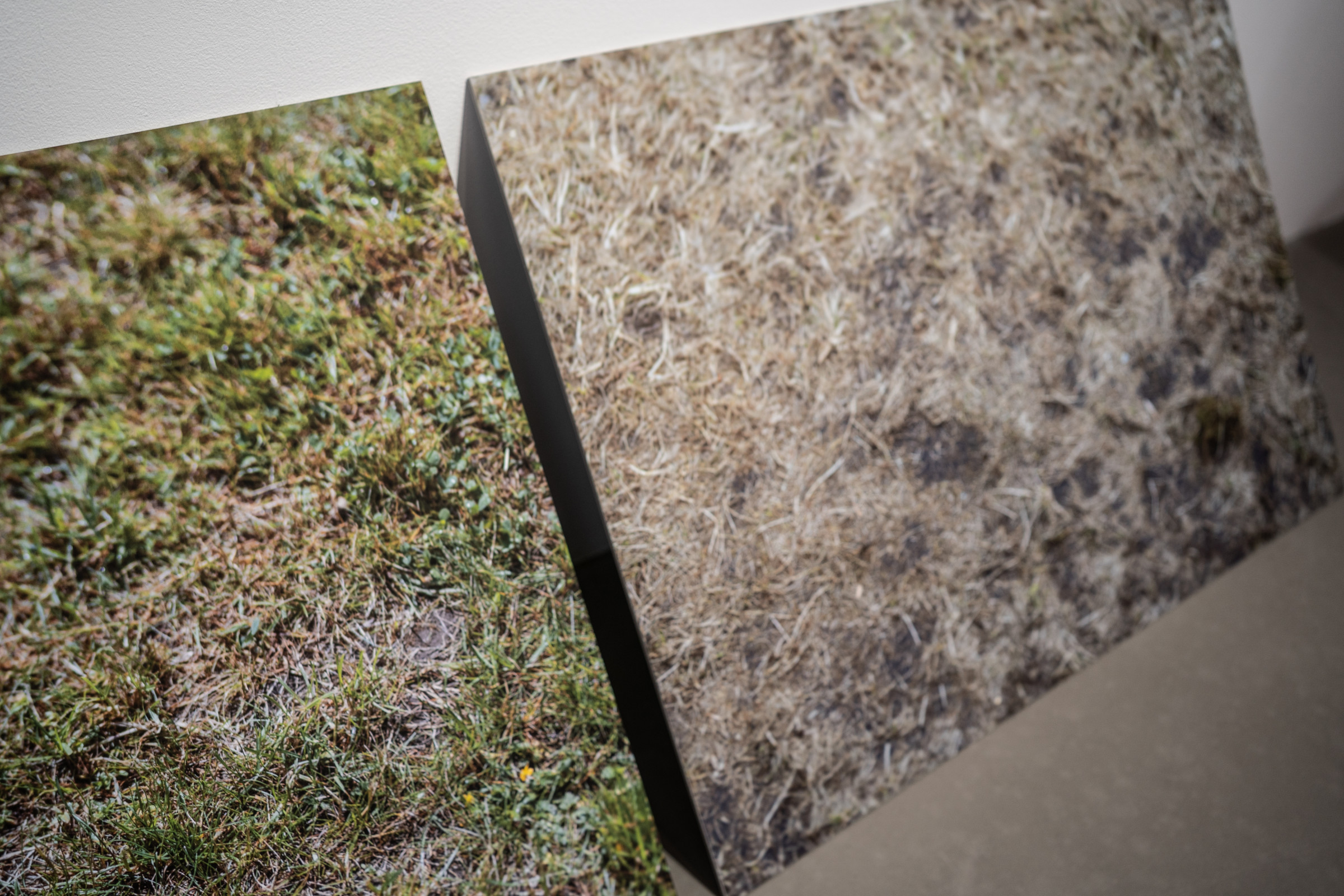
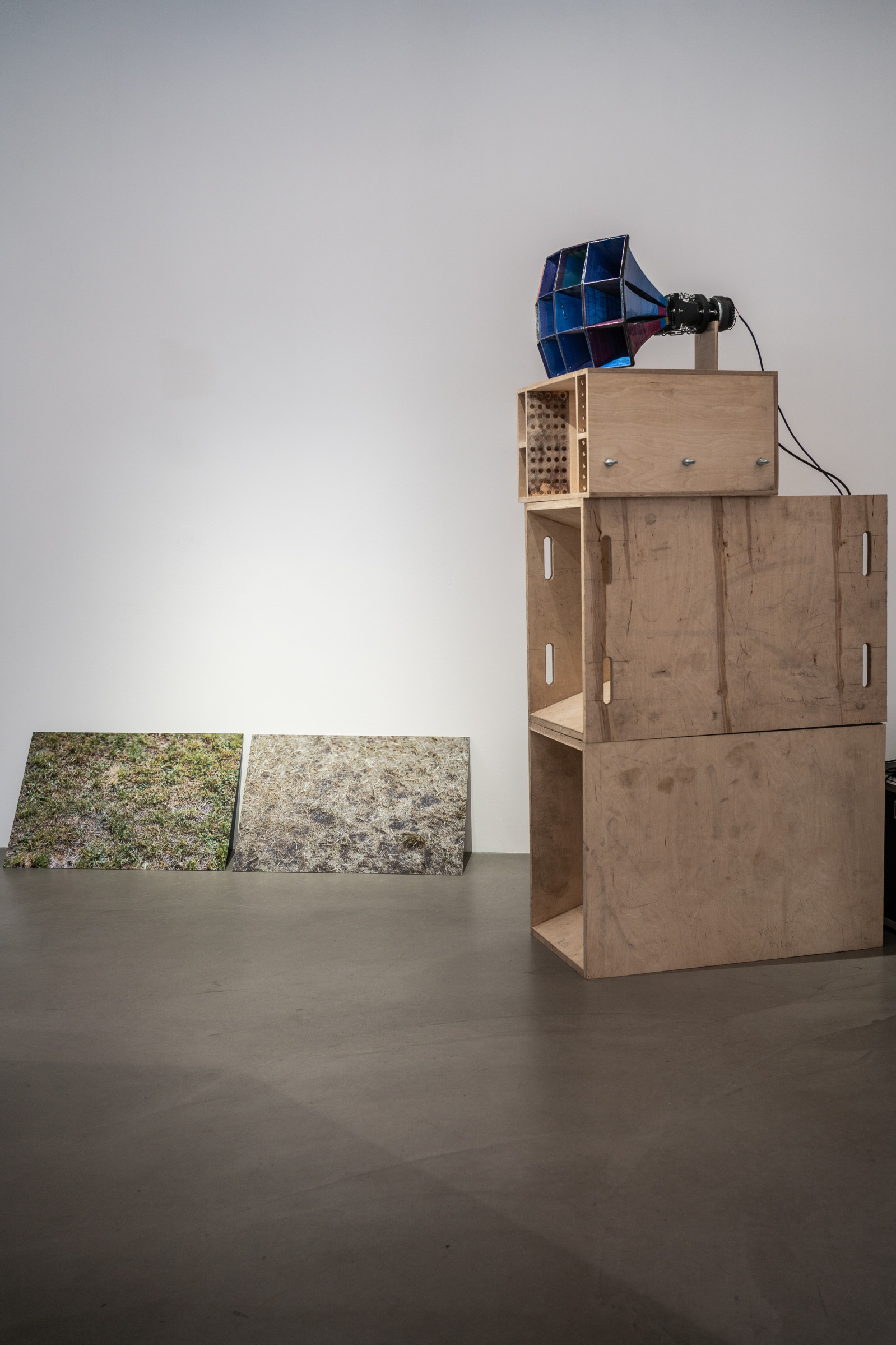
Two photographs are leaning against the wall of the exhibition space. The choice of Ilford matte paper lends the images a textural, almost tactile quality. They depict the same section of a meadow—exactly the same angle, the same ground texture—yet separated by a period of precisely 48 hours. The first image shows the untouched, tranquil grass before a festival; the second, the trampled, battered ground afterward. In this minimal, almost documentary-like difference, the story of a collective ecstasy is condensed.
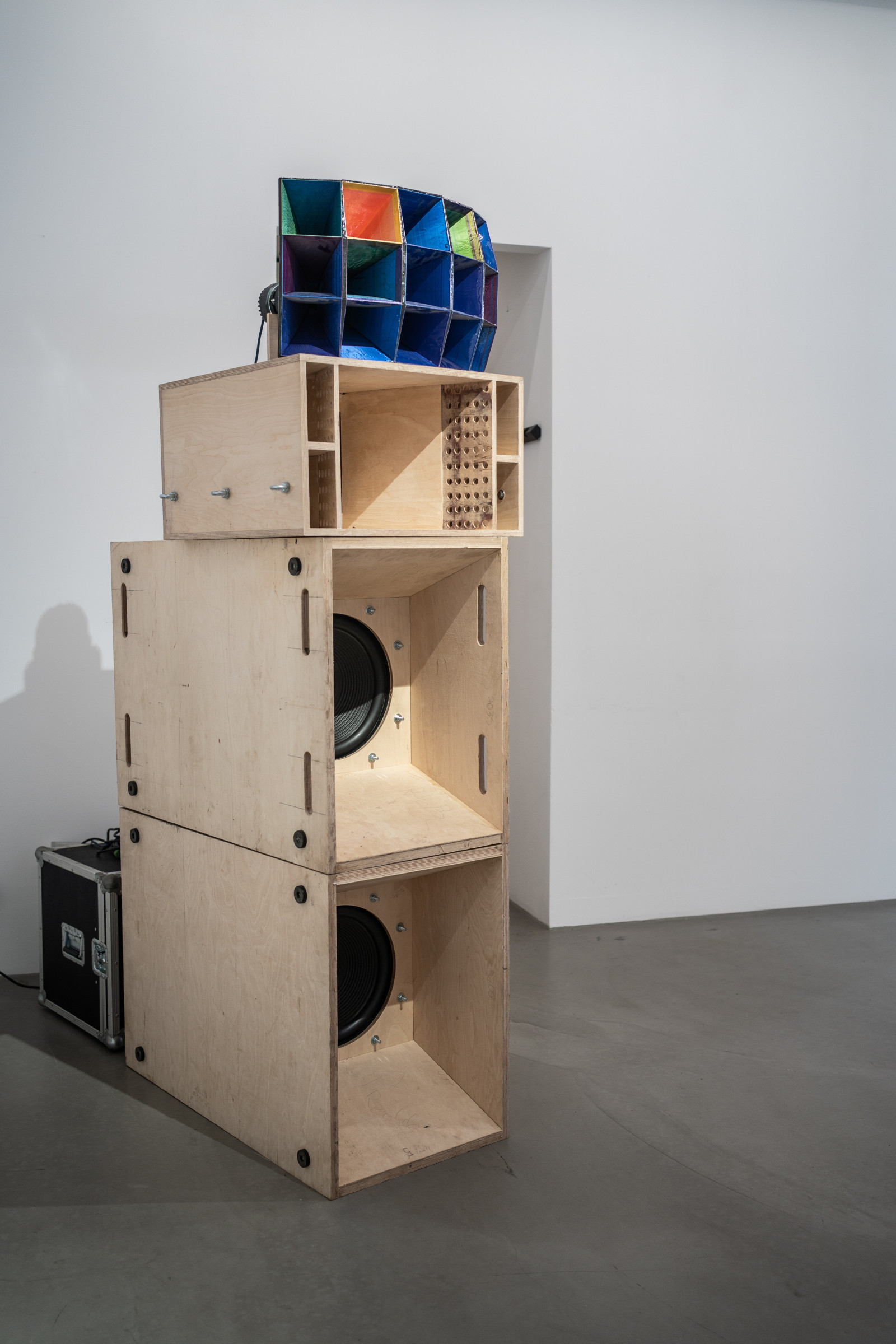
Right next to it stands a sculptural, homemade speaker system. With its two 15-inch subwoofers, a distinctive 12-inch midrange driver, and an artfully colorful high-frequency horn, it is an archaic relic of that open-air culture. Once a day, it fills the space with a 30-minute sound collage: the reverberating atmosphere of a dance floor, fragments of music, and snippets of conversation stream from the speakers.
The installation thus attempts to create a portrait of the dance floor—not of its visitors, but of the experience itself. It captures those intimate, fleeting moments of pure exertion that elude the ubiquitous documentation by smartphones and can only be experienced through the collective
sense of physical presence.
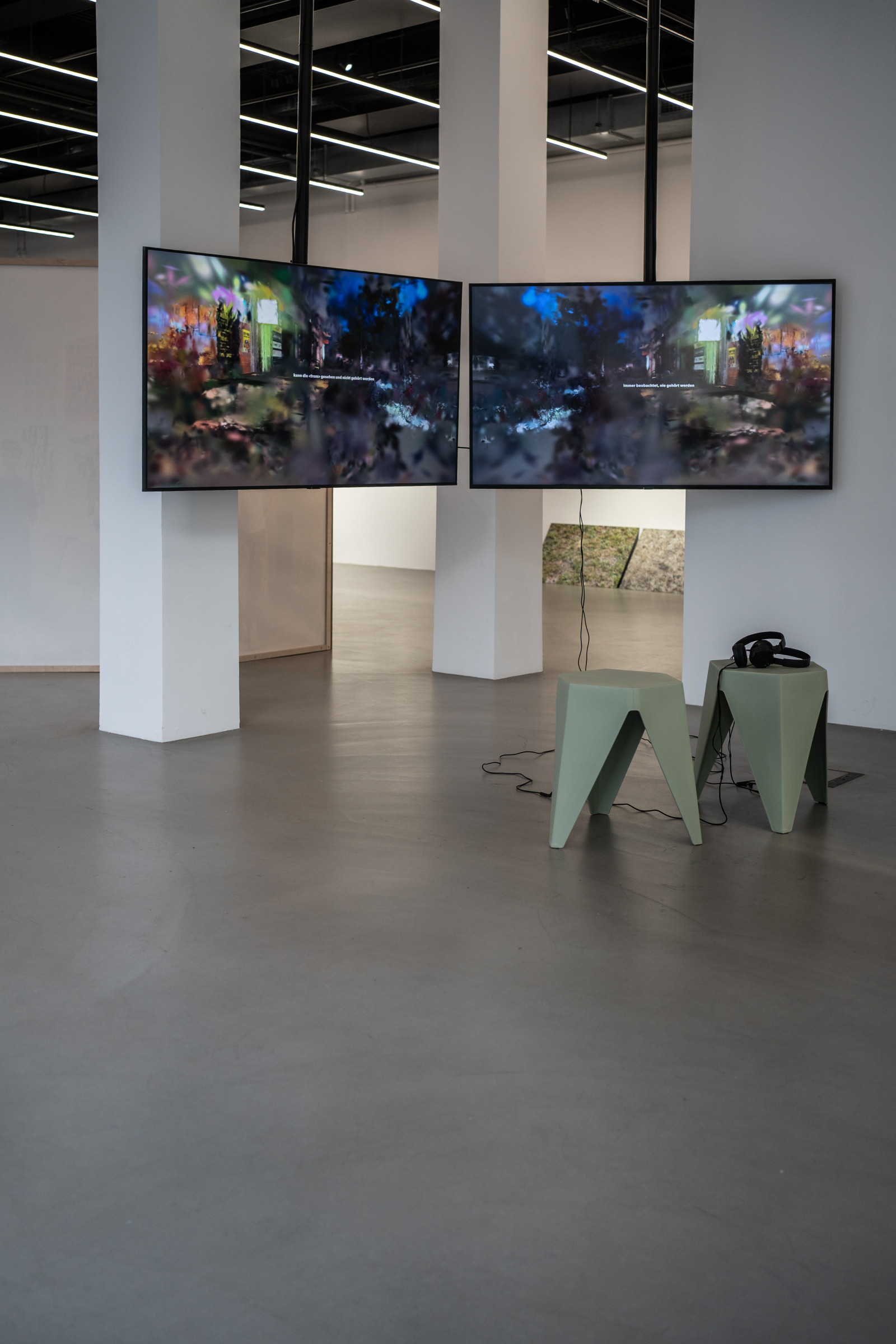
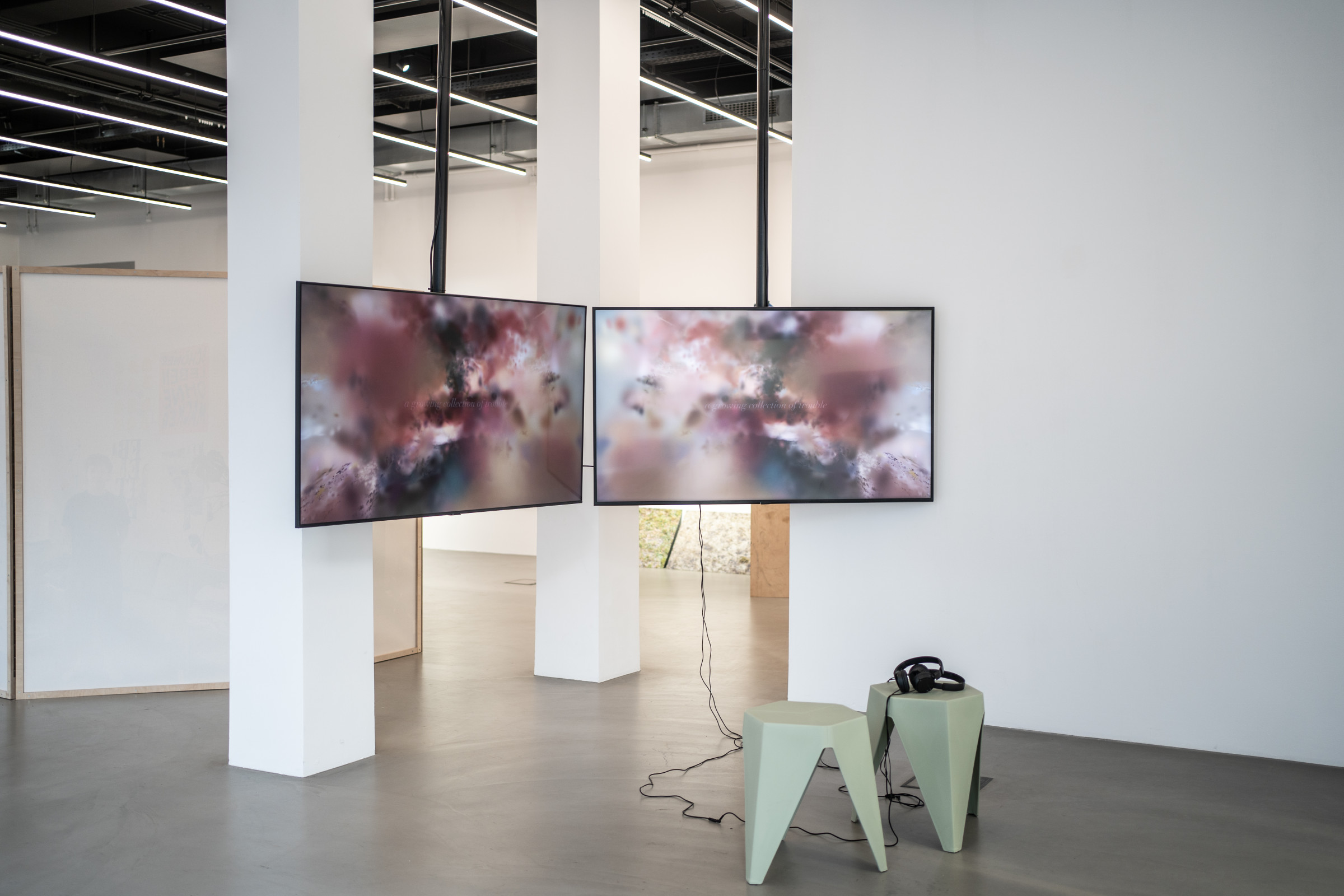
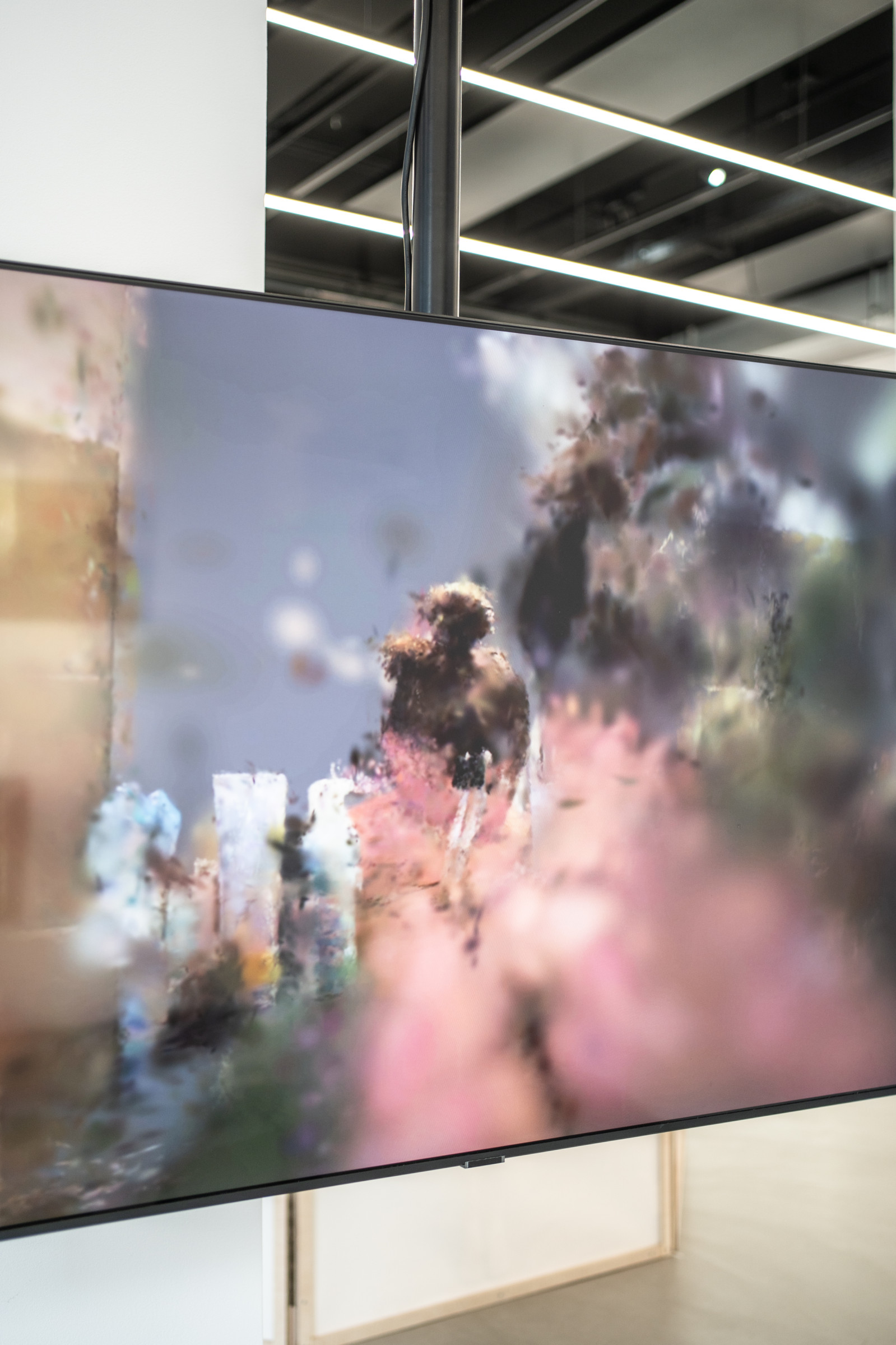
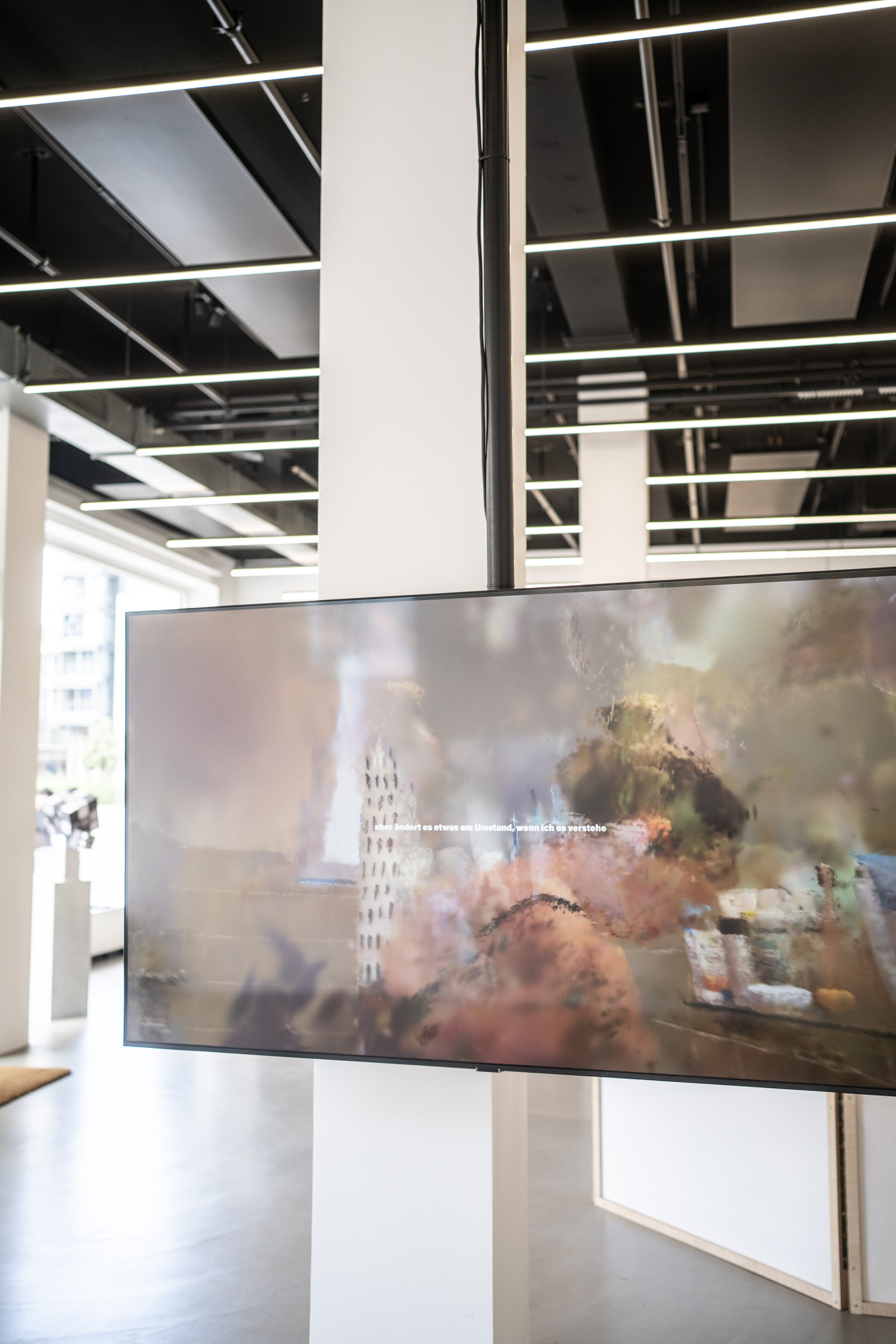
Freya Stoermer – a growing collection of trouble, 2026
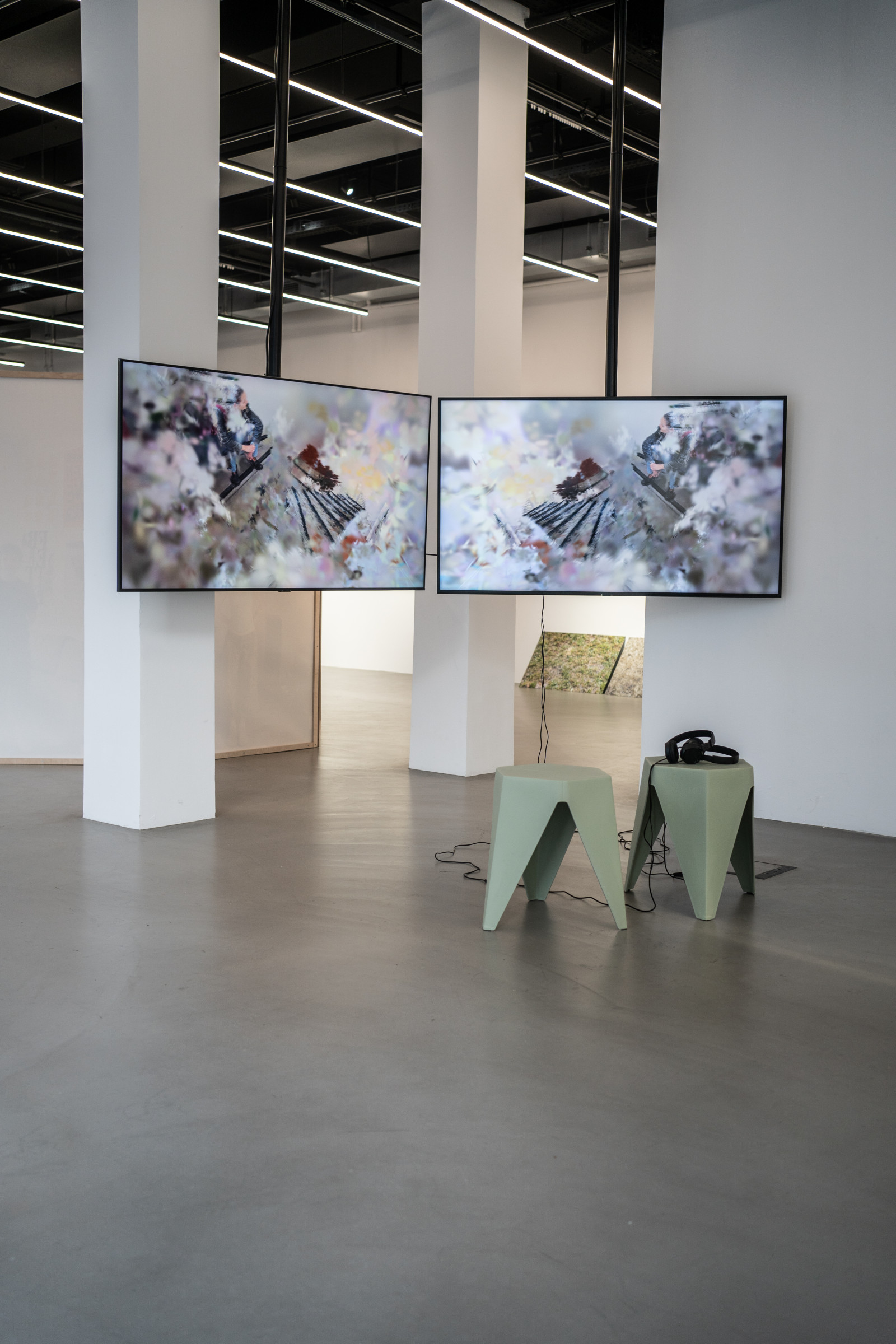
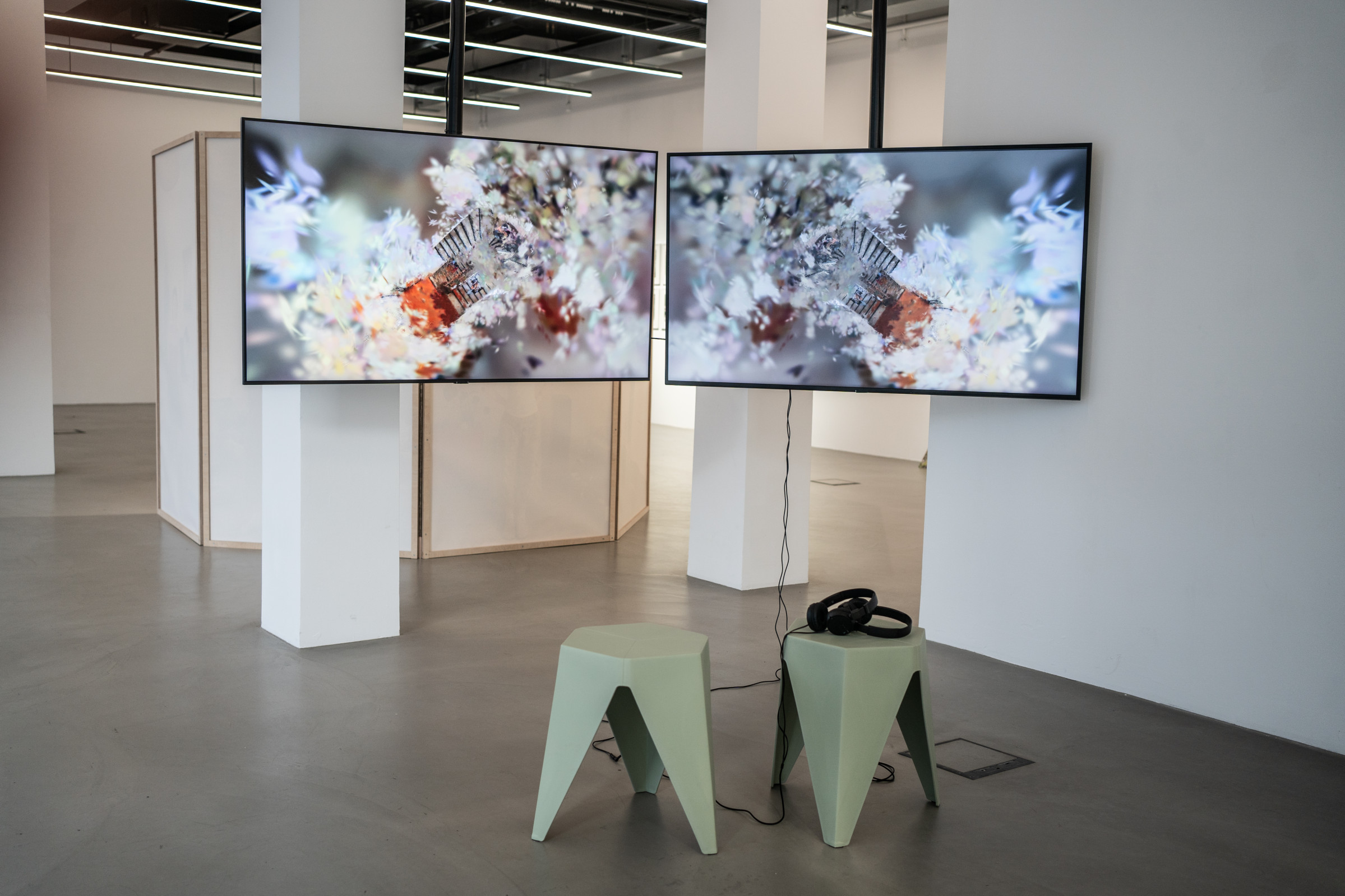
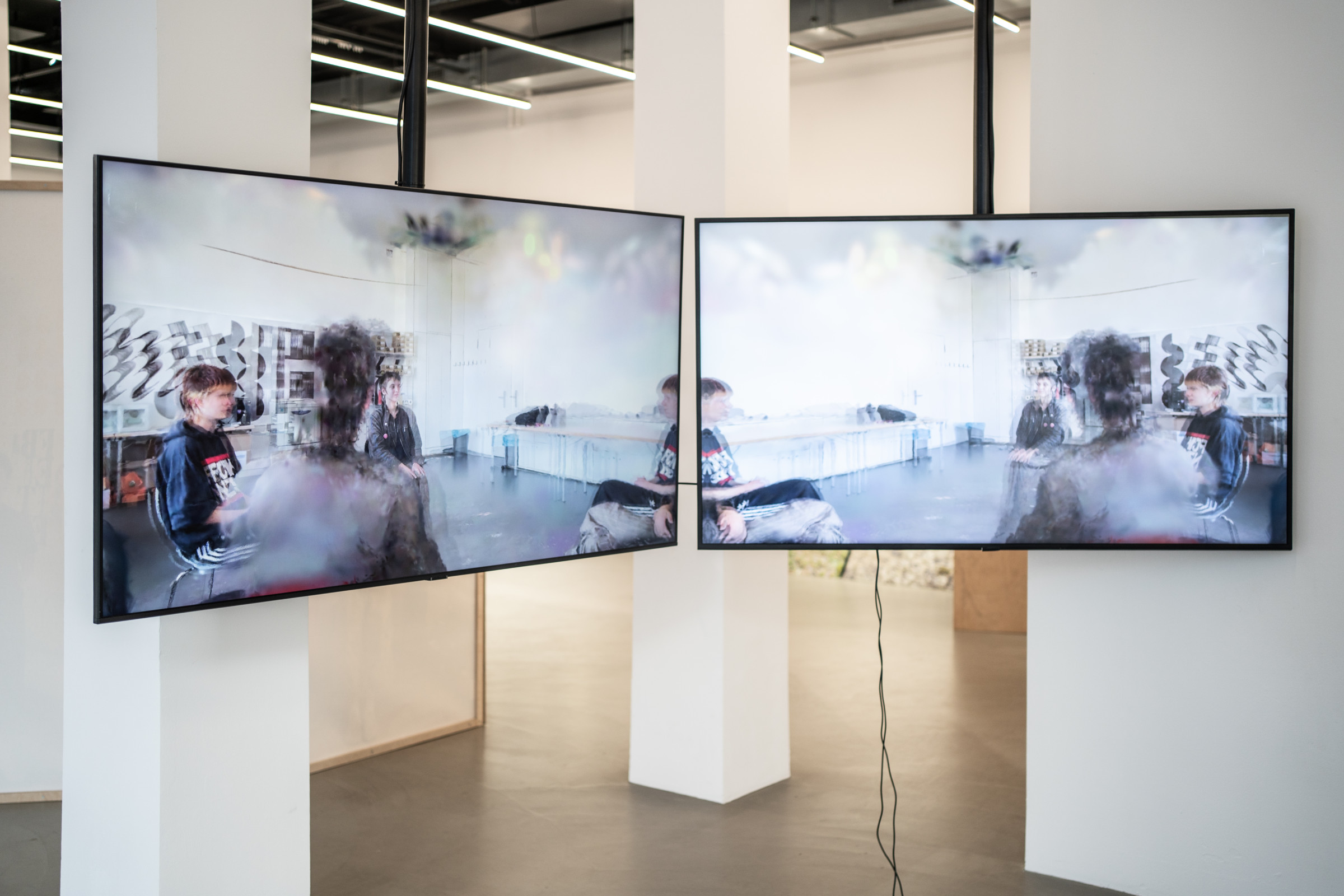
Video installation, sound
a growing collection of trouble is a video installation about moments of unease. Flickering between sharp focus and point clouds, camera tracks move through Gaussian splat scans. Images freeze, buffer, and interrupt themselves. In their stuttering, they negotiate the operational transparency of social and technical systems in everyday scenes.
Reflecting on images, the work contemplates a way out of binaries and strict regimes. While in uncertain times, clear-cut categories are gaining popularity and the uncertain, the undefined, and what lies in between are increasingly at risk of being standardized, this work seeks a language for that which refuses to be grasped.
For bodies in the in-between, on the outside, and right in the middle. Moving from very concrete, everyday situations toward collective ideas.
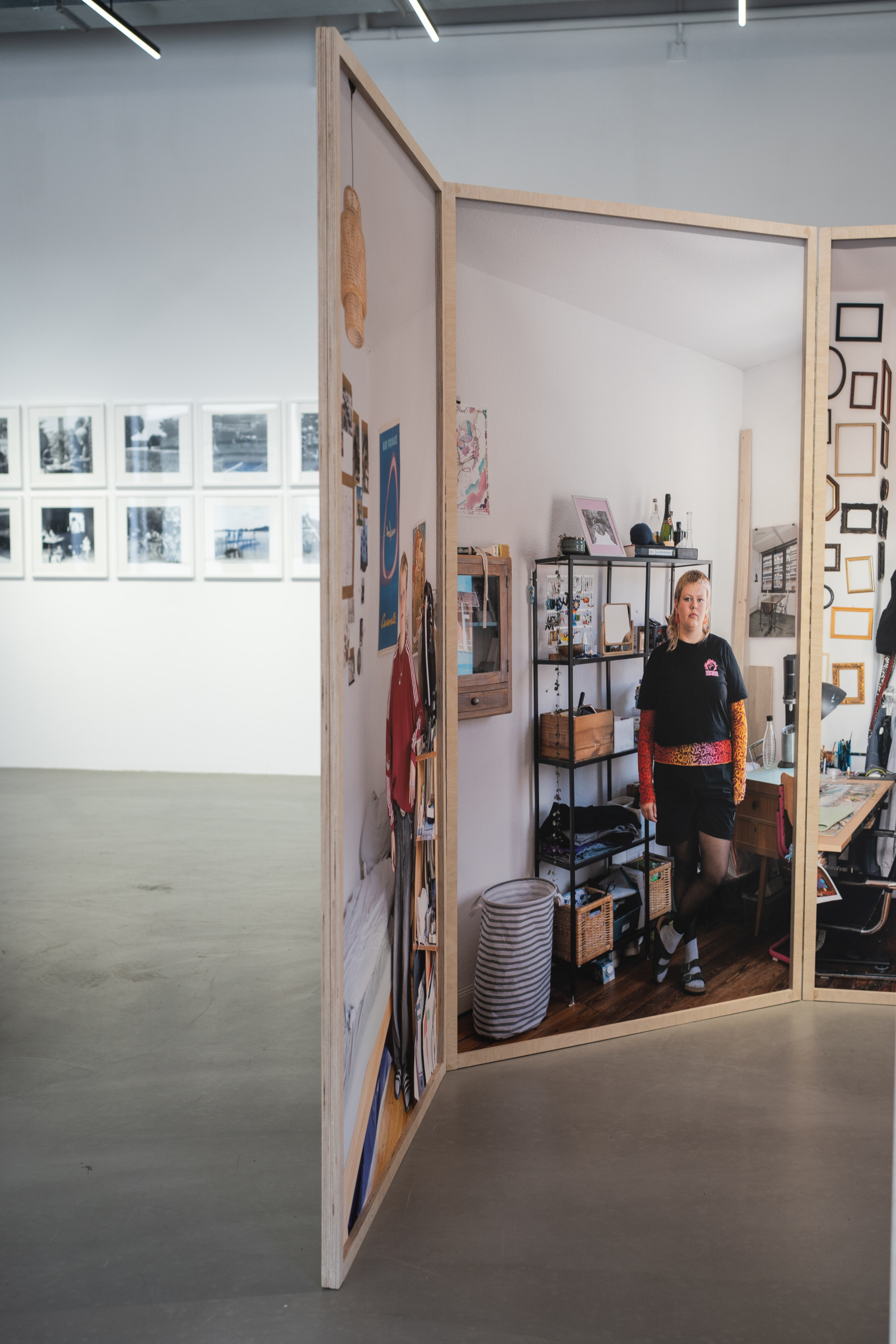
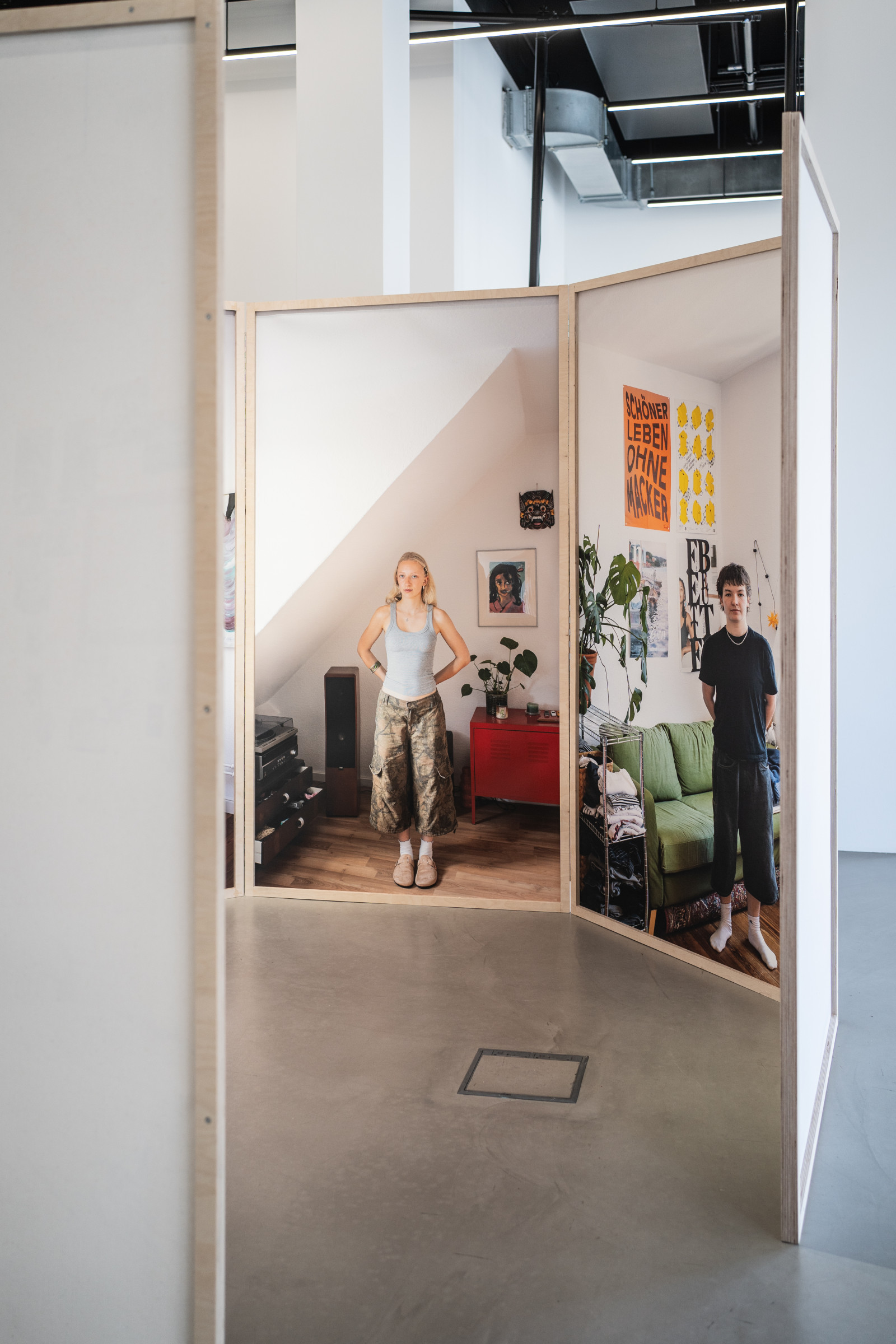
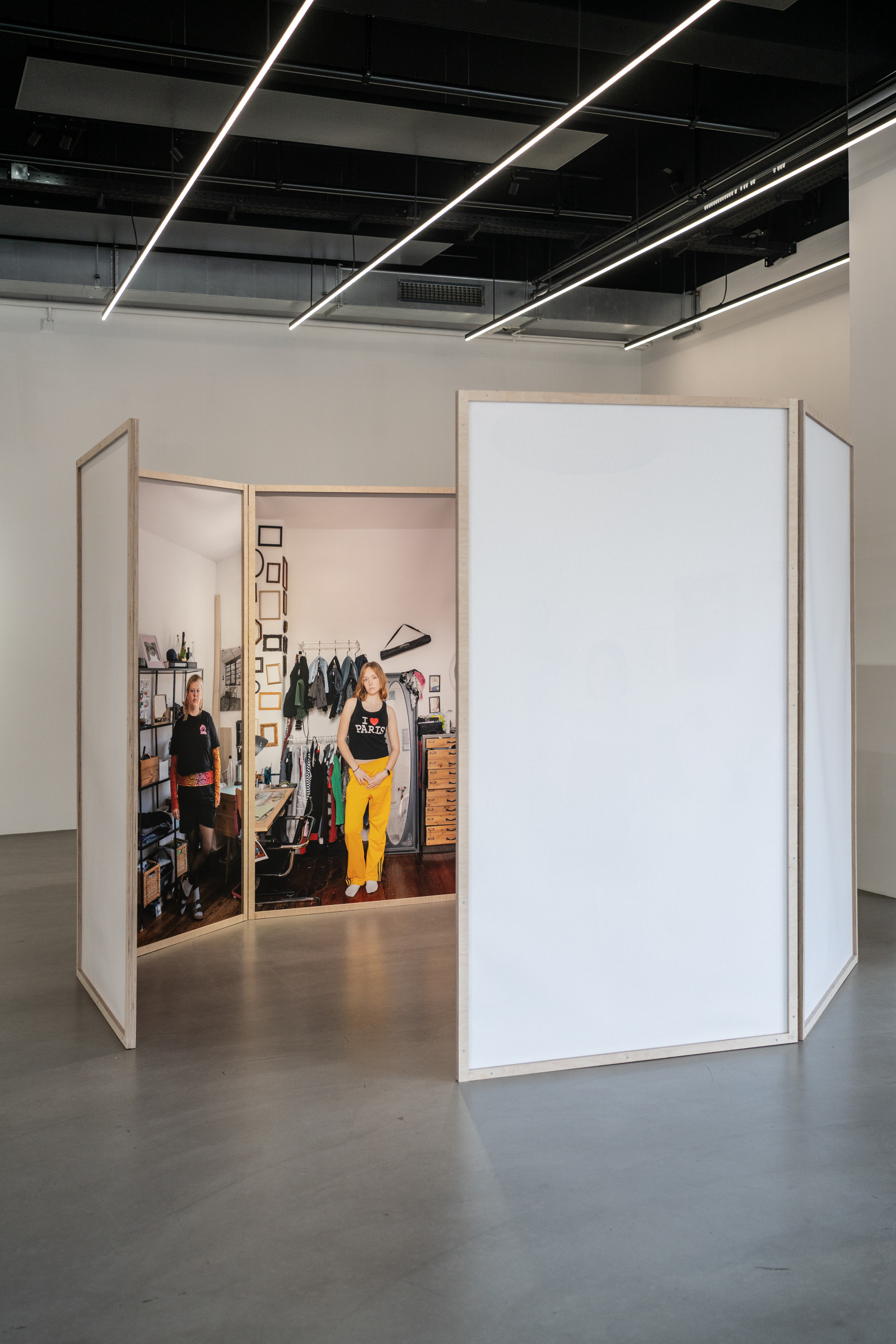
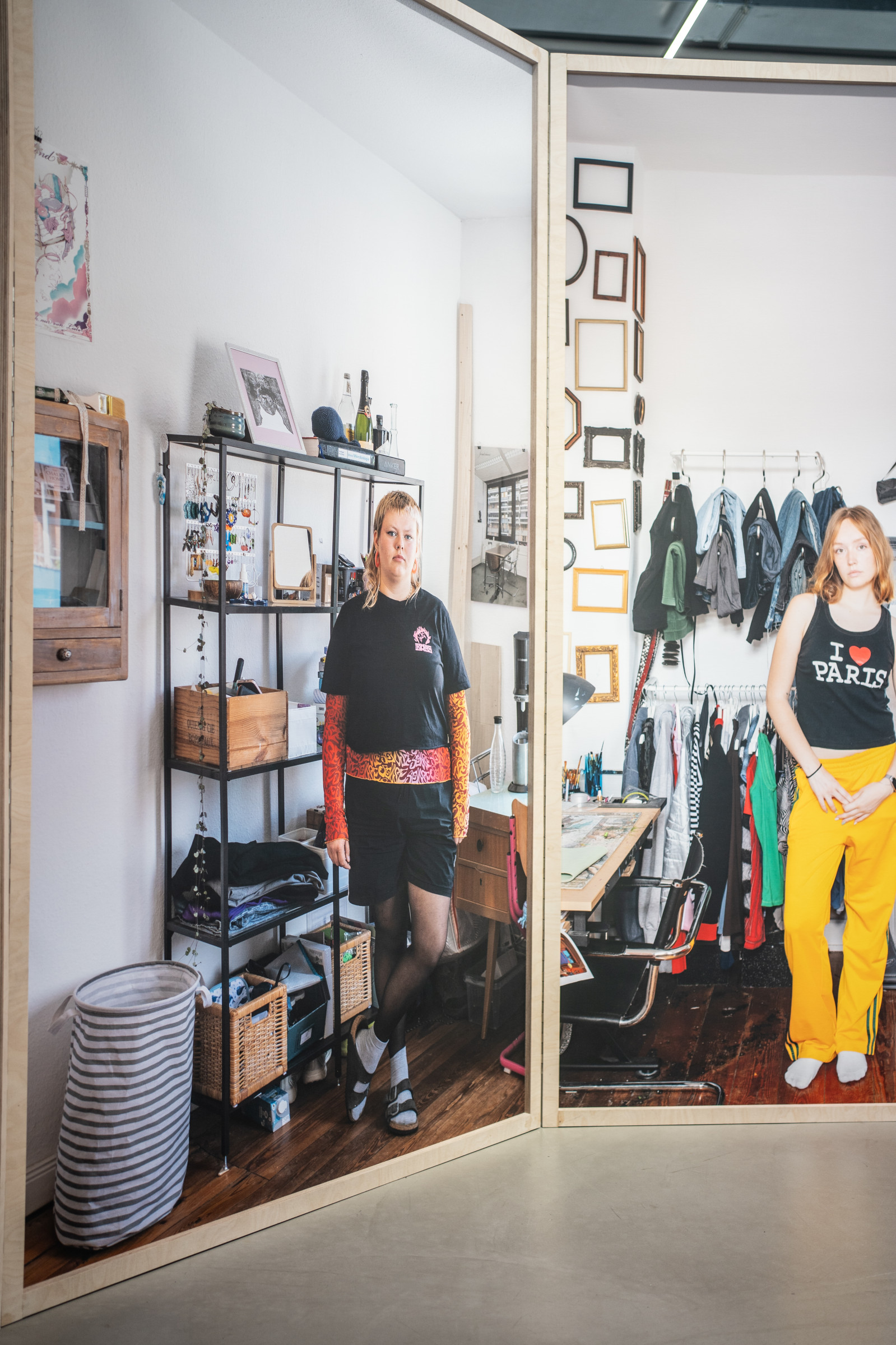
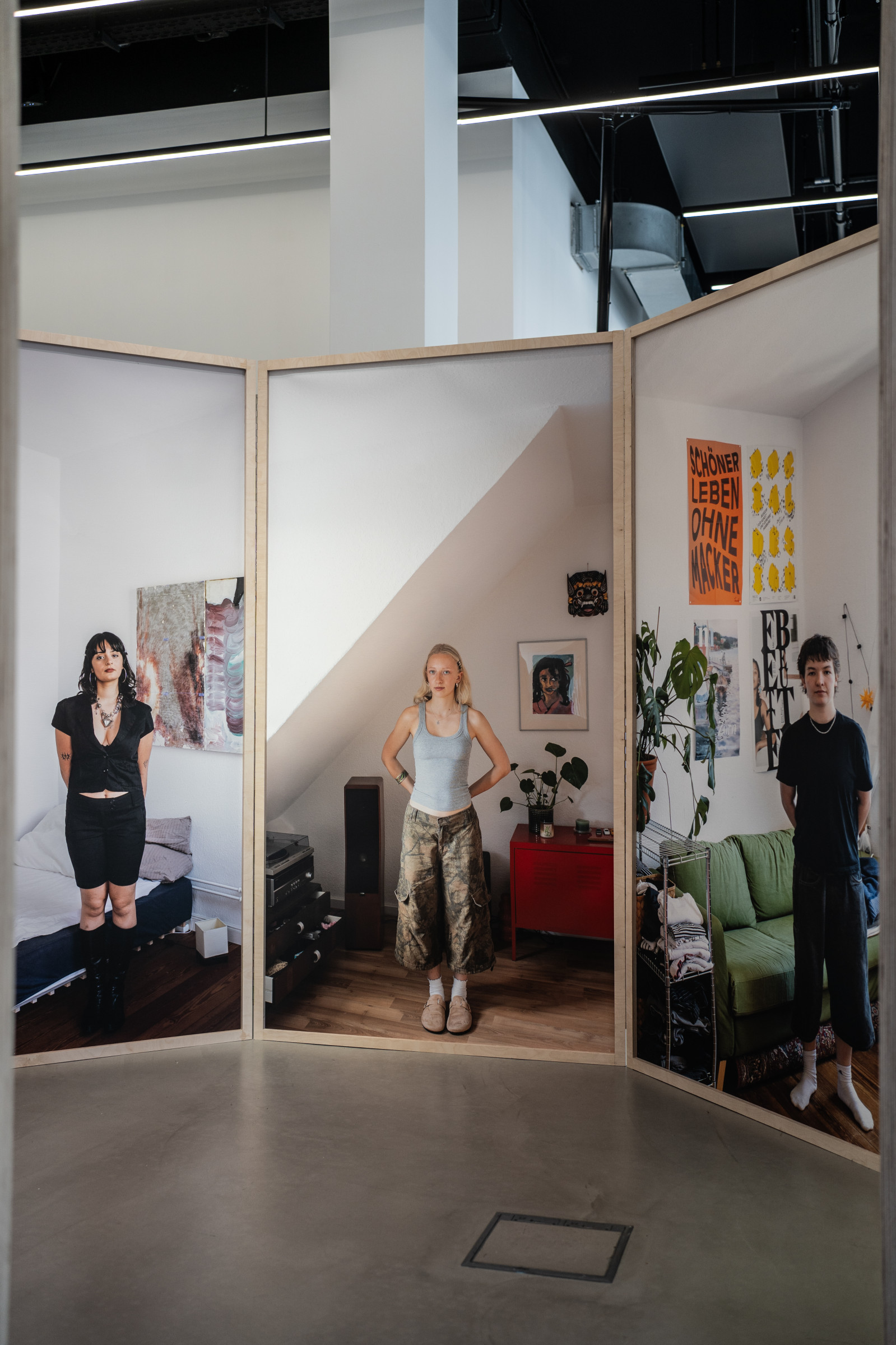
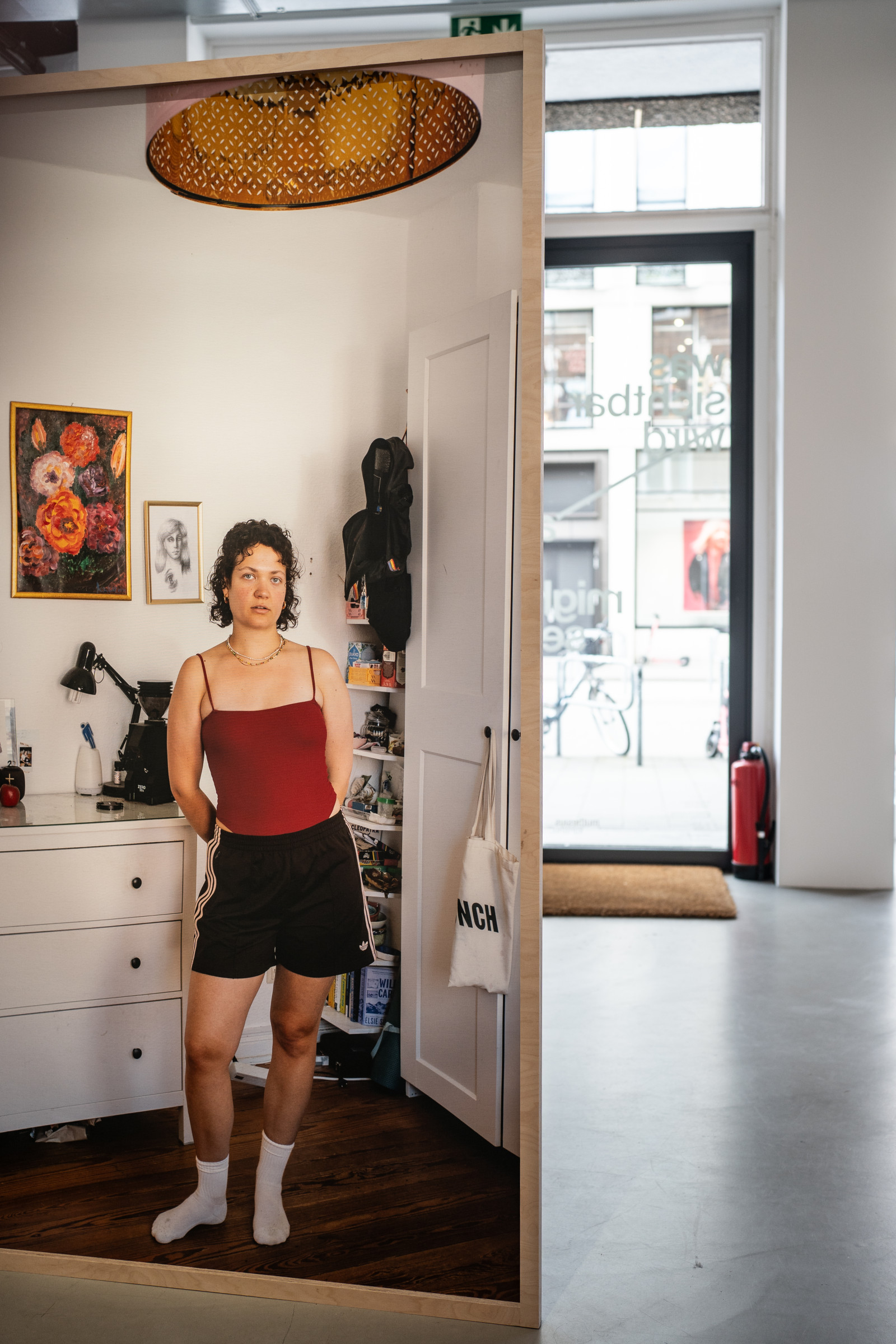
Marisa Velthuis – Paravent, 2026
Walk-through installation, photographs on canvas, each 198 × 108 cm, wooden frames
The work features photographs of FLINTA* individuals in their domestic settings. The folding screen creates a space of its own and enables a reordering of gaze and counter-gaze. In the spatial arrangement, the individual portraits interact with one another. They form a collective counterpart that returns the gaze and brings the viewers into focus.
The folding screen offers privacy in a public space and serves here as an object of protection. In this way, the space itself becomes the medium for the photographic work and expands the portraits to include a spatial experience.